

DwarfLab Dwarf mini - First Experiences
Introduction | First Usage Notes | First Visited Sky Objects |First Observations | First Observation Experiences | First Conclusions | Links
On this page, I describe my very first experiences with my electronic refractor telescope Dwarf mini 30 mm/150 mm (f/5).
See also:
- Information
- Tripod
- Bag
- EQ Mode
- First Experiences (this page)
- Mosaic Mode
- Observations of the Sun
- Observations of the Moon
- Observations with Filter
- >> My Deep Sky Observations with the Dwarf mini (Complete List of Observed DSO)
- Photo Gallery (Messier) - Photo Gallery (Other) - Galaxies - Nebulae - Star Clusters
- Photo Comparison (with Vaonis Vespera)
Introduction
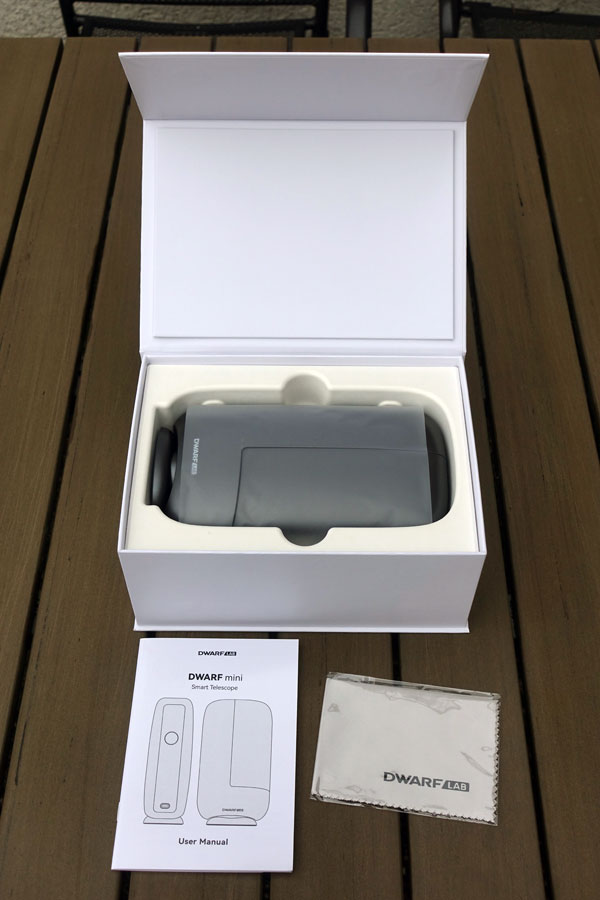 |
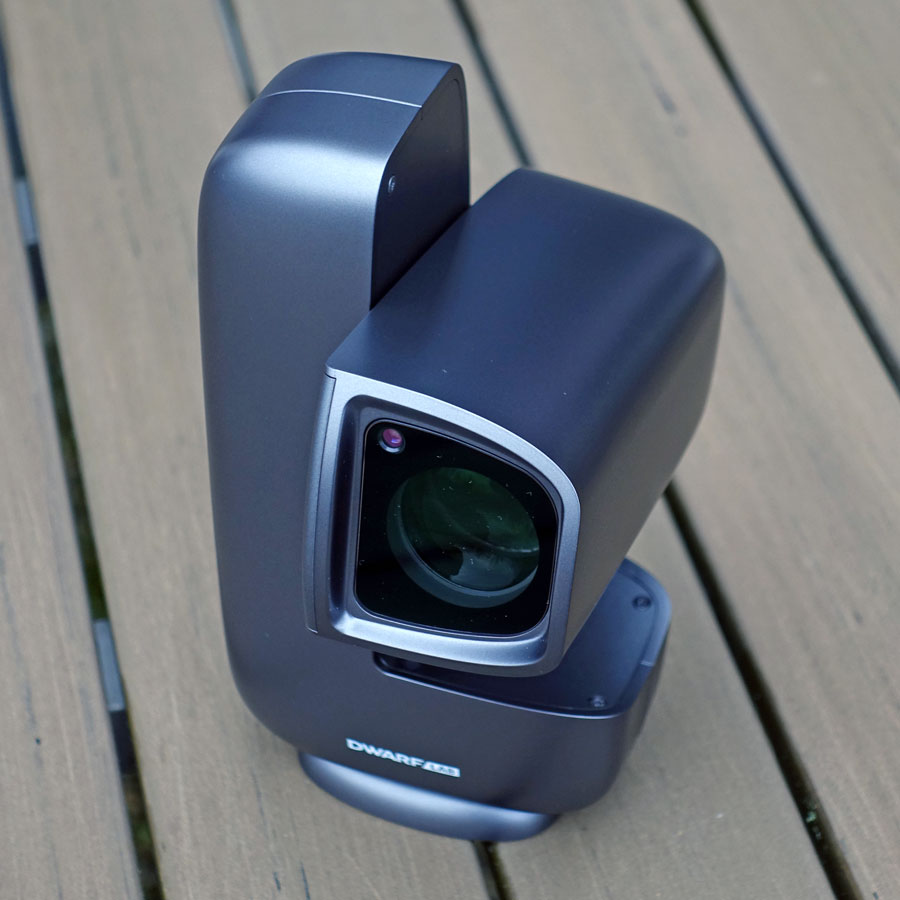 |
 |
Photo: My Dwarf mini (Jan 2026)
...
First Usage Notes
 |
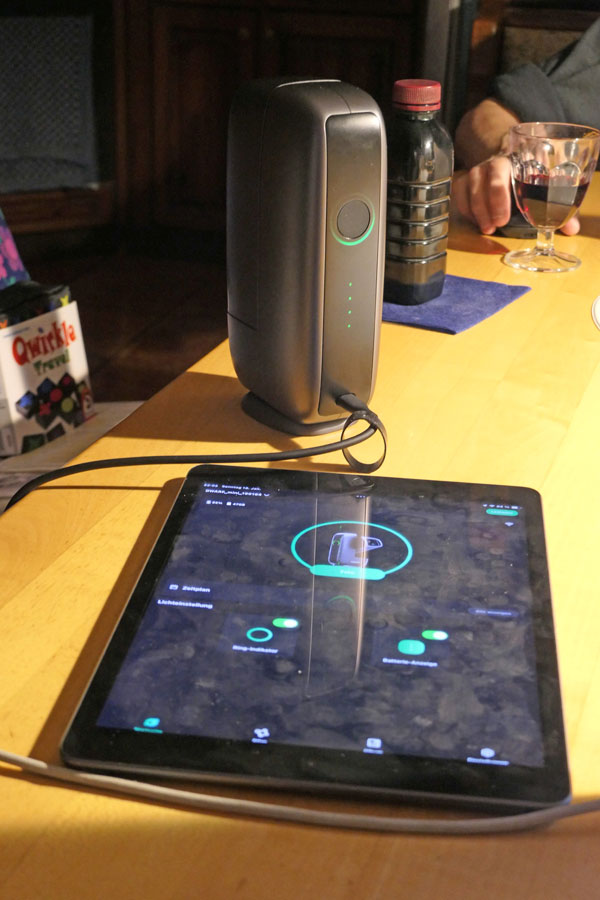 |
Photo: Dwarf mini during charging
Controlling the Dwarf mini via the DwarfLab app is very different from what I was used to with my Vaonis Vesperas. I do not find it nearly as intuitive as the app for the Vesperas, but I eventually got the hang of it. However, after long breaks, I always have to get used to it again...
The DwarfLab app has many more or less hidden settings that are not available on the Vesperas. That makes the app significantly more complex for me than the Vaonis app. Another thing that bothers me about the app is that the observation page is only accessible via the home screen. So if you switch to another page during an observation for example, to the album - you cannot jump directly back to the observation page (and thus resume the current observation); instead, you have to return to the home screen first. I pointed this out to DwarfLab, but did not receive a response…
Note: I decided not to make any further comments on the app’s use/usability because this would be a "bottomless pit" ;) In addition, changes to the app can quickly render such comments obsolete (I experienced this with my eVscopes...).
First Visited Sky Objects
Here I list the deep sky objects that I observed and photographed initially with the Dwarf mini. For details see First Observations below.
- Jan 15, 2026: M 33, M 42/43
- Jan 16, 2026: IC 1396, M 31/32/110
- Jan 18, 2026: NGC 7000/IC 5070, NGC 1499
- Jan 19, 2026: M 45, M 78, M 42/43
- Jan 21, 2026: NGC 1499 (EQ), B 33, NGC 2024, (EQ)
- Jan 22, 2026: Crescent of the moon
- Jan 23, 2026: Crescent of the moon
- Jan 24, 2026: Crescent of the moon, M 15, M 34, NGC 752, NGC 891
- Feb 5, 2026: Sun, M 31/32/110 (EQ), M 45 (EQ)
- Feb 7, 2026: M 42/43 (EQ), NGC 2237/2244 (EQ), NGC 2264/2261 (EQ)
- Feb 9, 2026: IC 410/405 (EQ), NGC 2237/2244 (EQ), NGC 2264 (EQ)
For a complete list of all visited sky objects see page My Deep Sky Observations with the Dwarf mini (Complete List of Observed DSO).
First Observations
In the following I describe my very first experiences with the Dwarf mini from the first 11 observation sessions (Mühlhausen/Kraichgau).
Jan 15, 2026
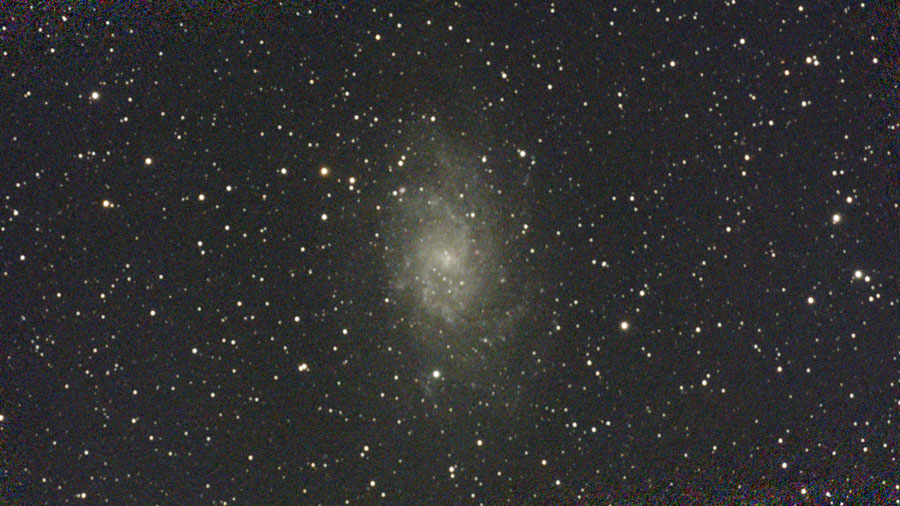
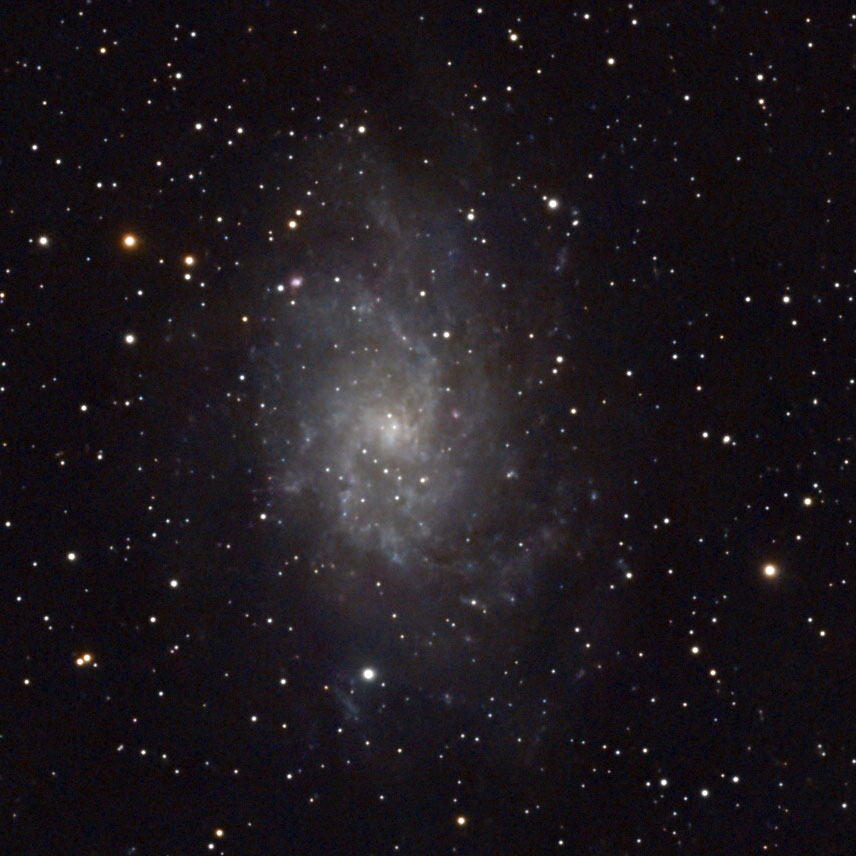
- M 33 (15 s, G 60, Astro filter) started shortly before 7 p.m.; aborted after 180 stacked subs (45 min) at about 7:50 p.m. because of fog; SQM mot measured, because of fog, and I was too late...
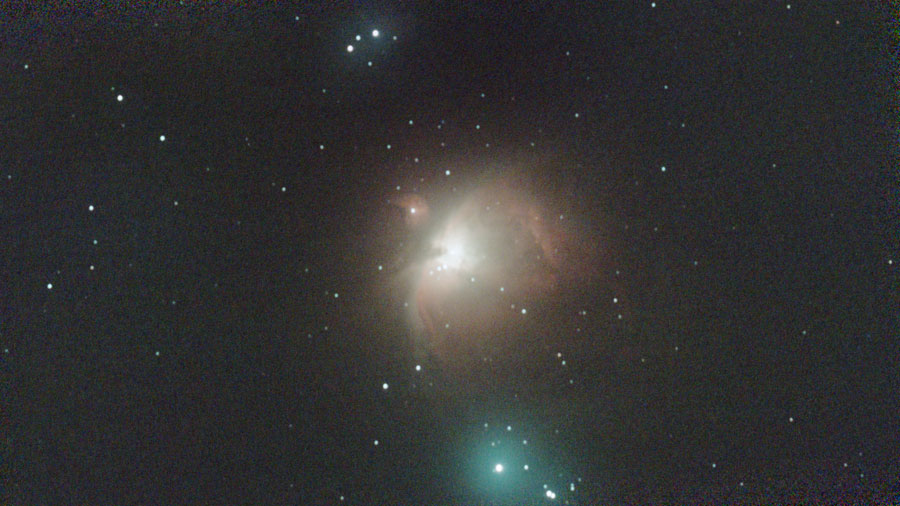
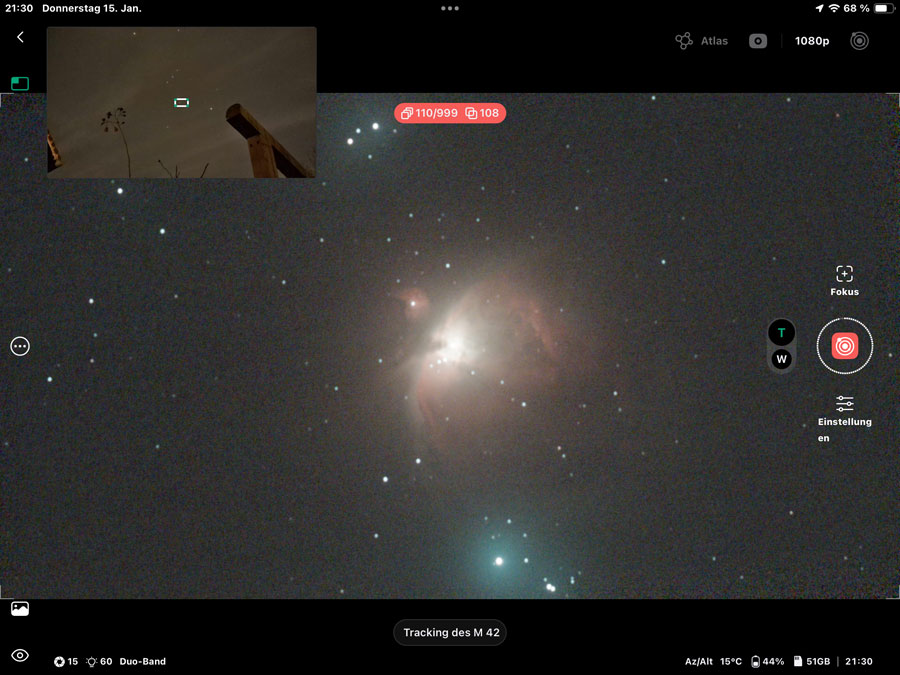
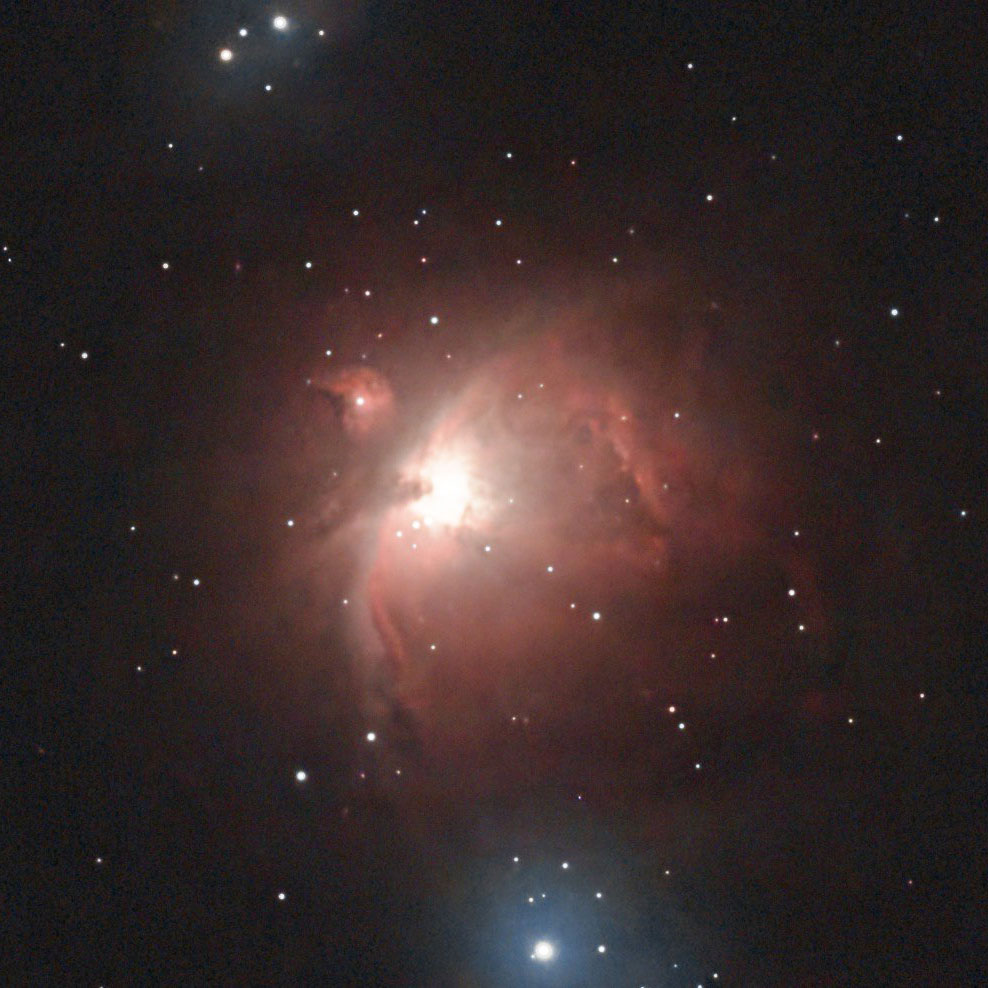
- Re-start shortly before 9 p.m.with M 42/43 (15 s, G 60, DuoBand filter); stopped after 150 stacked subs (37.5 min) at 9:44 p.m.; fog, resulting photo rather washed out, but there were clouds in that area...
 |
 |
|||
M 42/43, unprocessed, original |
M 33, unprocessed, original |
|||
 |
 |
 |
||
Screenshot of the App while observing M 42/43 |
M 42/43, DB filter, processed with Stellar Studio and further processed, section |
M 33, processed with Stellar Studio and further processed, section |
Jan 16, 2026
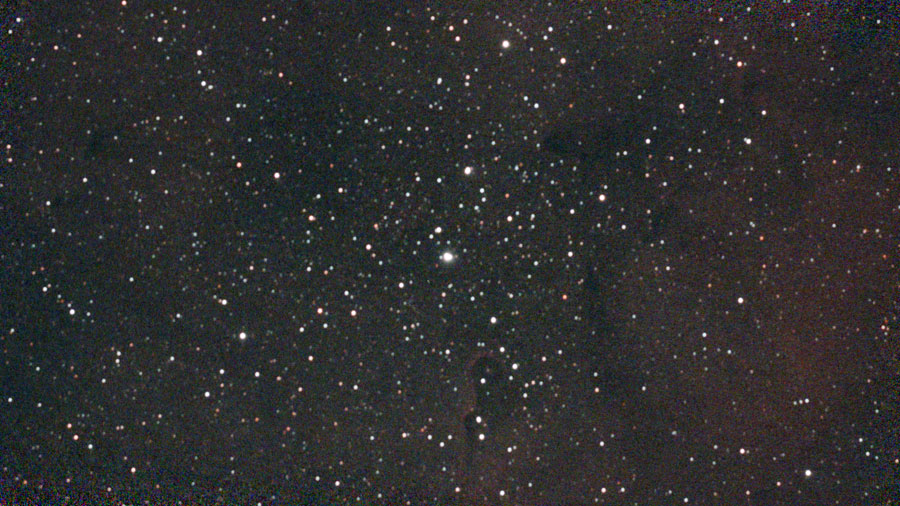
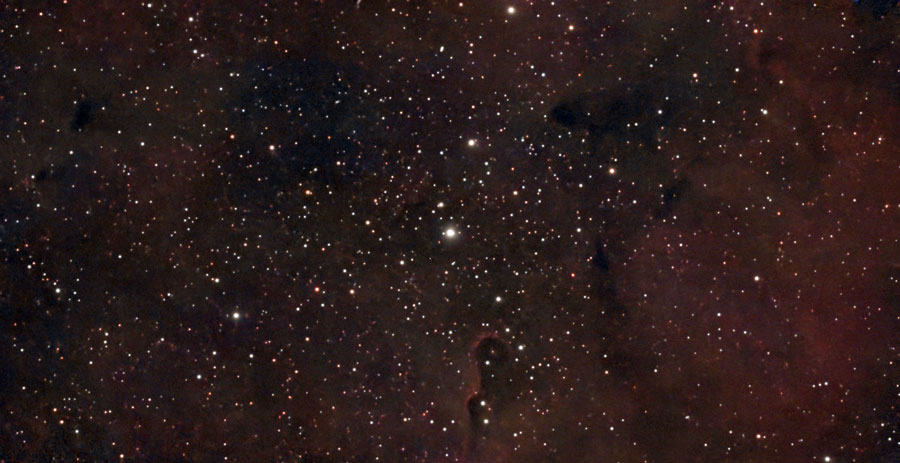
- IC 1396 (15 s, G 60, DuoBand filter) started at 6:28/19.45 p.m./SQM; stopped after 241 stacked subs (60 min) at 7:44 p.m..
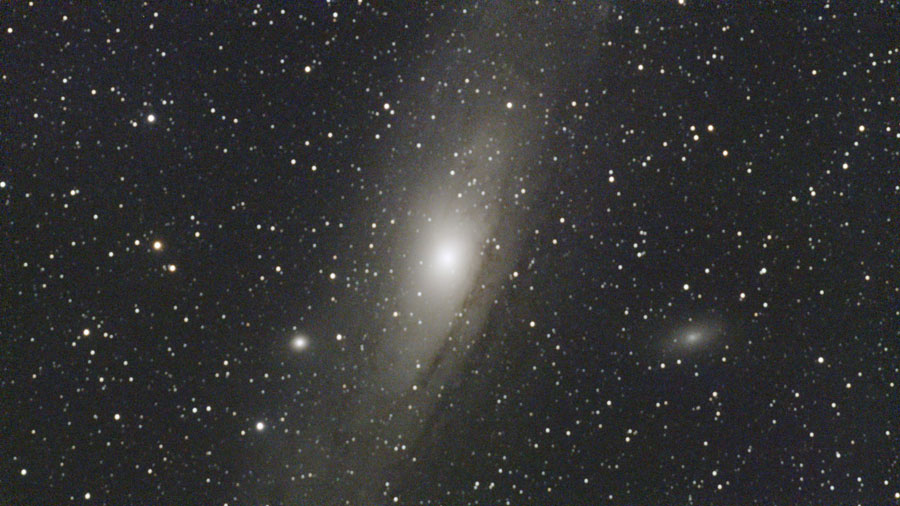
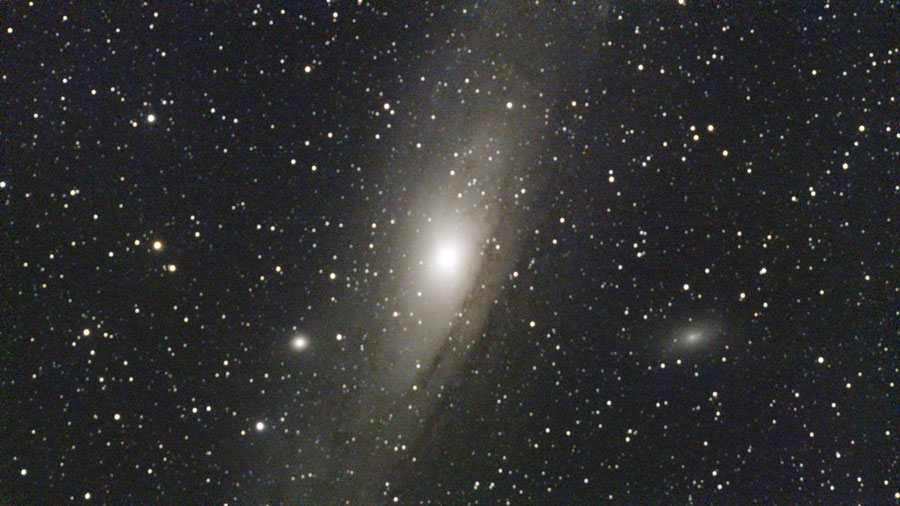
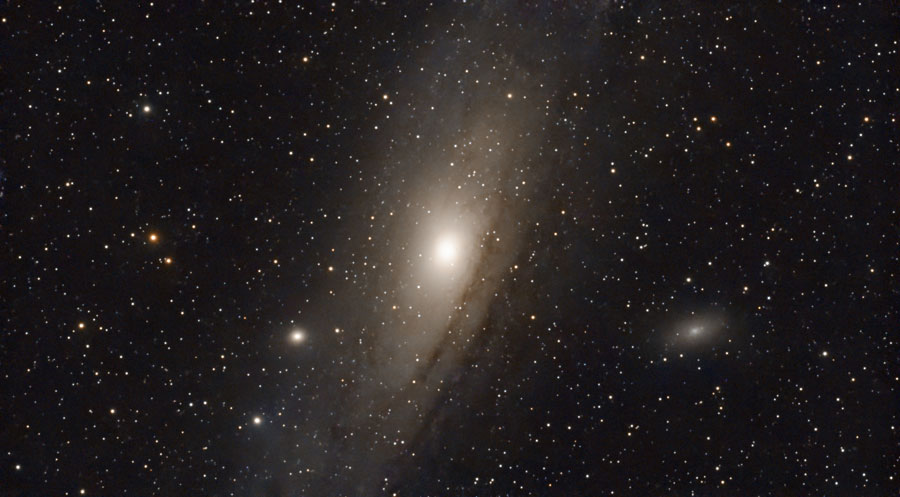
- M 31/32 (15 s, G 60, Astro filter) started at 7:55/19.86 p.m./SQM; aborted after 203 stacked subs (51 min) at 8:57 p.m. due to clouds; Battery went down to 18% , later even to 16%; connected a powerbank for testing purposes...
 |
 |
 |
||
IC 1396, unprocessed, original |
M 31/32/110, unprocessed, original |
M 31/32/110, processed, original |
||
 |
 |
|||
IC 1396 processed with Stellar Studio and further processed, original |
M 31/32/110, processed with Stellar Studio, original |
|
Jan 18, 2026 (New Moon)
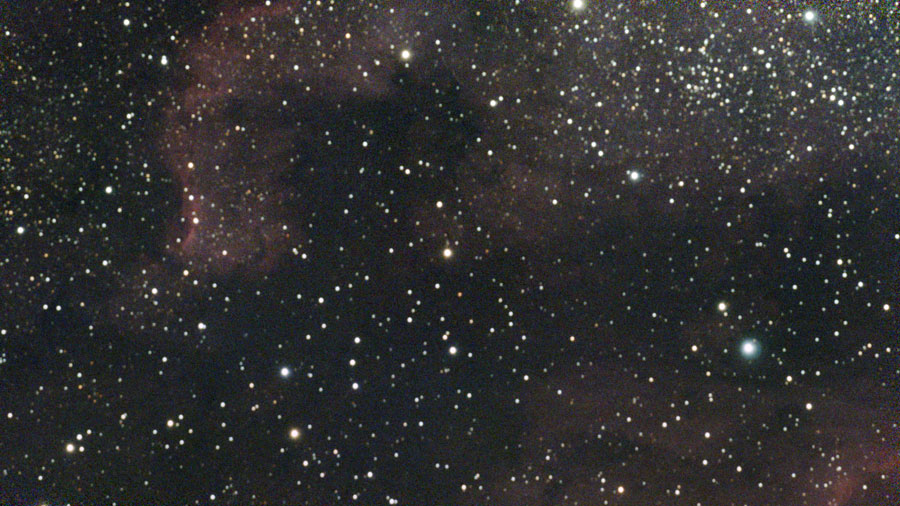
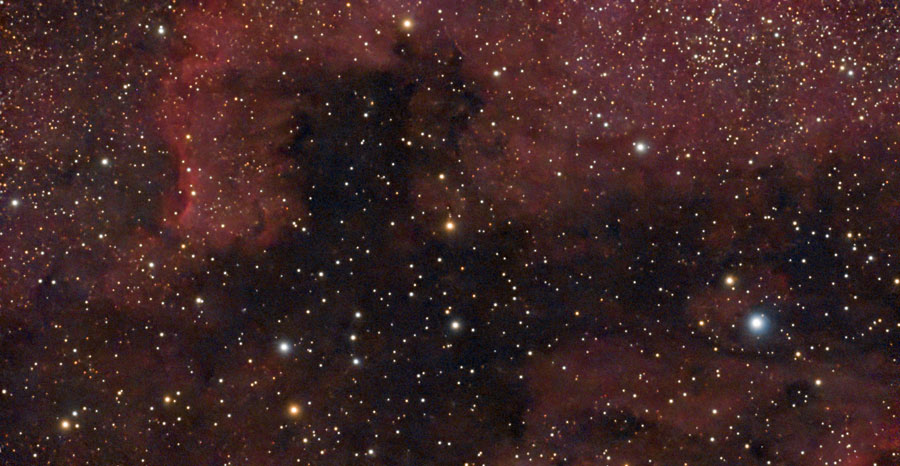
- NGC 7000/IC 5070 (15s, G 60, Astrof ilter) started at 18:07/18,45 (instead of NGC 7000 the star HD 199457 was lited - I had moved the section a little bit...; 6:45/19,7 p.m./SQM, foggy; the result was rather poor after 120 subs; stopped after 241 stacked subs (60 min) at 7:24/19.81 p.m./SQM; foggy...
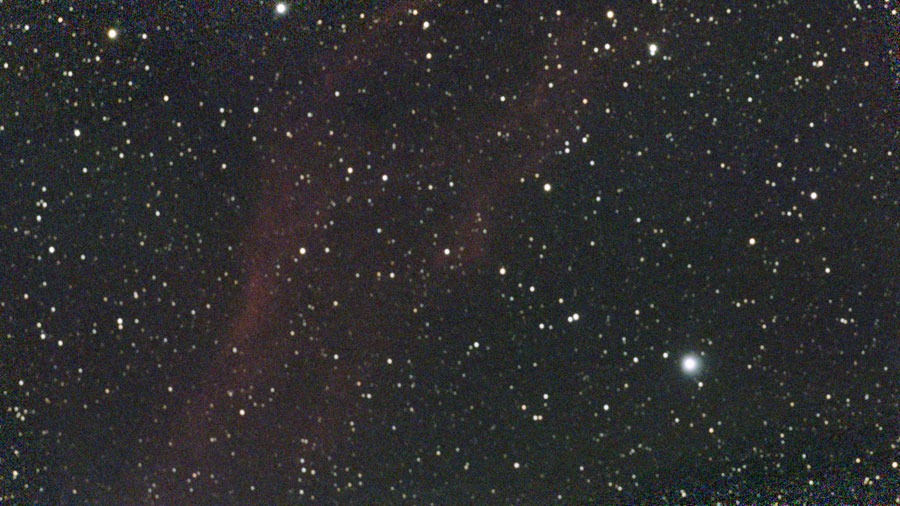
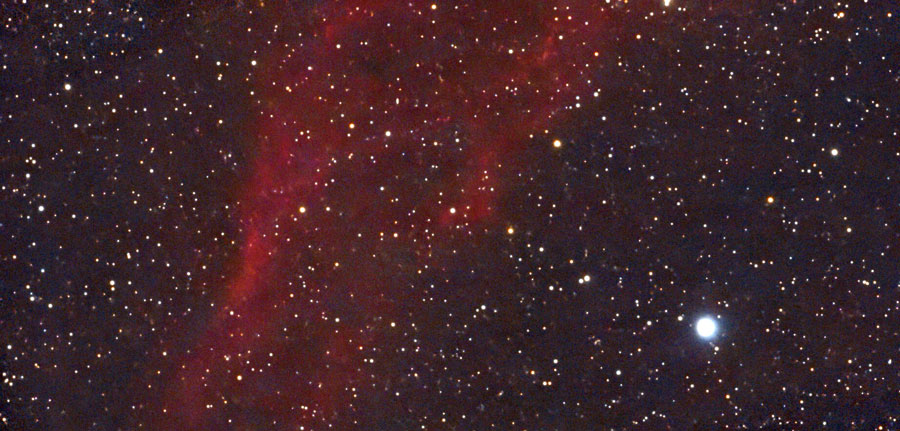
- NGC 1499: First attempt failed at 7:33 p.m.; new attempt, observation started at 7:50/19.69 p.m./SQM; aborted at around 9 p.m., because nothing happened due to clouds (we had supper at that time...); 230 subs, but only 129 were stacked (32 min), stacking was done only until 8:28 p.m.; the battery went down to 17%.
 |
 |
|
NGC 1499, unprocessed, original |
NGC 7000/IC 5070, unprocessed, original |
|
 |
 |
|
NGC 1499, processed with Stellar Studio and further processed, original |
NGC 7000/IC 5070, processed with Stellar Studio and further processed, original |
Jan 19, 2026 (1 Day after New Moon)
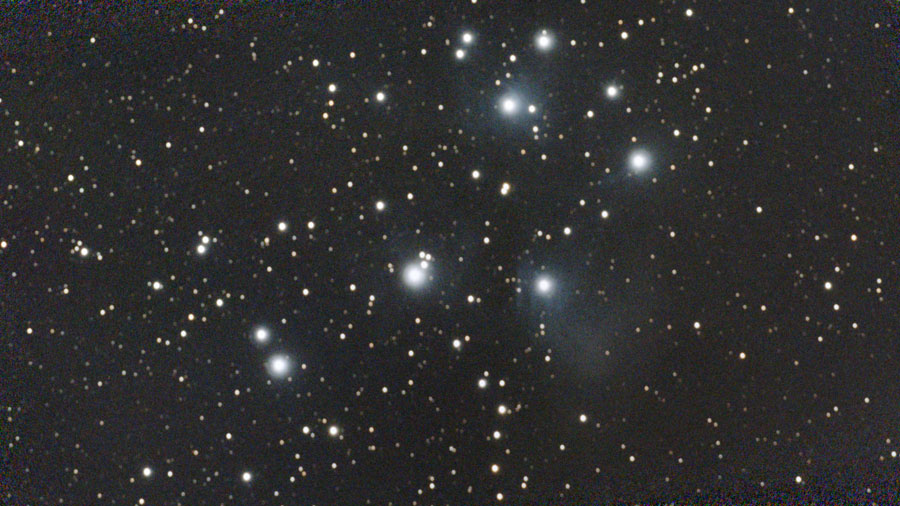
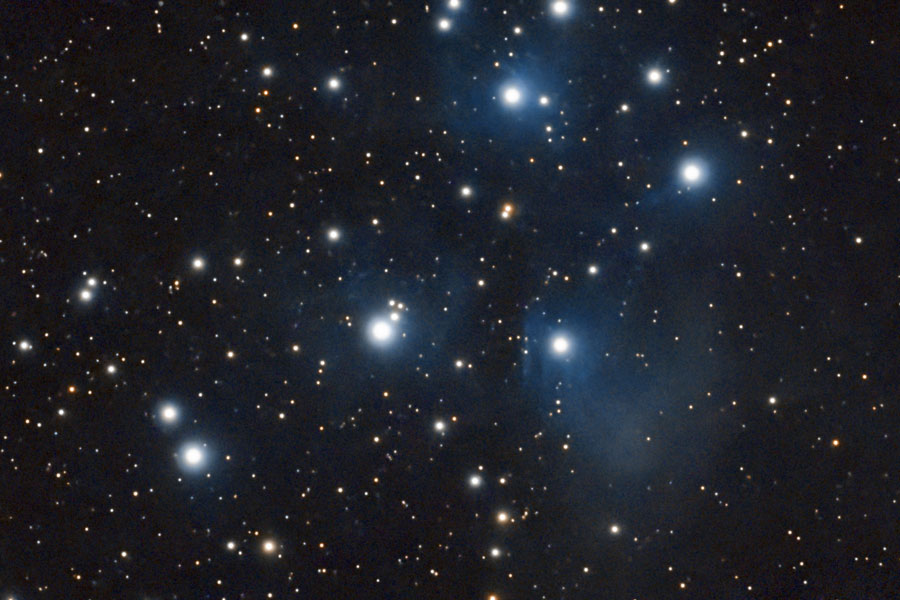
- M 45 (15 s, G 60, Astro filter): observed from 7:04 to 7:58 p.m.; observed from 181 subs (45 min)
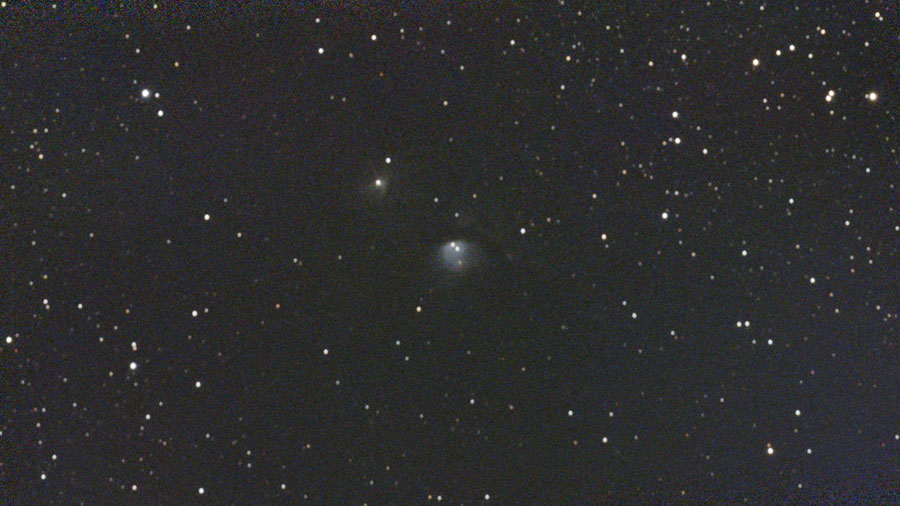
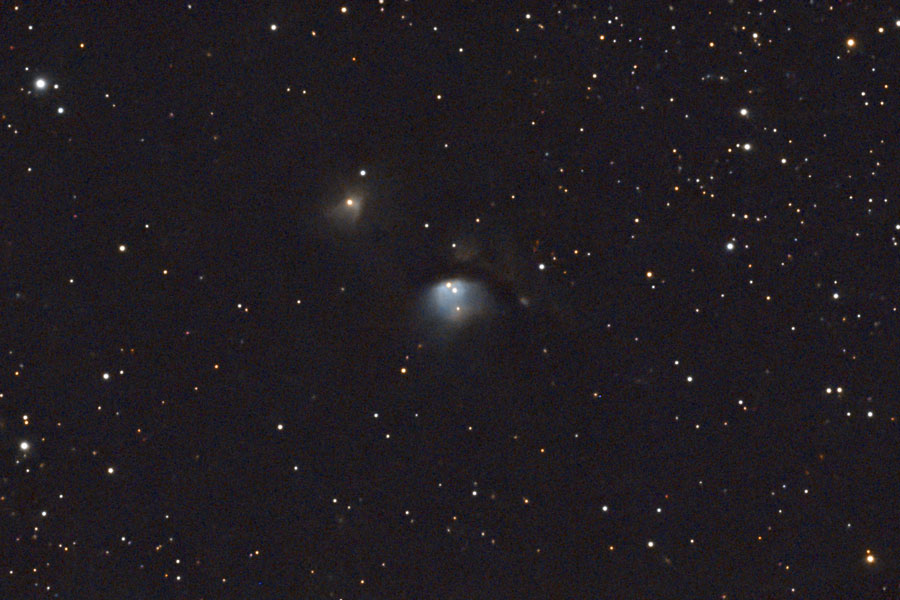
- M 78 (15 s, G 60, Astro filter): observed from 8:09 bis 9:03 p.m. beobachtet; observed from 181 subs (45 min)
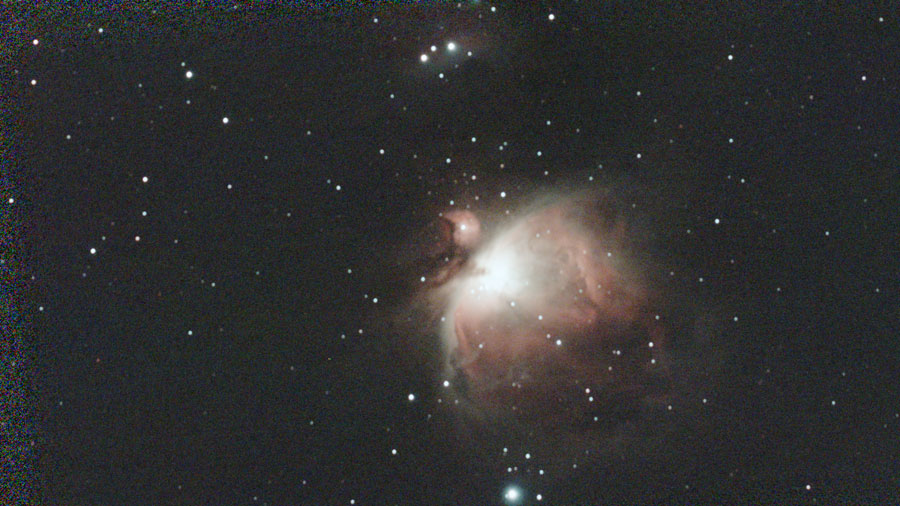
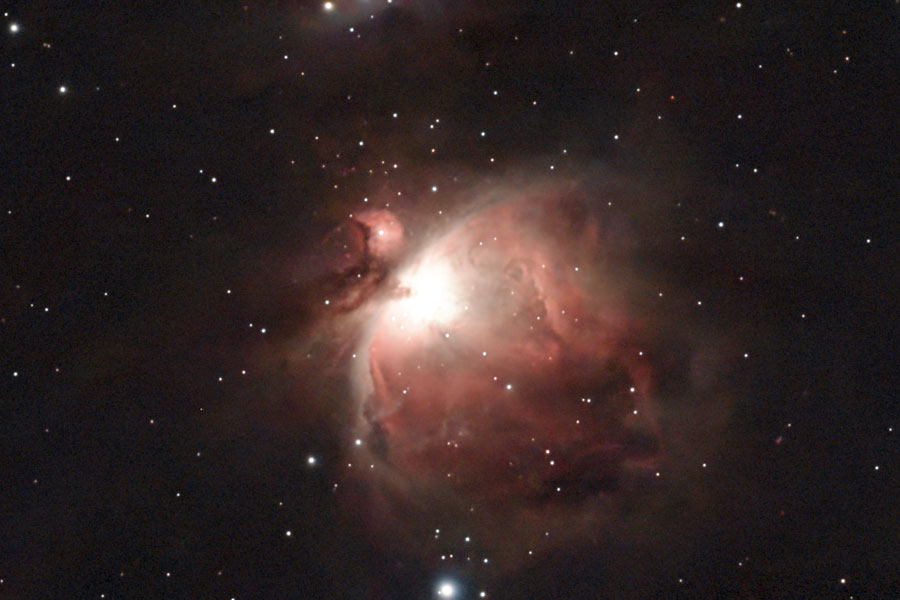
- M 42/43 (15 s, G60, DuoBand filter) : observed from 9:24 to 10:04 p.m.; observed from 138 subs (34.5 min); SQM not measured (forgot it...); everything in clouds at the end...
 |
 |
 |
||
M 45, unprocessed, original |
M 78, unprocessed, original |
M 42/43, DB filter, unprocessed, original |
||
 |
 |
 |
||
M 45, processed with Stellar Studio and further processed, section, original |
M 78, processed with Stellar Studio and further processed, section, original |
M 42/43, DB filter, processed with Stellar Studio and further processed, section, original |
Jan 21, 2026
- Start at about 8:00 p.m., everthing rather chaotic... SQM was 19.78 at aroung 9 p.m., the sky was fairly clair this night
- I trained the EQ and mosaic modes on NGC 1499 and NGC 2024/B 33; the EQ did not succeed, but the observations were OK, why ever...
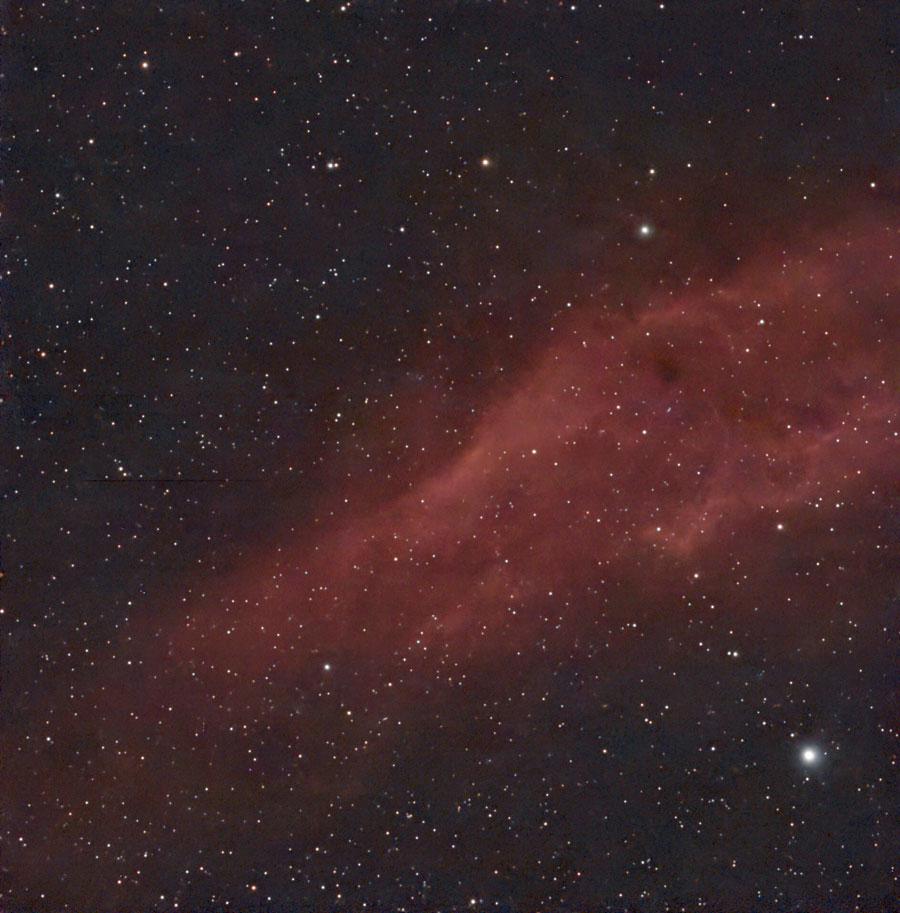
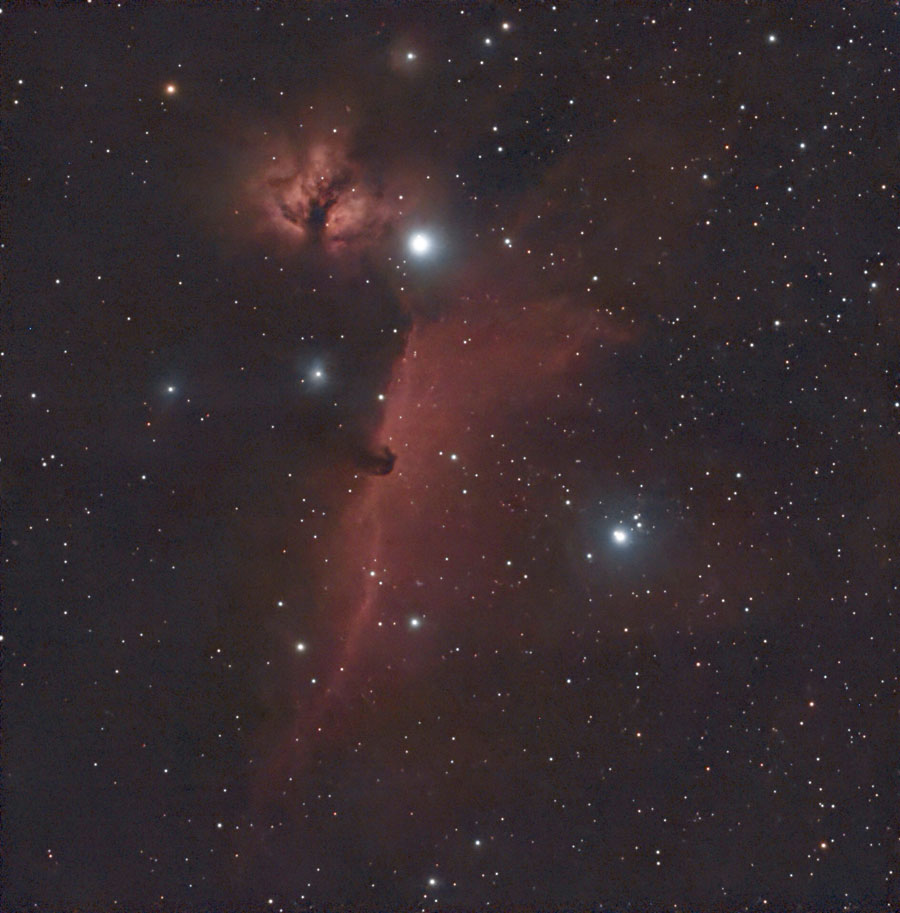
- NGC 1499 (30 s, G 60, DuoBand filter): Mosaic with 2 panels, observed from 8:29 to 21:37 p.m.; 50+50=100 subs (50 min)
- NGC 2024/B 33 (30 s, G60, DuoBand filter): Mosaic with 2 panels, observed from 10:00 to 11:07 p.m.; 50+50=100 subs (50 min); SQM was 19.89 at 22:24 p.m.
 |
 |
|
NGC 1499, processed with Stellar Studio and further processed, original |
NGC 2024/B 33, processed with Stellar Studio and further processed, original |
Since mosaics are only optimally assembled with Stellar Studio, I do not show any unedited images.
Notes:
- I first practiced EQ and mosaic modes on NGC 1499 (later on NGC 2024 and B 33). Therefore, no proper documentation... I seem to have placed the Dwarf mini in the opposite direction on the tripod (compared to the DwarfLab video, which I could not quite understand at first). But that does not matter, as I later learned from DwarfLab...
- First, I aligned the head at 41° (90°-49°)* and then aligned the Dwarf mini to the north using the compass app on my iPhone. The app tested the alignment and reported that it needs to be corrected. I tried to do that, but it did not work; I tried that several times, but it never worked...
*) According to the angle scale, that was correct... - I then started observing NGC 1499 anyway, selecting a 1:1.8 mosaic consisting of two panels. The observation then started and switched back and forth between the two panels. However, the switching took forever (several minutes)...
- In between, I occasionally encountered massive connection problems... At some point in time, it continued again.
- I still have problems with adjusting certain things (EQ mode, mosaic mode, etc.).
- The mosaic could not be improved with Stellar Studio (problems in China). It only worked the next day...
Jan 22, 2026
- Photographed the crescent moon at about 5 p.m.. Took photos with 20, 38 and 50 subs, which were stacked. Post-processed some stacks in Stellar Studio.
Photos see page Observations of the Moon.
Jan 23, 2026
- Photographed the crescent moon at about 8 p.m.. Took photos with 2x20, 1x50 subs, which were stacked. All stacks were post-processed in Stellar Studio.
Photos see page Observations of the Moon.
Jan 24, 2026
- Photographed the crescent moon at about 6:15 p.m.. Took photos with 1x20, 1x50 subs, which were stacked. All stacks were post-processed in Stellar Studio.
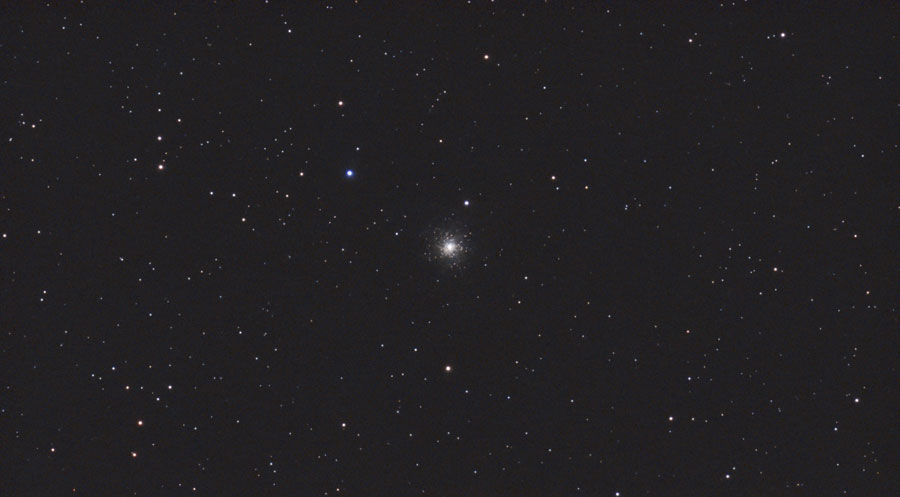
- M 15 (15 s, G 60, Astrofilter), attempted from 6:33 p.m., low on the horizon (19°, nearly in a tree), sky rather bright; (6:45/18.6); aborted at 7:07 p.m., M 15 was in a tree for a long time... 109 stacked subs (27 min)
- NGC 1555 attempted at 7:16:p.m., but was still behind a house...
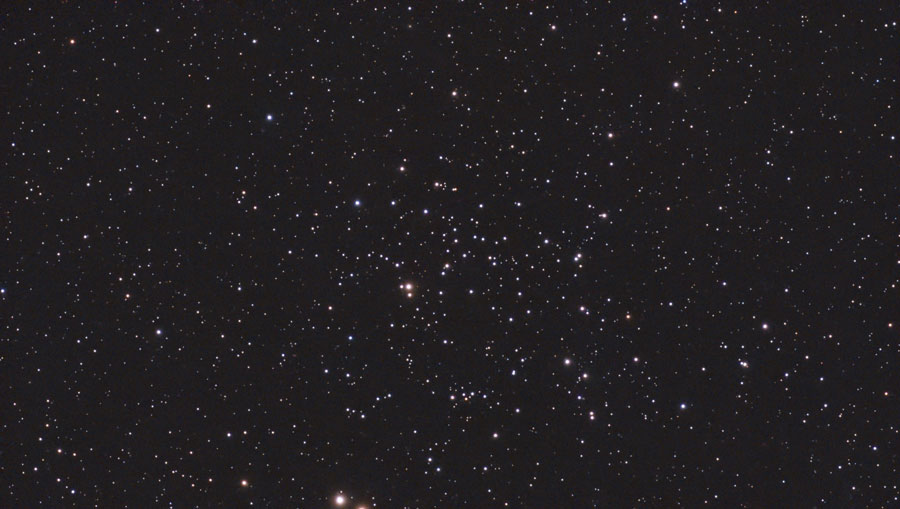
- M 34 (15 s, G 60, Astro filter): 7:33/19.16 p.m./SQM, moon alread quite bright; aborted after 140 subs (35 min) at 8:07 p.m.; turned Dwarf mini off, because the battery was low...
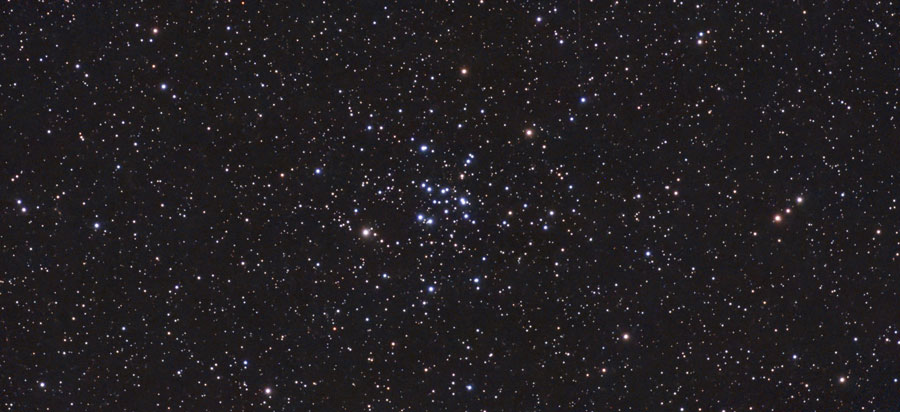
- NGC 752 (C 28) (15 s, G 60, Astro filter): Start at 8:17/19.07 p.m./SQM; aborted after nach 90 subs (22.5 min) at 8:43 p.m.
- 9:15 p.m.: Powerbank connected
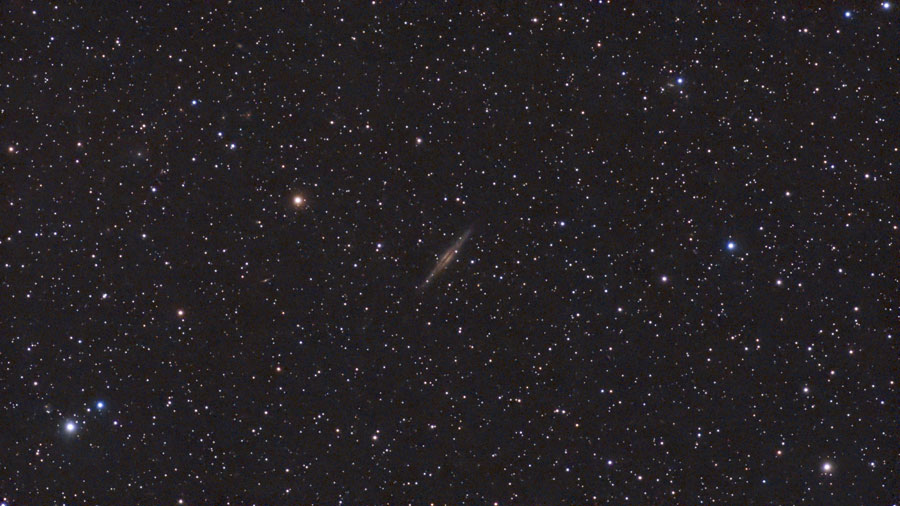
NGC 891 (15 s, G 60, Astro filter): Start at 9:19/19.22 p.m./SQM; galaxy (small) hard to recognize in the beginning; stopped after 182 subs (45.5 min) at 10:15 p.m.
Photos of the moon see page Observations of the Moon. I restacked M 15 to eliminate disturbed photos. Here, I only show the restacked photo. This time, I only present the photos in their post-processed versions.
 |
 |
|
M 15, 27 min, processed with Stellar Studio, re-stacked original |
M 34, 35 min, processed with Stellar Studio, original |
|
 |
 |
|
NGC 752 (C 28), 22.5 min, processed with Stellar Studio, original |
NGC 891, 45,5 min, processed with Stellar Studio and further processed, original |
Feb 5, 2026
Photographed the sun in the afternoon (at about 3 p.m.) 4Took 4x photos with 20 subs each, which were stacked; post-processing with Stellar Studio brought no improvement...
Photos see page Observations of the Sun.
Started the Dwarf mini in EQ mode around 7:45 p.m.. At the beginning, I did not understand the instructions for the corrections: when the advised "higher", it meant "lower" (reducing the angle). During the first correction I made the angle larger and the error promptly grew from 9° to 14°. Then I tried the other way around and suddenly I was within 2° ;) So I was ready for the observations!
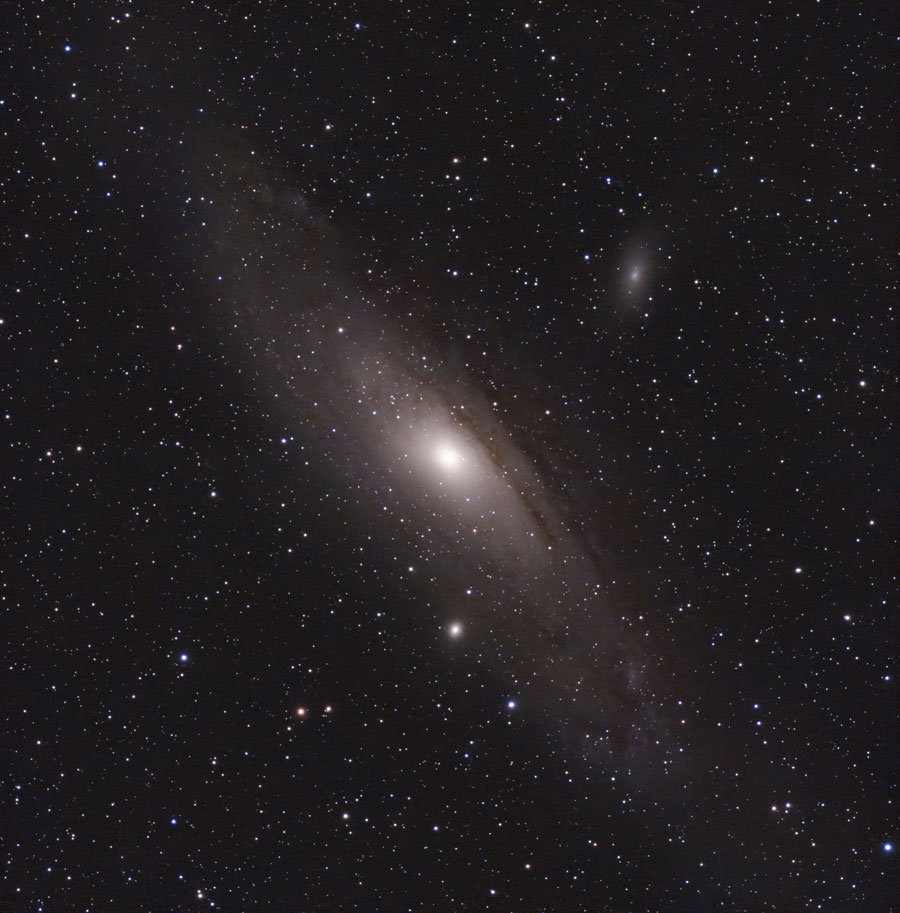
- Started observations with M 31 in EQ mode as a 1:1.8 mosaic at about 7:50/19.6 p.m./SQM (15/60/Astro; 50 subs per panel); stopped at about 8:35 p.m.
- New attempt at M 31 in EQ mode at 8:42/19.7 p.m./SQM with 30s (30?/60/Astro) as a 1:1.8 mosaic; aborted, because 30s did not work (15s because of automatic parameters)
- At about 9 p.m. attempt at M 45 in EQ mode as a 1:1.8 mosaic; this time, 30s worked (30/60/Astro; autom. param. off; 50 subs per panel); stopped at 10:15 p.m.
Thereafter, I stopped my observations because of clouds...
 |
|
|
M 31, 50 min, mosaic, processed with Stellar Studio, original |
M 34, 50 min, mosaic, processed with Stellar Studio, original |
Feb 7, 2026
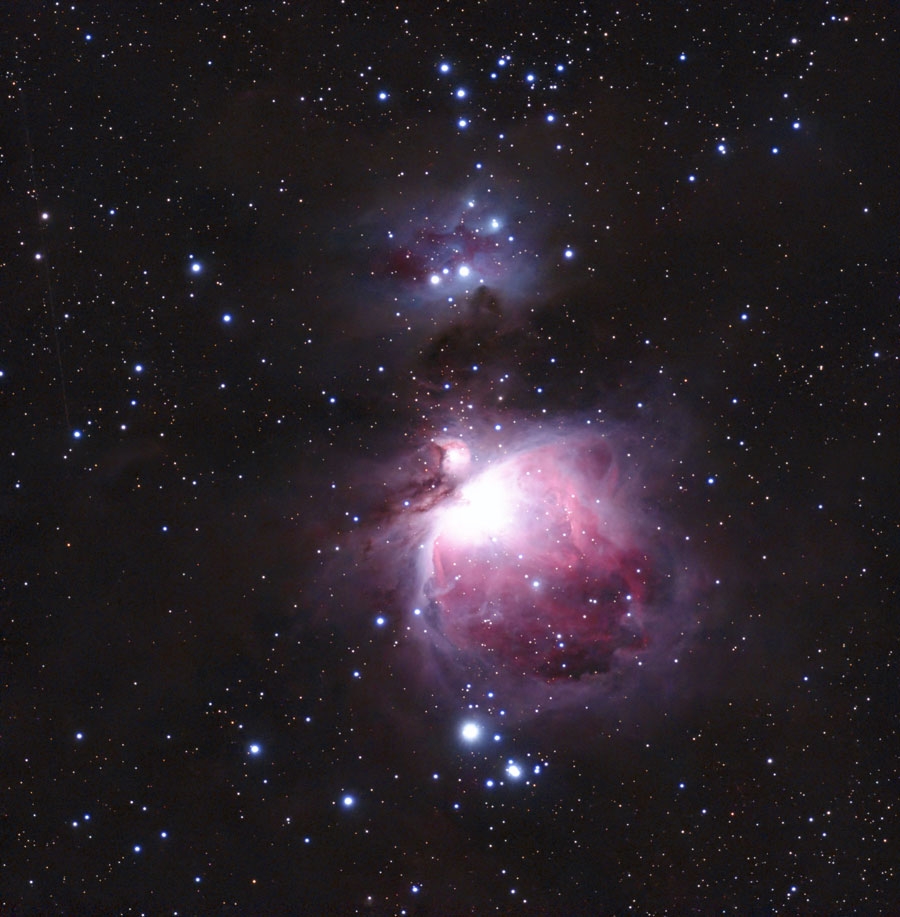
- Started in EQ mode a 2-panels 1:1.8 mosaic for M 42/43 at about 7:30 p.m. (Coal Car Cluster down to Jewels) (30/120/Astro; 50 subs per panel); SQM 19.8; stopped at 8:41 p.m.
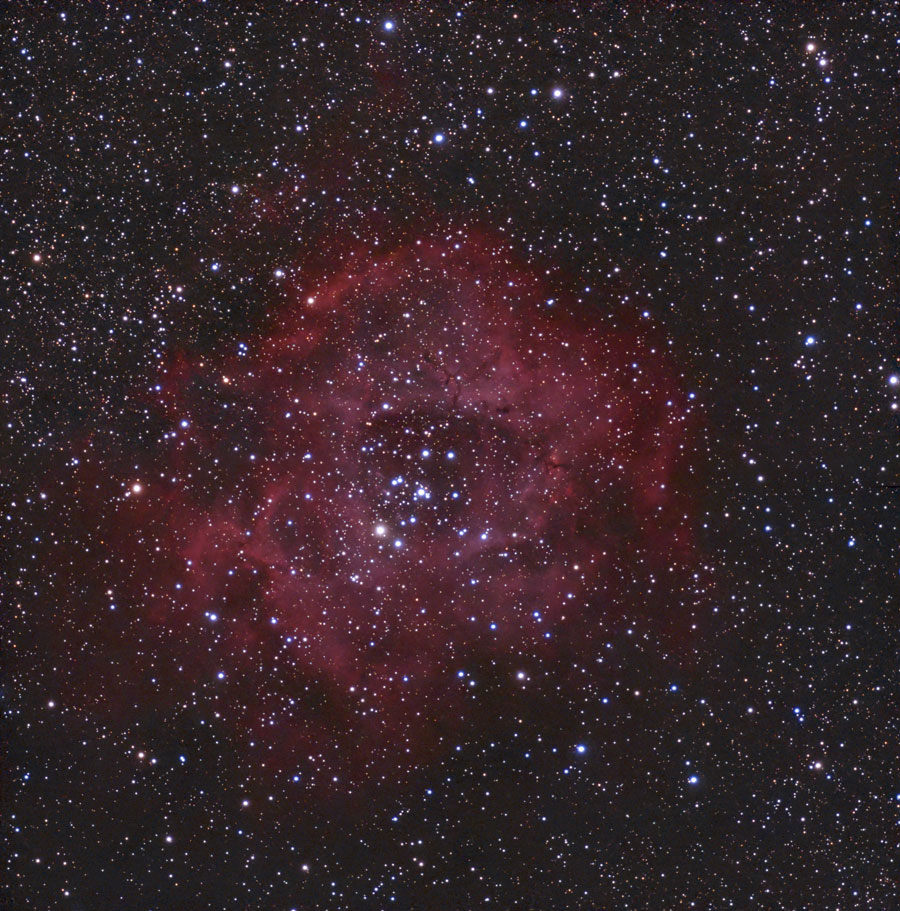
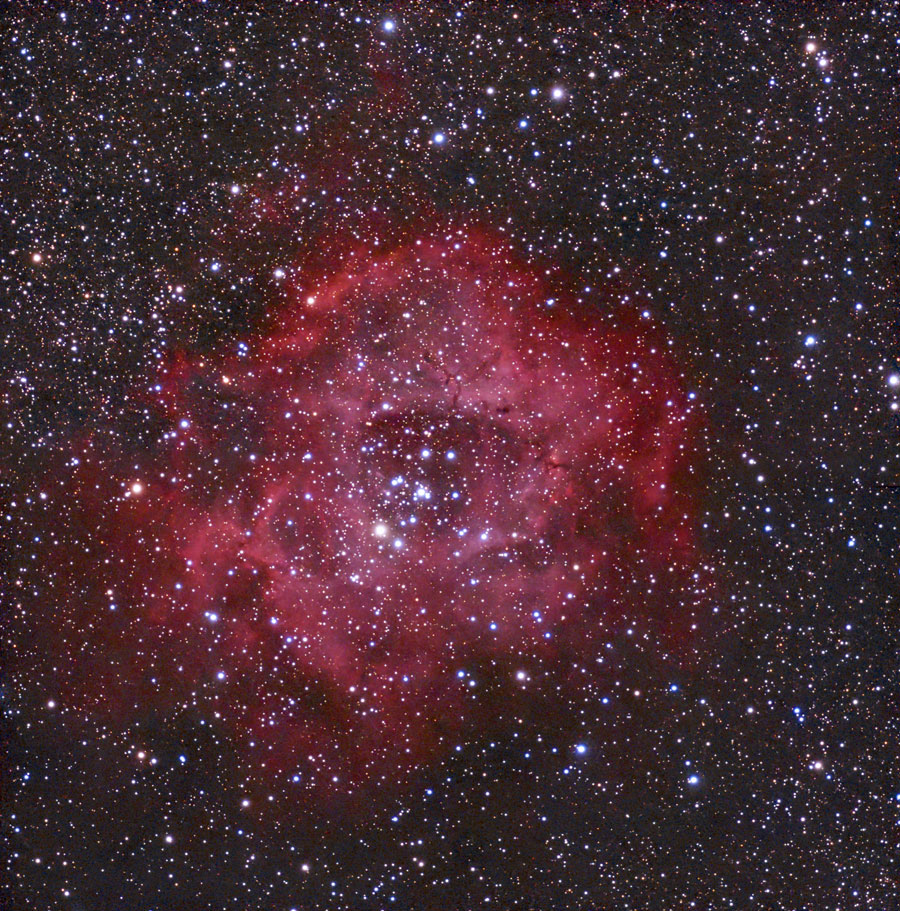
- Started in EQ mode a 2-panels 1:1.8 mosaic for NGC NGC 2237/2244 at about 8:50 p.m.(30/120/Astro; 50 subs per panel); 9:06/19.99 p.m./SQM; stopped at 10:02/19.99 p.m./SQM.
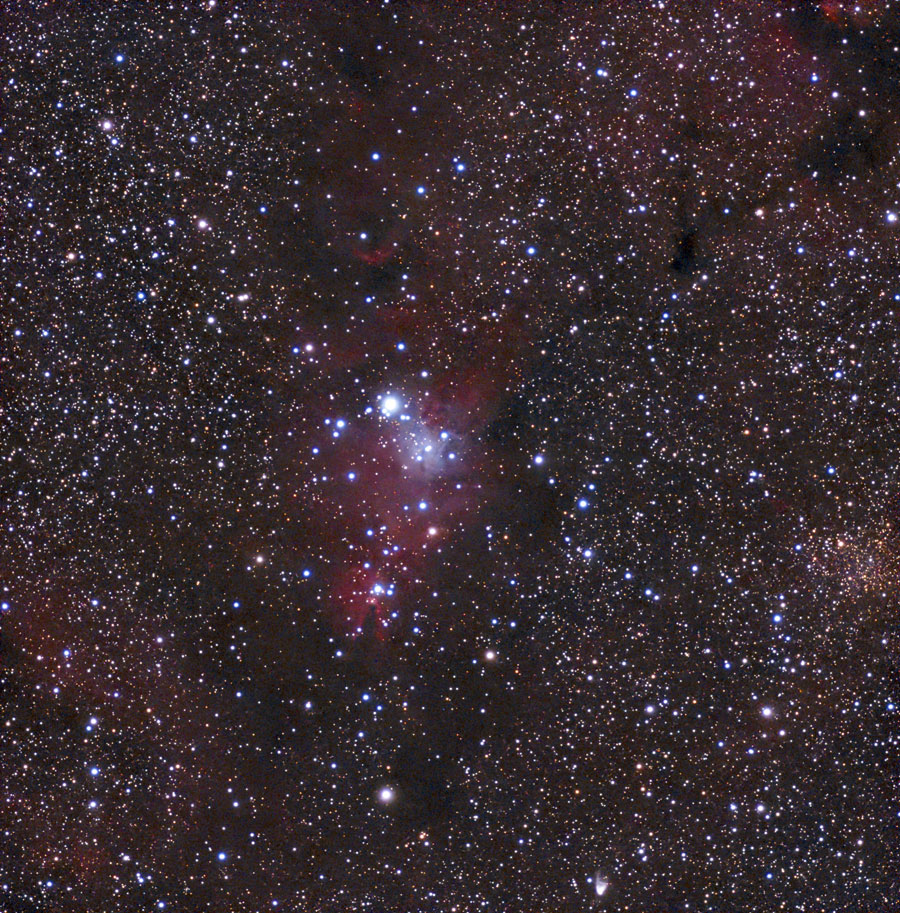
- Started in EQ mode a 2-panels 1:1.8 mosaic for NGC 2264 at 10:10/19.99 p.m./SQM (30/120/Astro; 50 subs per panel); stopped at 11:19 p.m.
Thereafter, I stopped my observations because of clouds...
 |
 |
|
M 42/43, 50 min, mosaic, processed with Stellar Studio, original |
NGC 2244, 50 min, processed with Stellar Studio, original |
|
 |
 |
|
NGC 2244, 50 min, processed with Stellar Studio and additionally strongly processed, original |
NGC 2264 with NGC 2261, 50 min, processed with Stellar Studio and additionally processed, original |
Feb 9, 2026
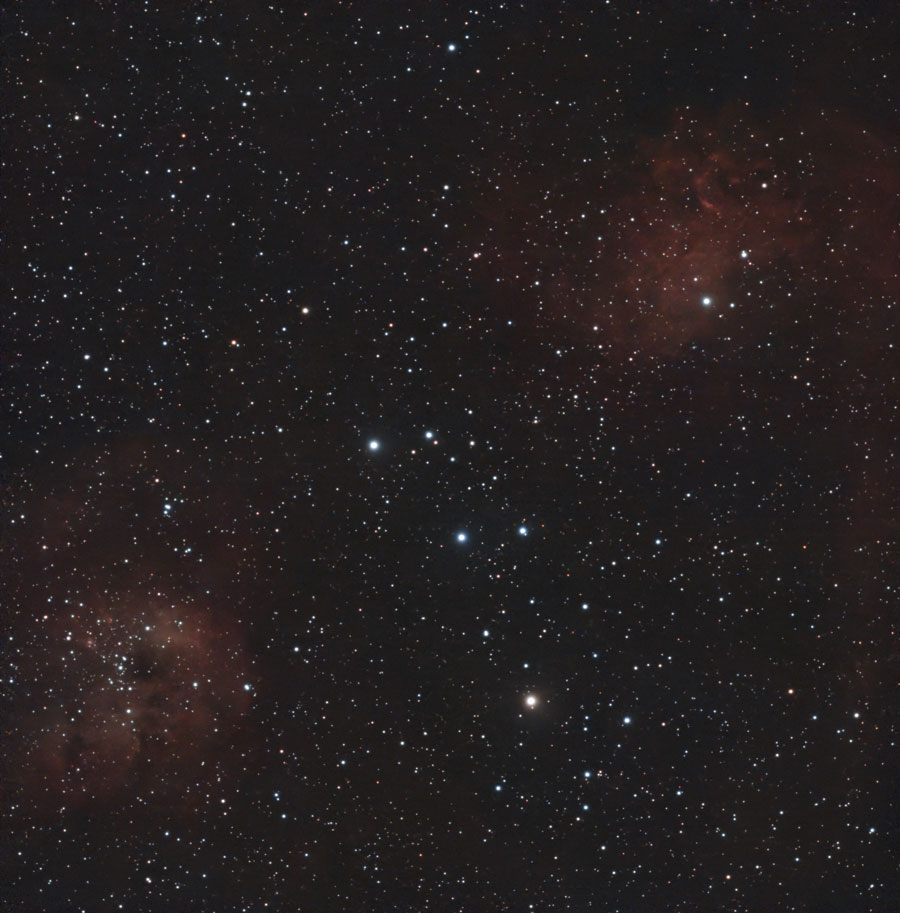
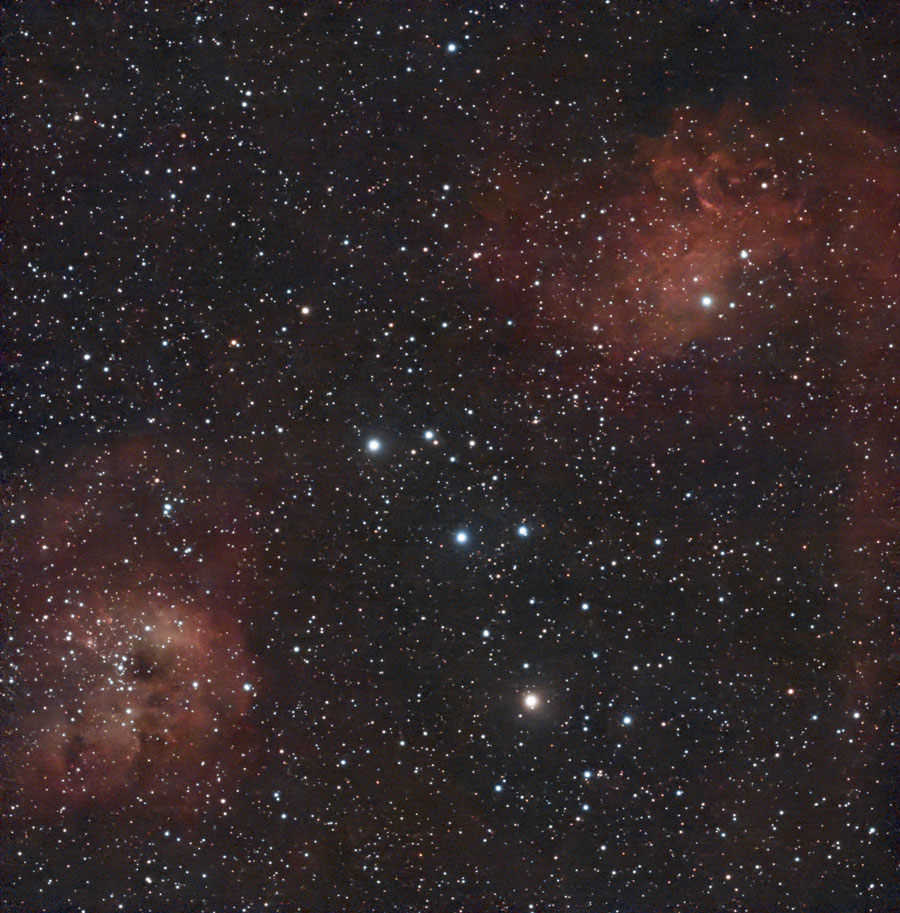
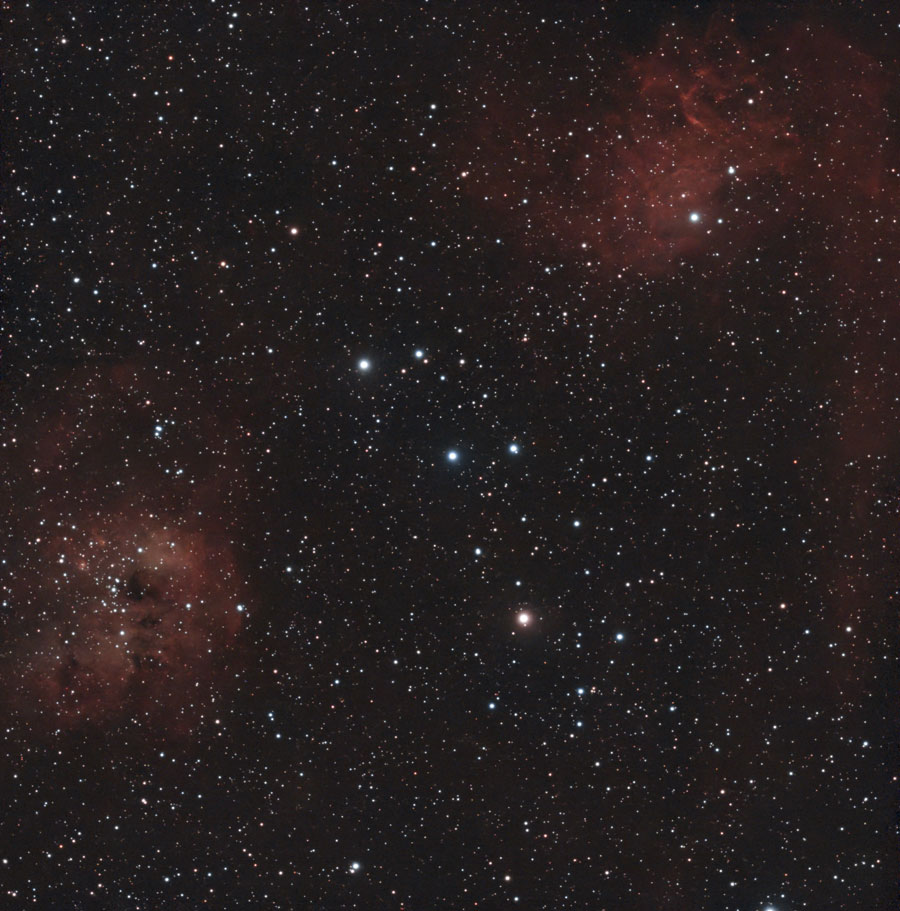
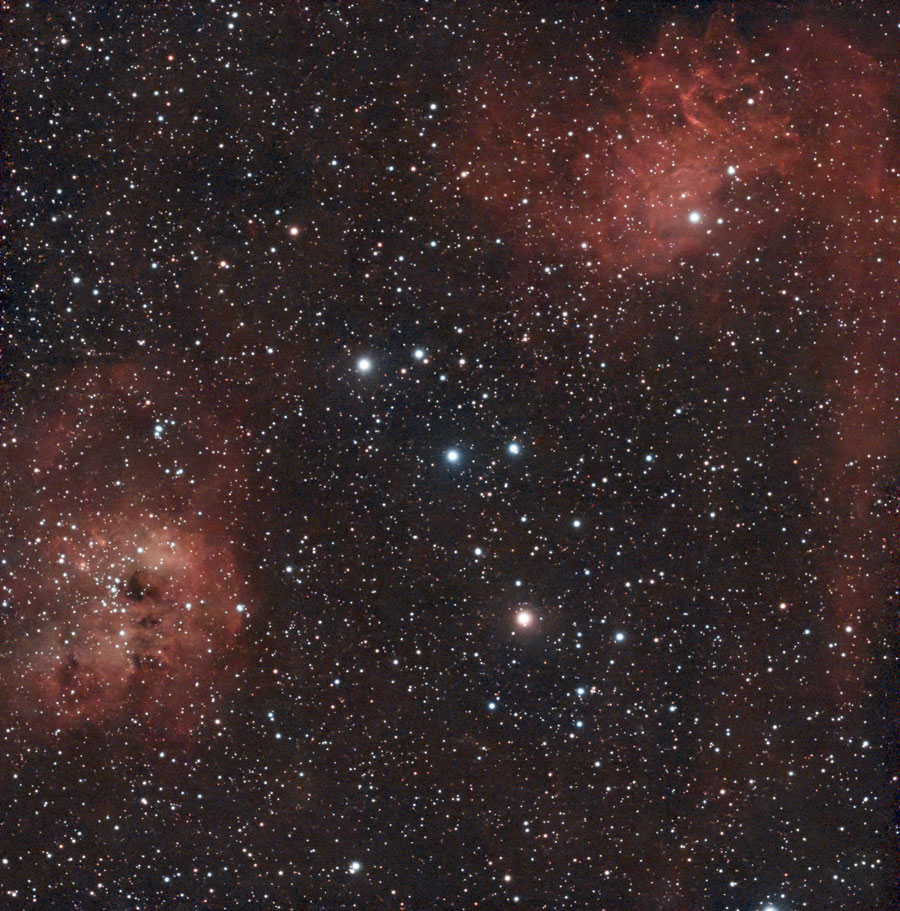
- Started in EQ mode a 2-panels 1:1.8 mosaic for IC 410 at 7:18/19.65 p.m./SQM (30/60/Duo; 50 subs per panel); stopped at 8:28 p.m.
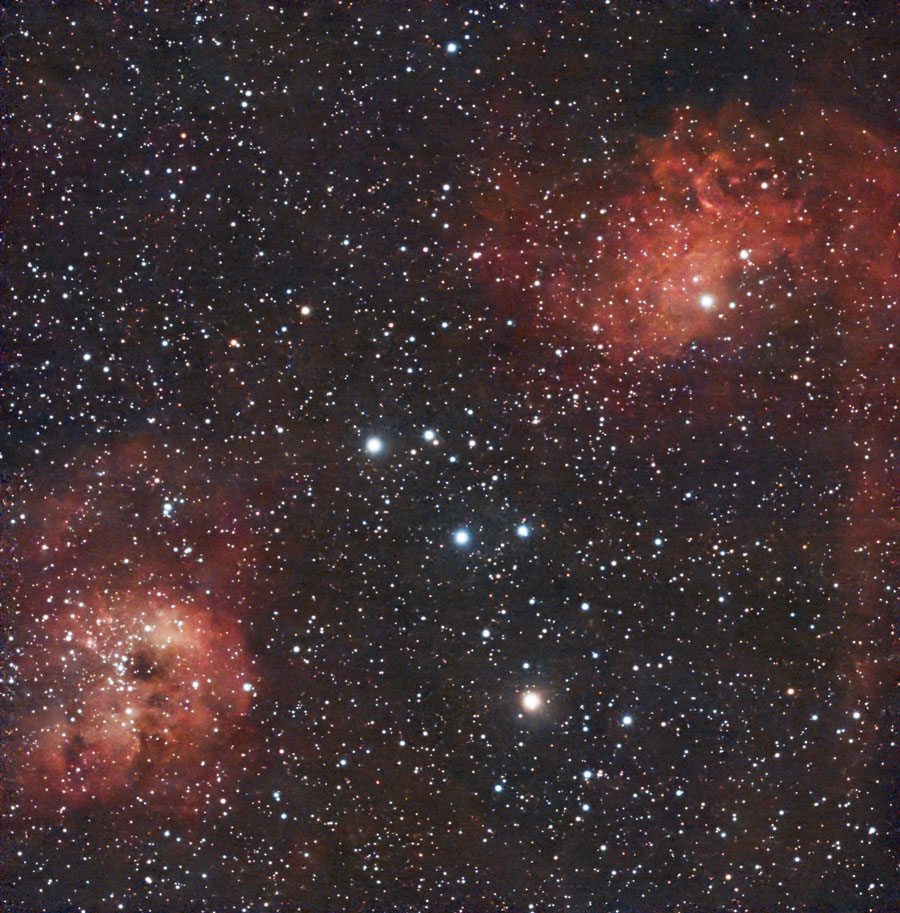
- Ditto with gain 120 at 8:35/19.67 p.m./SQM; stopped at about 9:44 p.m.
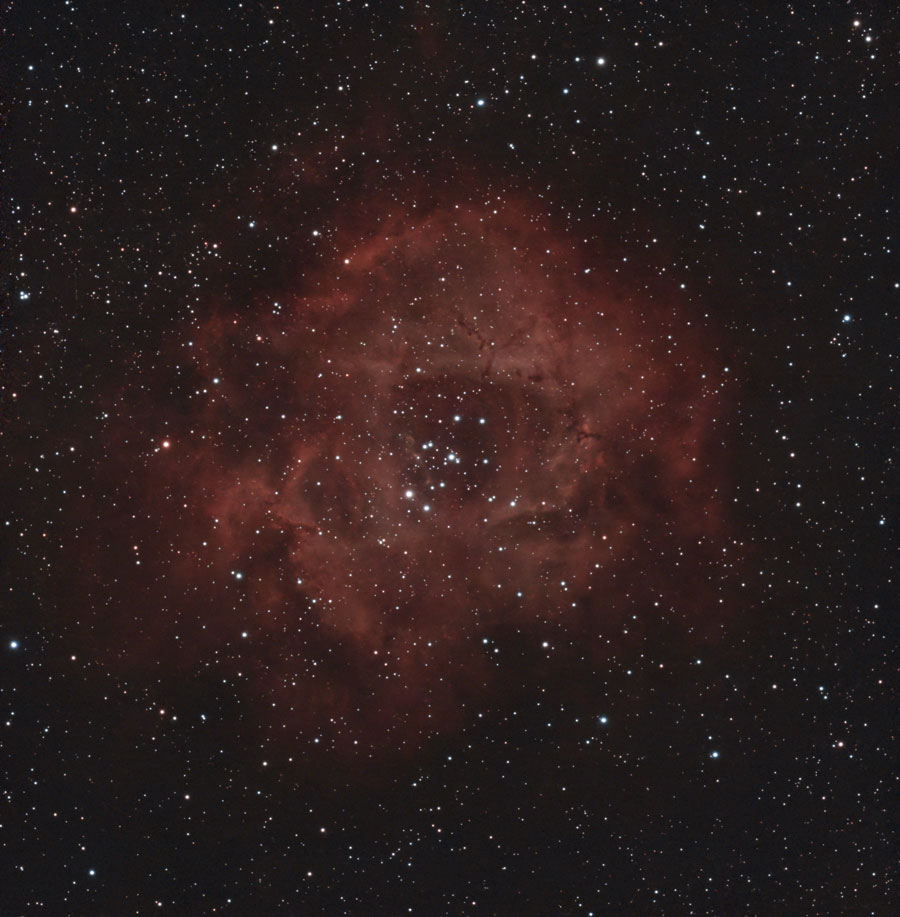
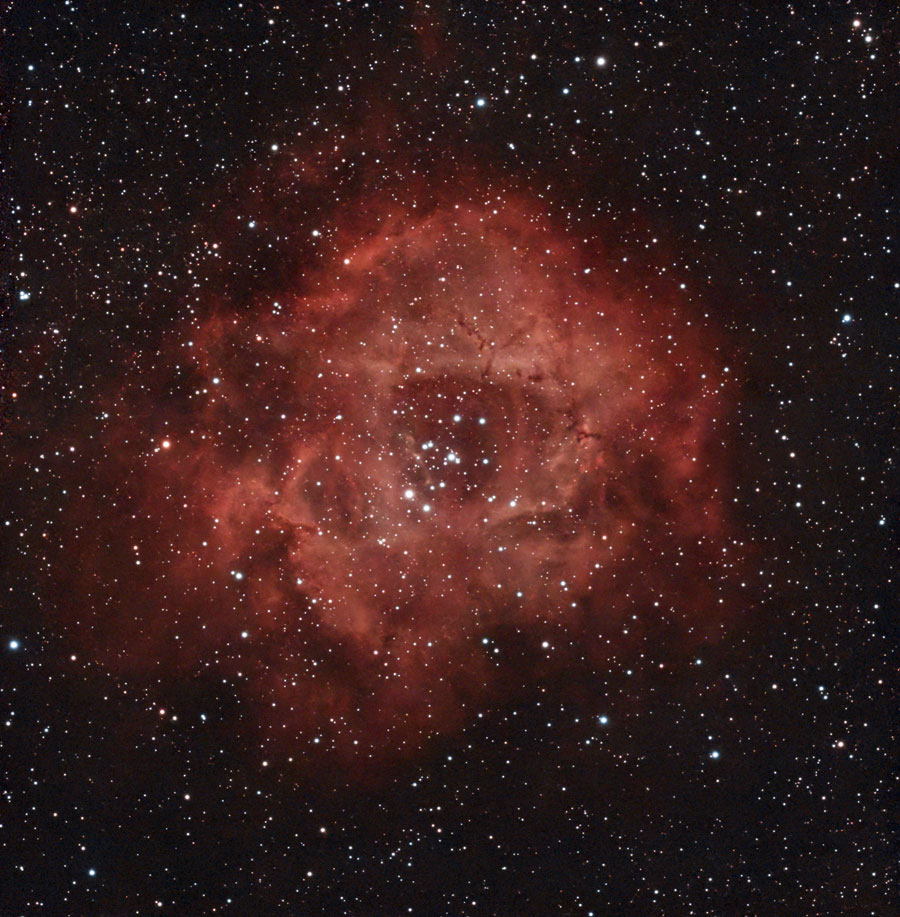
- Started in EQ mode a 2-panels 1:1.8 mosaic for NGC 2237/2244 at about 9:57/19.86 p.m./SQM (30/120/Duo; 50 subs per panel); stopped at 11:06 p.m. - ran until 11:25 p.m.???
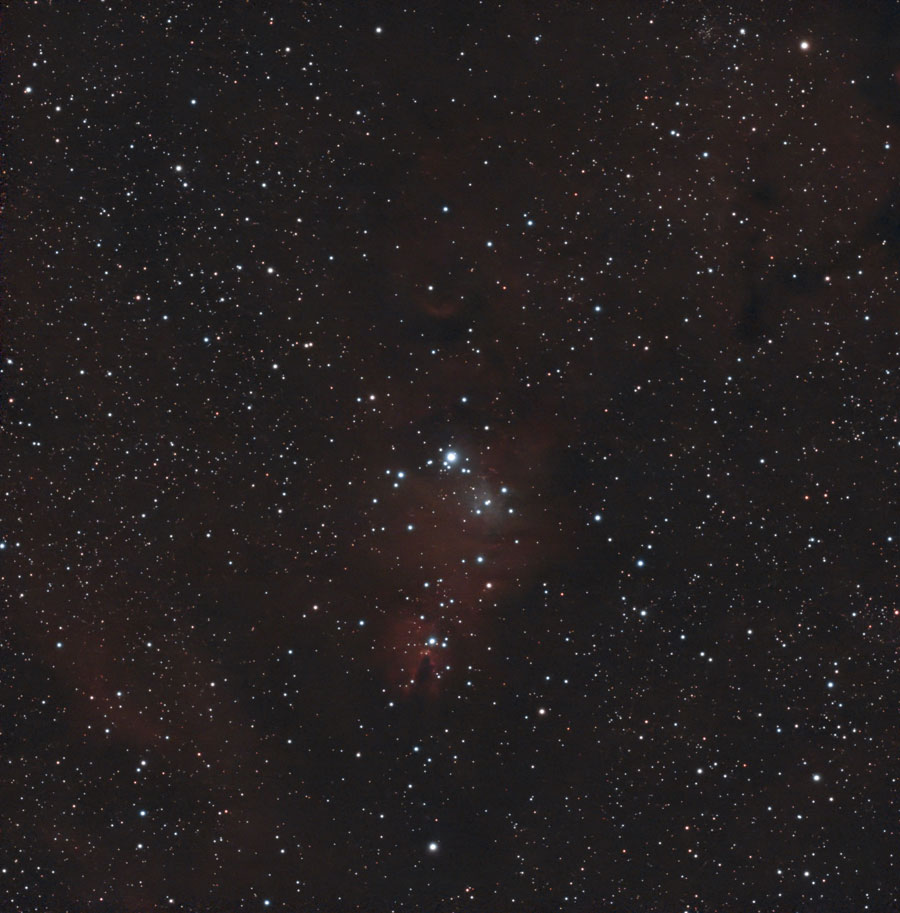
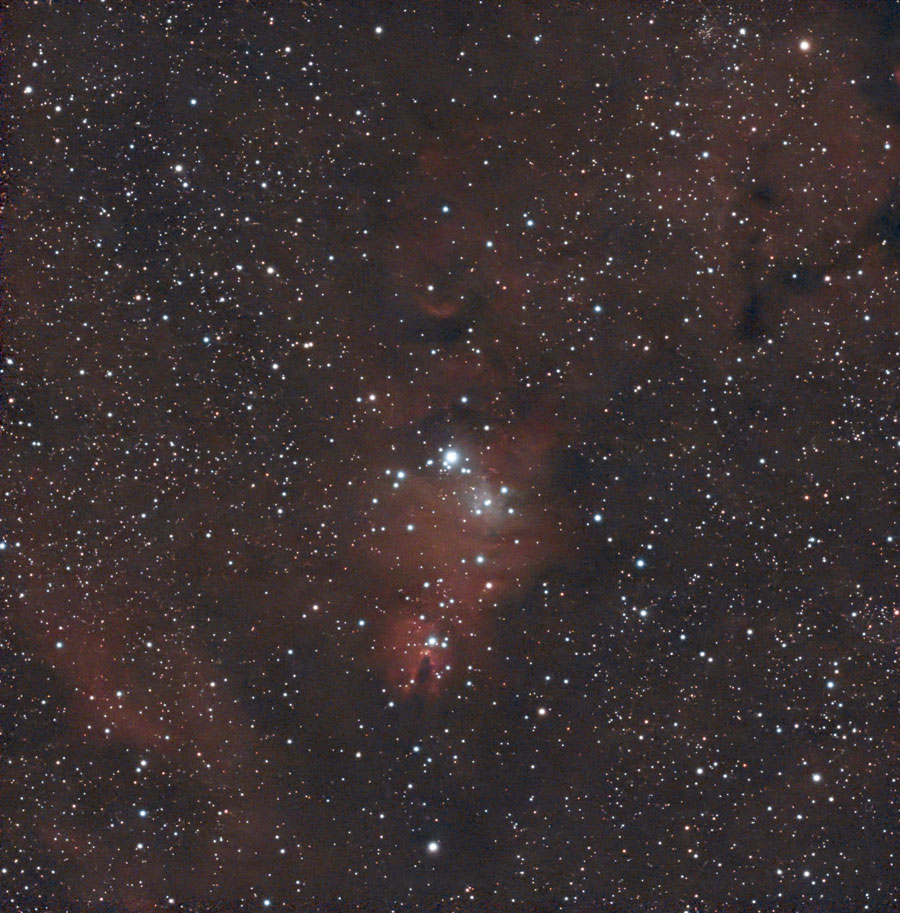
- Started in EQ mode a 2-panels 1:1.8 mosaic for NGC 2264 at about 11:30 p.m. (30/120/Duo; 50 subs per panel); stopped at 0:38 p.m.
 |
 |
|
IC 405/410, 50 min, DuoBand filter, mosaic, gain 60, processed with Stellar Studio, original |
IC 405/410, 50 min, DuoBand filter, mosaic, gain 60, processed with Stellar Studio and further post-processed, original |
|
 |
 |
|
IC 405/410, 50 min, DuoBand filter, mosaic, gain 120, processed with Stellar Studio, Original |
IC 405/410, 50 min, DuoBand filter, mosaic, gain 120, processed with Stellar Studio and further post-processed, original |
|
 |
||
IC 405/410, 50 min, DuoBand filter, mosaic, gain 120, processed with Stellar Studio and further post-processed strongly, original |
||
 |
 |
|
NGC 2237/2244, 50 min, DuoBand filter, mosaic, gain 120, processed with Stellar Studio, original |
NGC 2237/2244, 50 min, DuoBand filter, mosaic, gain 120, processed with Stellar Studio and further post-processed, original |
|
 |
 |
|
NGC 2264, 50 min, DuoBand filter, mosaic, gain 120, processed with Stellar Studio, original |
NGC 2264, 50 min, DuoBand filter, mosaic, gain 120, processed with Stellar Studio and further post-processed, original |
First Observation Experiences
Here, I describe my very first experiences with the Dwarf mini from the first 11 observation sessions (Mühlhausen/Kraichgau).
At first I only observed in AZ mode because I first had to get familiar with the Dwarf mini. But unlike the Vaonis telescopes, the Dwarf mini also offers an EQ mode. However, apart from a few failed attempts with a wedge for the Sky-Watcher AZ-GTi mount, I have not been able to gain any experience with this type of mount. In this respect, I was breaking new ground with the EQ mode of the Dwarf mini. And it took a few attempts until I understood how to set it up and how to interpret the instructions provided by the DwarfLab app. More about this on page EQ Mode.
Compared to the Singularity app for the Vaonis Vesperas, the DwarfLab app is quite different and unusual. There are some things I did not find right away, and some I find very "hidden". It is also strange that you cannot access the observation screen from everywhere; instead, I always have to go back to the home screen and then select "Photos".
During my first sessions I also had to struggle a lot with fog, which quickly put an end to the observations. Later it was more clouds that forced me to stop, but they usually came a little later...
The use of filters turned out to be another "pitfall" that I was not the only one to encounter. For example, in the Atlas, the app displays "Duo" for an object, i.e. the DualBand filter. But when you start observing and use automatic settings, you photograph with the standard "Astro" filter. Why this is the case, has not yet been clarified. So my current recommendation is to always check which filter is actually selected and, if necessary, to use the manual settings.
On a related note, there is another problem I encountered with the Rosette Nebula. If you select the star cluster NGC 2244, which is located in the middle of the Rosette Nebula NGC 2237 & co, the astro filter is suggested. This is valid for a star cluster in itself, but not if it is in the middle of an emission nebula!
With the Rosette Nebula you can select different objects, including simply by moving the objects in the field of view, but only NGC 2237 is displayed with "Duo" (and then still not photographed with it, at least not with the automatic settings). Here too, my recommendation is to always check which filter is actually selected and, if necessary, to select the manual settings.
First Conclusions
It took me some time to really get to grips with the DwarfLab app, and I am sure there are still some "white spots"... It also took me some time to understand how to set up the EQ mode; but now I believe that is the case.
Links
- Dwarf Mini Smart Telescope – Review & Tutorial (Wido's Astroforum): astroforumspace.com/dwarf-mini-smart-telescope-review-tutorial/ - YouTube-Video dazu: www.youtube.com/watch?v=4SoaQqLWR0s
- Dwarf Mini im Test: Das Technik-Wunder und Spaßgerät für die Hosentasche (Dimitrios Georgomanos): www.blickohnegrenzen.de/2026/02/06/dwarf-mini-im-test-das-technik-wunder-und-spassgeraet-fuer-die-hosentasche (in German)
- Dwarf mini documentation (DwarfLab): help.dwarflab.com/en/docs/dwarf-mini-smart-telescope
- DWARF mini User Manual: help.dwarflab.com/en/docs/DWARF-mini-Smart-Telescope-User-Manual
- Get to Know the Files Stored in DWARF mini: help.dwarflab.com/en/docs/help-doc
- DWARF mini Lighting Effects: help.dwarflab.com/en/docs/help-doc-mini-lighting-effects
- How to View DWARF mini Files Wirelessly Using a Computer: help.dwarflab.com/en/docs/help-doc-1
- FAQ & Troubleshooting Guide for DWARF Users: help.dwarflab.com/en/docs/help-doc-2
- Mini Tripod with hydraulic Head (DwarfLab): dwarflab.com/products/tripod-for-dwarf-3 (shown for Dwarf 3)
- The Tripod Setup and Usage (DwarfLab video): help.dwarflab.com/en/docs/tripod-setup-and-usage?product=dwarf-3 (shown for Dwarf 3)
- DWARF mini EQ Mode Setup Guide (DwarfLab video): https://help.dwarflab.com/en/docs/dwarf-mini-equatorial-setup-guide?product=dwarf-mini
- See also my page offering Astronomy Links.
|
made by  on a mac! on a mac! |


| 18.10.2026 |  |