

Observations of the Moon with the DwarfLab Dwarf mini
Introduction | First Experiences with Photos of the Moon | How Small are the Craters that Can Be Seen? | First Conclusions | Links
On this page, I describe my first experiences with my electronic refractor telescope Dwarf mini 30 mm/150 mm (f/5) when observing the moon.
See also:
- Information
- Tripod
- Bag
- EQ Mode
- First Experiences
- Mosaic Mode
- Observations of the Sun
- Observations of the Moon (this page)
- Observations with Filter
- >> My Deep Sky Observations with the Dwarf mini (Complete List of Observed DSO)
- Photo Gallery (Messier) - Photo Gallery (Other) - Galaxies - Nebulae - Star Clusters
- Photo Comparison (with Vaonis Vespera)
Introduction
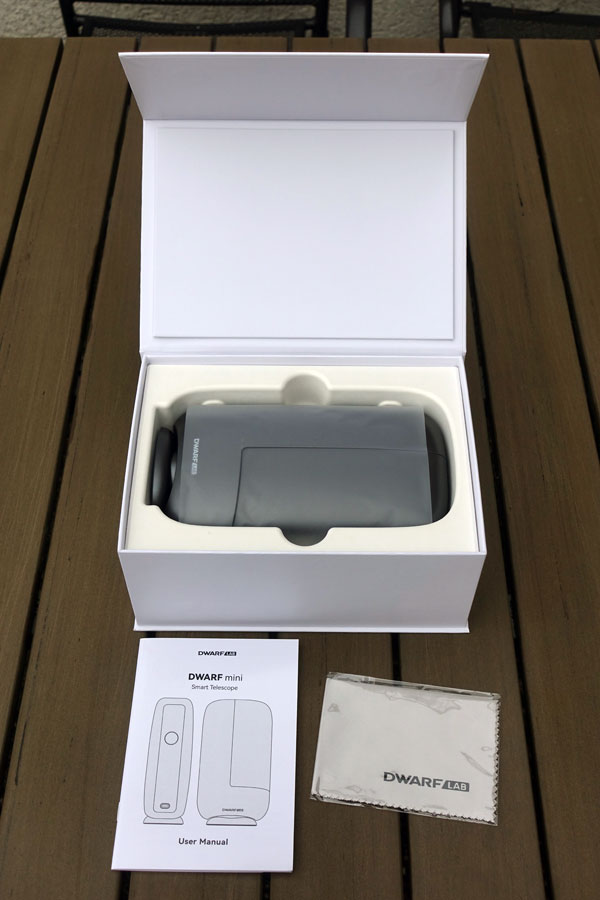 |
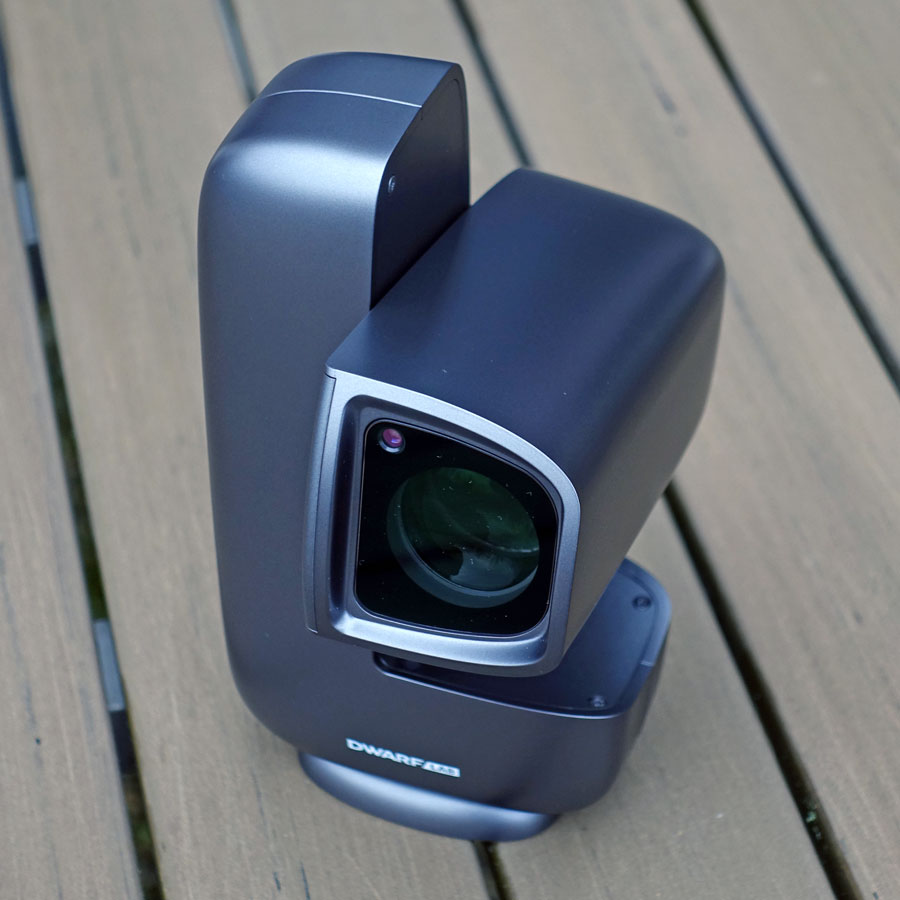 |
 |
Photo: My Dwarf mini (Jan 2026)
So far, I was only able to photograph the crescent moon.
First Experiences with Photos of the Moon
In the following, I present my first photos of the moon, which I took with the Dwarf mini. So far, I have only taken photos of the crescent moon, but photos of up to the full moon will follow in due course...
When observing the moon, the Dwarf mini has to be directed towards the moon using direction buttons (and initially manually). This is fairly cumbersome, because the motors behave somewhat erratically.
In contrast to, for example, the Vesperas, you can take a specified number of shots, which are stacked for better image quality. You can also improve the results in Stellar Studio, but the difference is not overwhelming, at least in my opinion...
I usually stack 20 or 50 shots, but I cannott see any difference between the two options. Originally, the Dwarf mini app only suggests 20 shots.
January 22, 2026: Crescent of the Moon
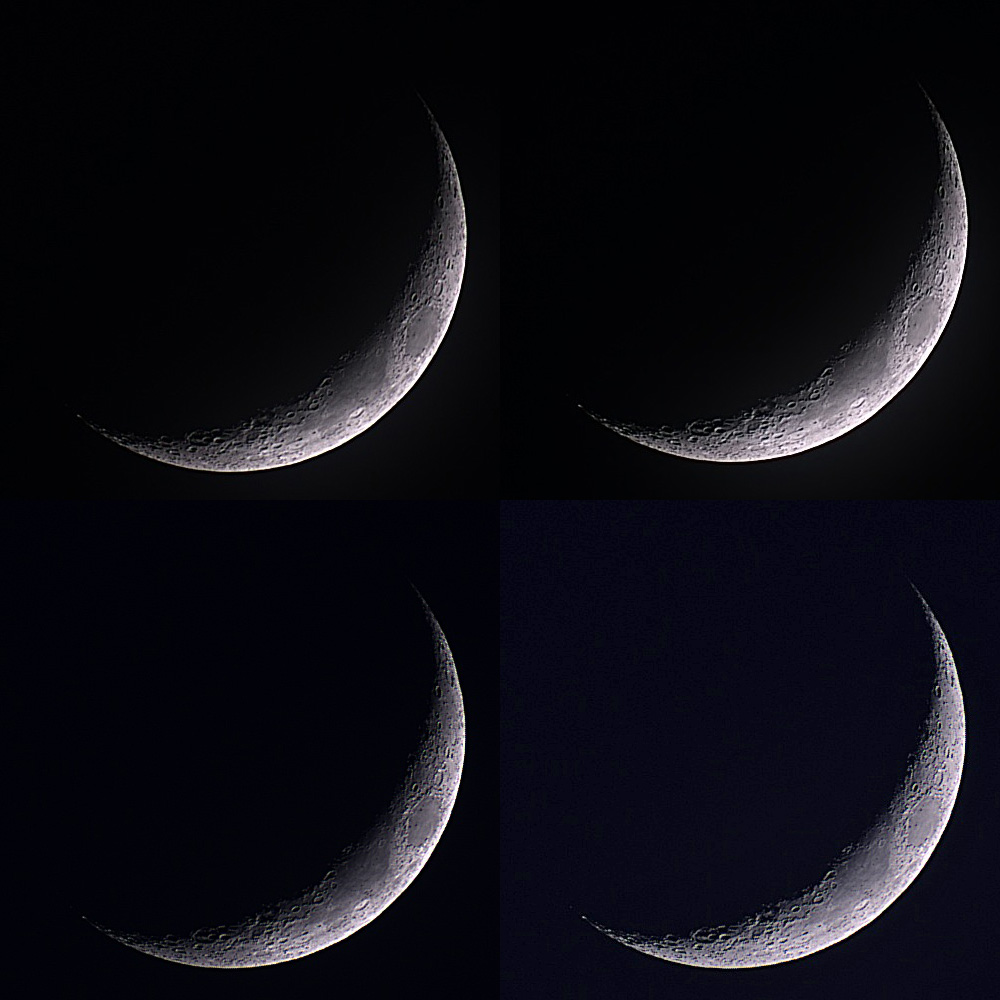
Crescent of the Moon: Top row 50 subs stacked, right photo post-processed with Stellar Studio; bottom row 20 subs stacked, right photo made brighter manually (Adobe PSE).
January 23, 2026: Crescent of the Moon
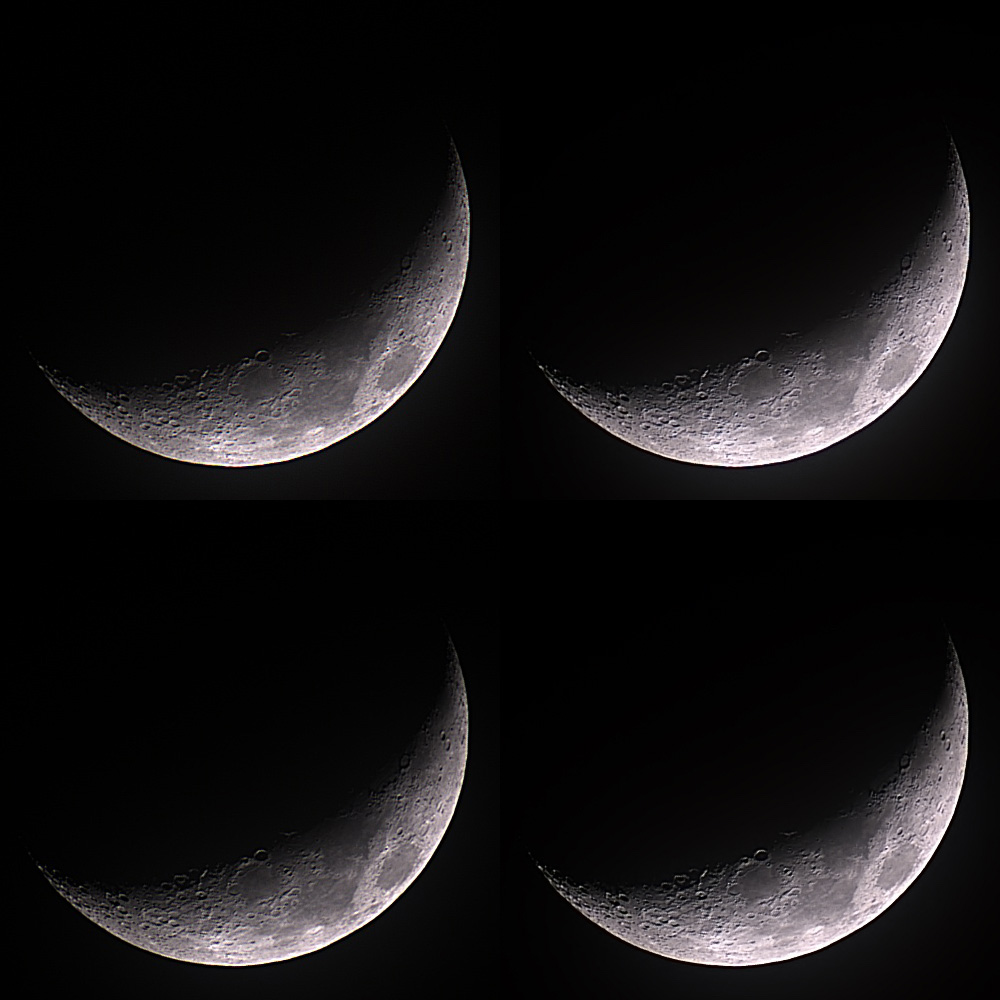
Crescent of the Moon: Top row 50 subs stacked, bottom row 20; right photos post-processed with Stellar Studio
January 24, 2026: Crescent of the Moon now Clearly Thicker
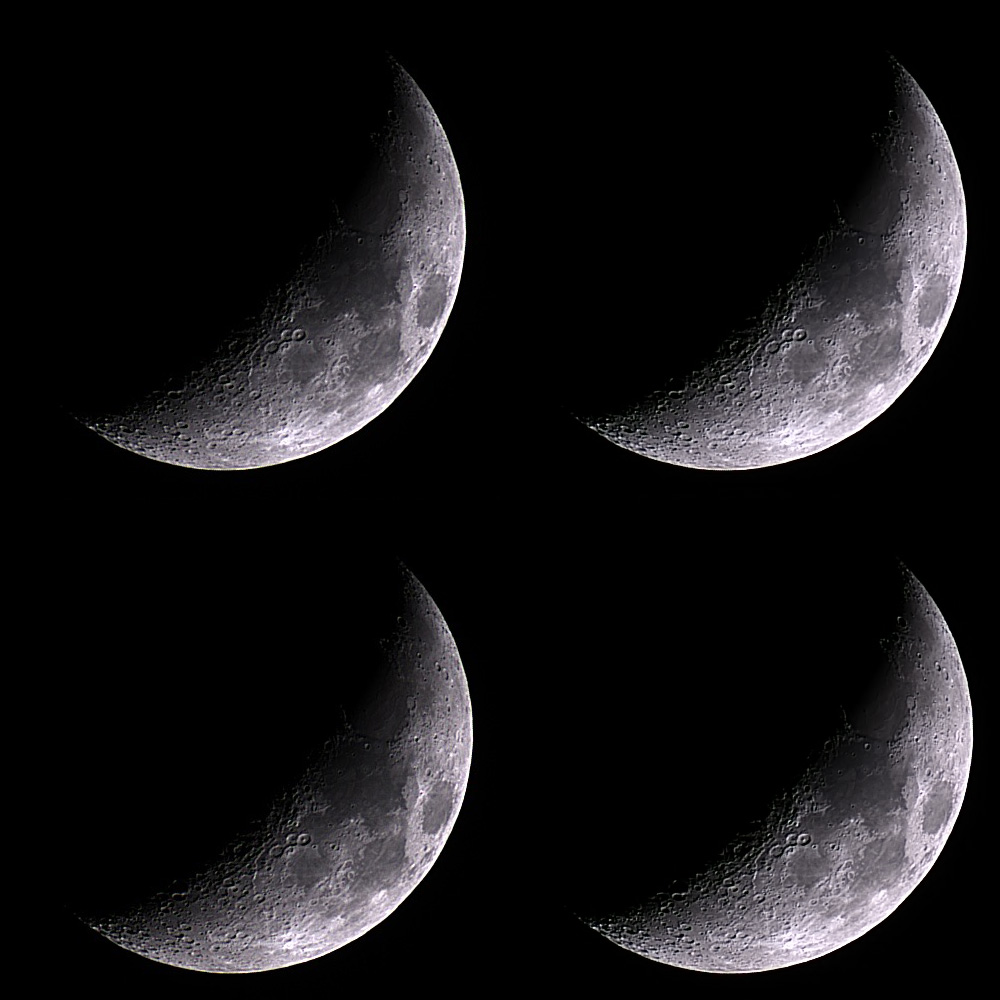
Crescent of the Moon: Top row 50 subs stacked, bottom row 20; right column photos post-processed with Stellar Studio
 |
 |
|
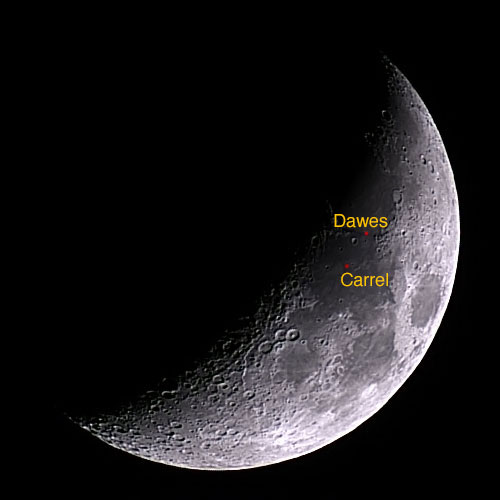
Post-processed with Stellar Studio |
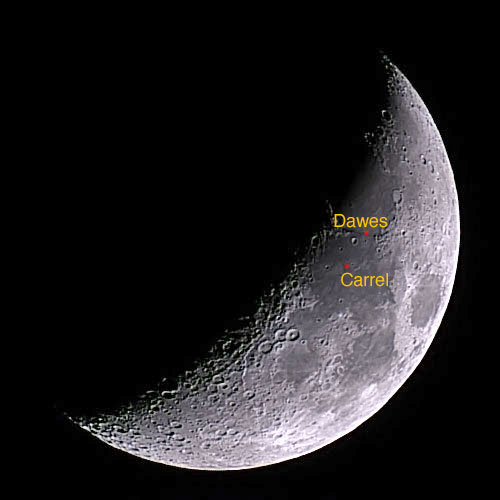
Made brighter to increase the visibility of the craters |
The Dawes crater is 18x18 km in size and looks somewhat irregular (below the red dot); Carrel is 17x16 km in size and, when magnified, you can see a dark pixel and some blurring around it (to the right of the red dot).
I cannot tell exactly how many km a pixel actually represents. Based on my photos, I have made a rough estimate: 3476 km / 500 pixels = 7 km (I estimated the diameter of the moon to be 500 pixels). Presumably, 8 km is more realistic...
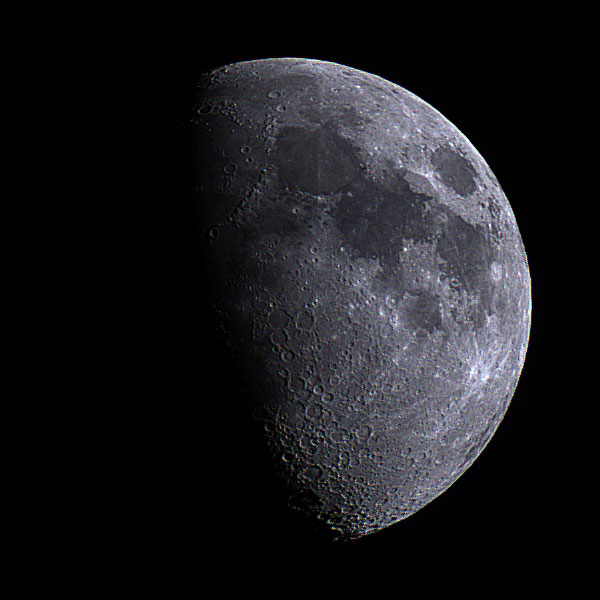
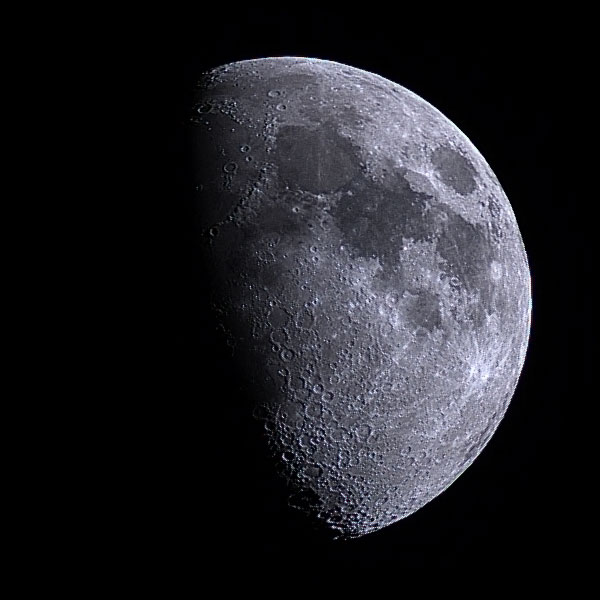
February 25, 2026: A little more than Half Moon
 |
 |
|
20 Fotos stacked |
ditto, post-processed with Stellar Studio |
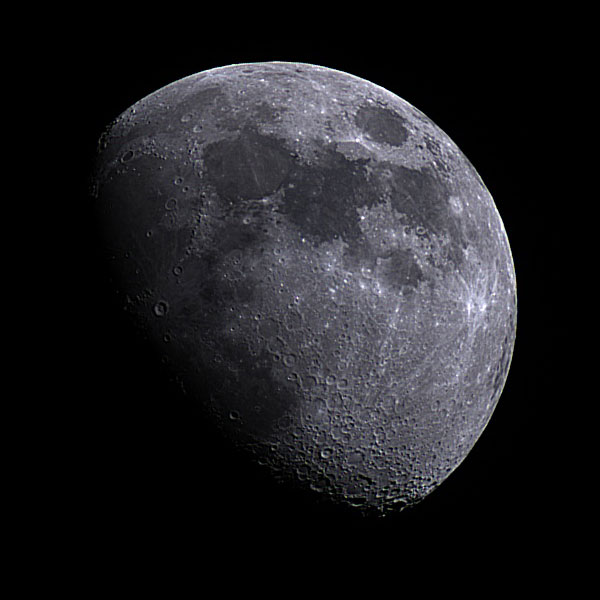
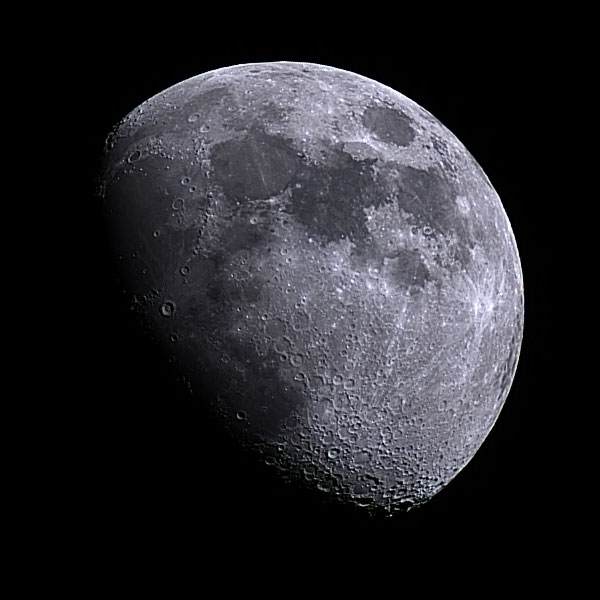
February 26, 2026: Beyond Half Moon
 |
 |
|
20 Fotos stacked |
ditto, post-processed with Stellar Studio |
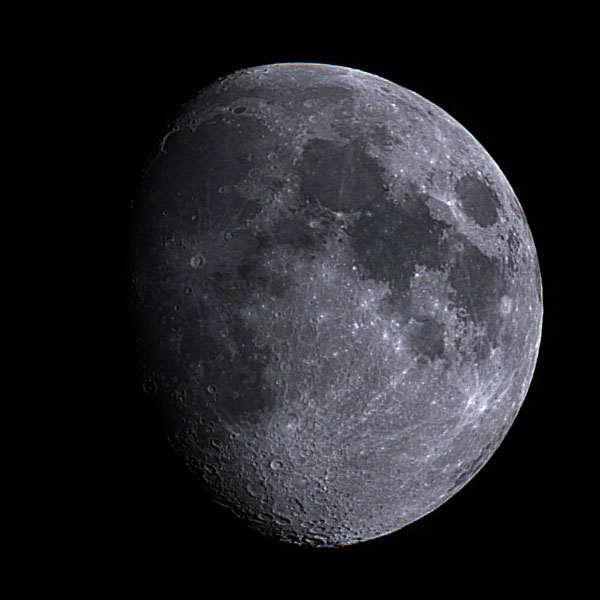
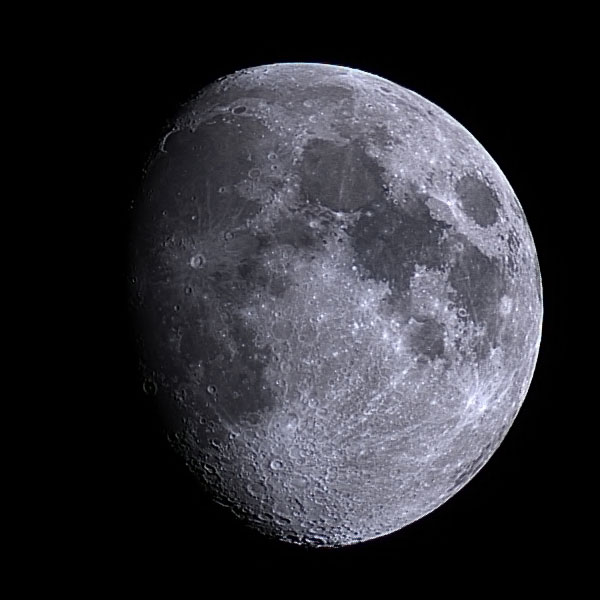
February 27, 2026: A little Beyond the Golden Handle
 |
 |
|
20 Fotos stacked |
ditto, post-processed with Stellar Studio |
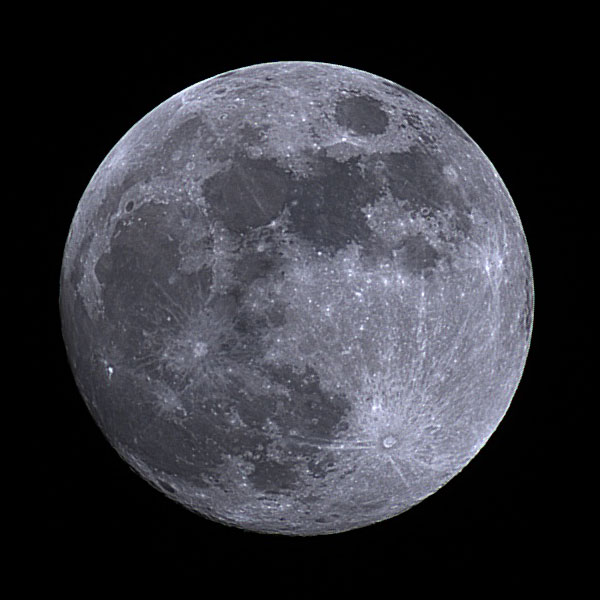
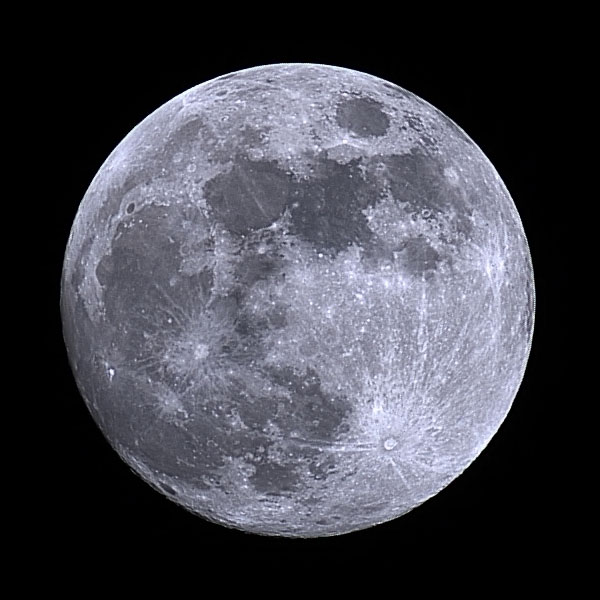
March 2, 2026: Nearly Full Moon
 |
 |
|
20 subs stacked |
Ditto, post-processed with Stellar Studio |
How Small Are the Craters that Can Be Seen?
I asked myself this question years ago for various types of observation and telescopes or telescope/camera combinations. I came up with a diameter of about 8 km for the smallest visible craters. Purely mathematically, even 2-4 km was possible... With the Dwarf mini, you cannot expect to be able to see craters that small. In any case, craters with a diameter of 25-50 km are still clearly visible. In the image taken on January 24, 2026, I was able to see two craters with a diameter of 16-18 km, which I have marked on the photo:
|
|
|
Processed with Stellar Studio |
Made brighter so thar the craters can be easier recognized |
The Dawes crater is 18 x 18 km in size and looks somewhat irregular (below the red dot); Carrel is 17 x 16 km in size and, when magnified, you can see a dark pixel and some blurring around it (to the right of the red dot).
I cannot state exactly how many km a pixel actually represents. Based on my photos, I have made a rough estimate: 3476 km / 500 pixels = 7 km (I estimated the diameter of the moon to be 500 pixels). Presumably, 8 km is more realistic...
First Conclusions
Observations of the moon are very easy with the Dwarf mini. The photos are not as sharp and detailed as when I take photos with normal telescopes and a photo camera, and they call also not compete with the other smartscopes that I possess(ed). The resolution is simply too low (less than 600 pixels for the full moon).
So I probably will not be using the Dwarf mini as my "moon telescope." The Sony RX10 M4 and the Vespera Pro deliver much better results even without stacking! Nonetheless, I may use the Dwarf mini now and then for a quick shot of the moon ;)
Links
- Dwarf Mini Smart Telescope – Review & Tutorial (Wido's Astroforum): astroforumspace.com/dwarf-mini-smart-telescope-review-tutorial/ - YouTube-Video dazu: www.youtube.com/watch?v=4SoaQqLWR0s
- Dwarf Mini im Test: Das Technik-Wunder und Spaßgerät für die Hosentasche (Dimitrios Georgomanos): www.blickohnegrenzen.de/2026/02/06/dwarf-mini-im-test-das-technik-wunder-und-spassgeraet-fuer-die-hosentasche (in German)
- Dwarf mini documentation (DwarfLab): help.dwarflab.com/en/docs/dwarf-mini-smart-telescope
- DWARF mini User Manual: help.dwarflab.com/en/docs/DWARF-mini-Smart-Telescope-User-Manual
- Get to Know the Files Stored in DWARF mini: help.dwarflab.com/en/docs/help-doc
- DWARF mini Lighting Effects: help.dwarflab.com/en/docs/help-doc-mini-lighting-effects
- How to View DWARF mini Files Wirelessly Using a Computer: help.dwarflab.com/en/docs/help-doc-1
- FAQ & Troubleshooting Guide for DWARF Users: help.dwarflab.com/en/docs/help-doc-2
- Mini Tripod with hydraulic Head (DwarfLab): dwarflab.com/products/tripod-for-dwarf-3 (shown for Dwarf 3)
- The Tripod Setup and Usage (DwarfLab video): help.dwarflab.com/en/docs/tripod-setup-and-usage?product=dwarf-3 (shown for Dwarf 3)
- DWARF mini EQ Mode Setup Guide (DwarfLab video): https://help.dwarflab.com/en/docs/dwarf-mini-equatorial-setup-guide?product=dwarf-mini
- See also my page offering Astronomy Links.
|
made by  on a mac! on a mac! |


| 18.10.2026 |  |