

Dark Nebulae
What Are Dark Nebulael/Dark Clouds? | Why Did I Create a Page on Dark Nebulae/Clouds? | Well-Known Dark Nebulae | Around M 11... | Around M 24... | Links
On this page, I discuss dark nebulae/dark clouds and show some examples that I photographed myself - sometimes intentionally, sometimes by chance, "on the side."
What Are Dark Nebulae/Dark Clouds?
This says Wikipedia (German version, translated):
In astronomy, dark clouds or dark nebulae are large clouds of interstellar matter that absorb the light from objects behind them. They can be observed when they dim or completely obscure background stars (e.g., Barnard 68), or when they obscure parts of emission or reflection nebulae (e.g., the Horsehead Nebula).
The nature of dark clouds was discovered by the astronomer Edward Emerson Barnard. The Barnard Catalog, named after him, lists over 300 dark clouds; for example, the Horsehead Nebula bears the catalog number B 33.
Why Did I Create a Page on Dark Nebulae/Clouds?
As an amateur astronomer, you typically observe deep-sky objects - that is, galaxies, star clusters, and nebulae - but, with a few exceptions, not dark nebulae. One exception is arguably the most famous dark nebula, the Horsehead Nebula (B 33). Another frequently photographed dark nebula is the Elephant’s Trunk Nebula (IC 1396). Yet another well-known dark nebula is the Cone Nebula (near the Christmas Tree Cluster NGC 2264). But that is about it. I have photographed all three myself, though I have not yet managed to capture the Elephant’s Trunk Nebula very well. I have not "intentionally" observed the many other dark nebulae from Barnard’s Catalog so far; rather, some of them just happen to appear as "bycatch" in my photos. I discovered some of them on my own, while others I found only with the help of photos taken by other amateur astronomers.
Well-Known Dark Nebulae
Below, I present my best photos of the well-known dark nebulae: the Horsehead Nebula (B 33), the Elephant Trunk Nebula (IC 1396A, in IC 1396), and the Cone Nebula (in NGC 2264).
Horsehead Nebula (B 33)
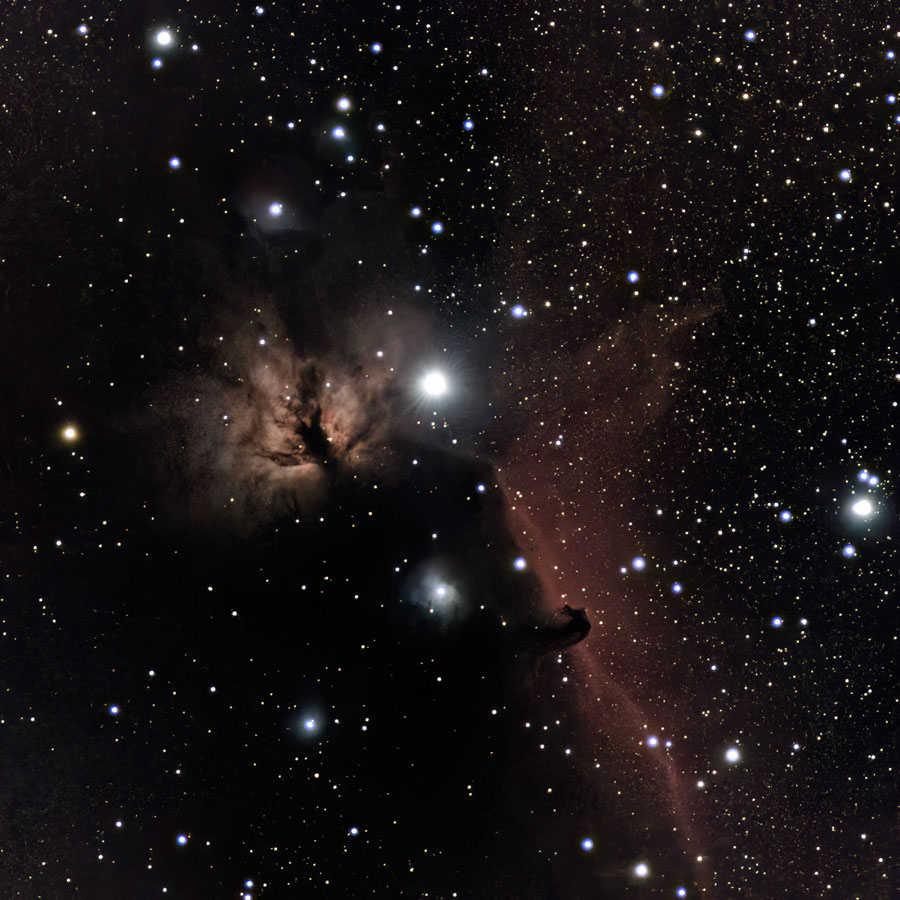
The Horsehead Nebula (B 33) is arguably the best-known and most-photographed dark nebula. According to Wikipedia, it is a 3-light-year-wide portion of a dark cloud in the constellation Orion that stands out against the red-glowing emission nebula IC 434 with a silhouette resembling a horse’s head. From Earth, the nebula is approximately 1,500 light-years away and therefore appears one-quarter the size of the Moon.
Vespera |
Vespera Pro |
||
 |
|
||
B 33, NGC 2023, IC 435, and NGC 2024, Jan 29, 2023 - large, processed, denoised (DN) |
NGC 2024 and B 33 with NGC 2023 and IC 435, Feb 1, 2025 - large (45 min), TIFF processed and denoised (PAI) |

Elephant Trunk Nebula (IC 1396A)
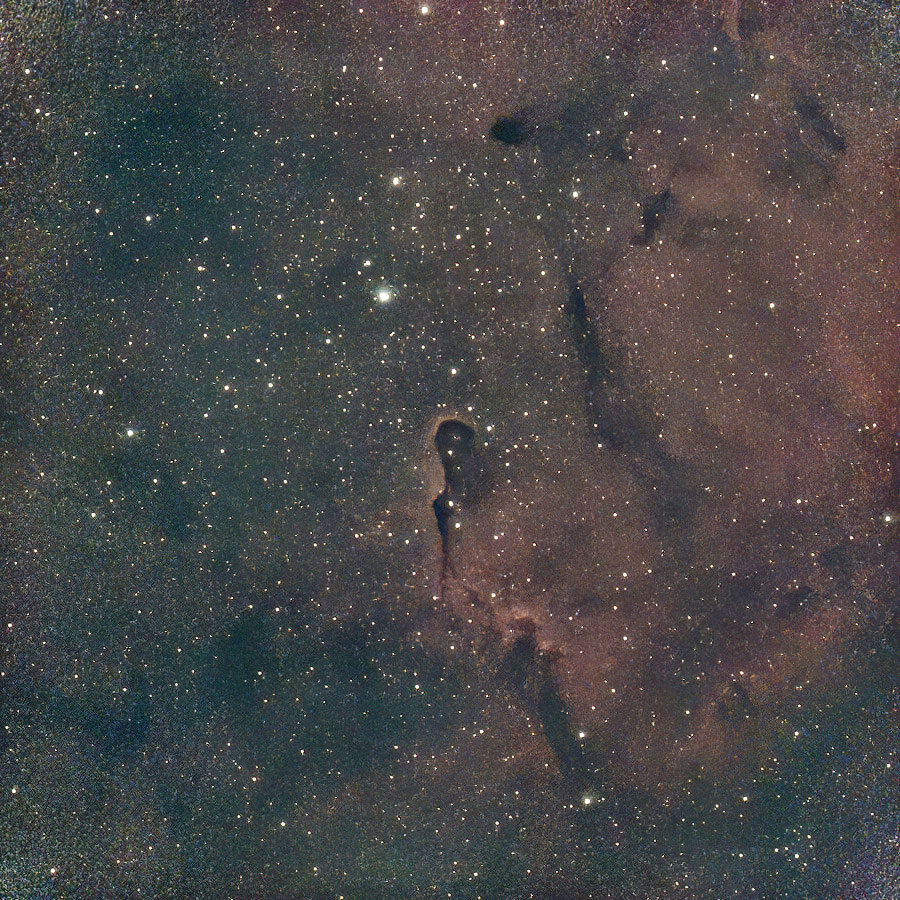
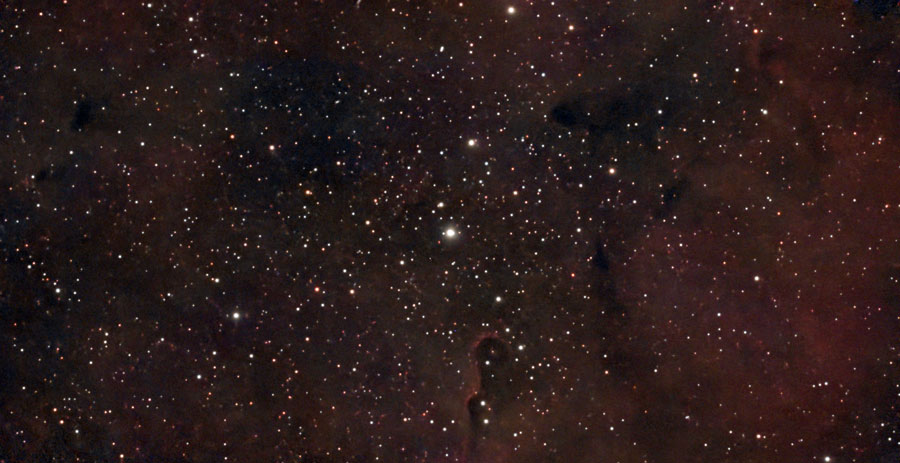
The Elephant Trunk Nebula, also known by the catalog designation IC 1396A, is a brightly outlined globule - that is, a collection of interstellar gas and dust - in the constellation Cepheus. The globule is part of IC 1396, an H II region (emission nebula) with an embedded star cluster in the constellation Cepheus.
Vespera Pro |
Dwarf mini |
|
 |
 |
|
IC 1396A, Dec 26, 2024 - 2000 (213 frames = 35 min), DB filter, processed (TIFF), denoised (DN), made brighter |
IC 1396A - Jan 16, 2026, 60 min, processed with Stellar Studio and post-processed, original |
Cone Nebula (NGC 2264)
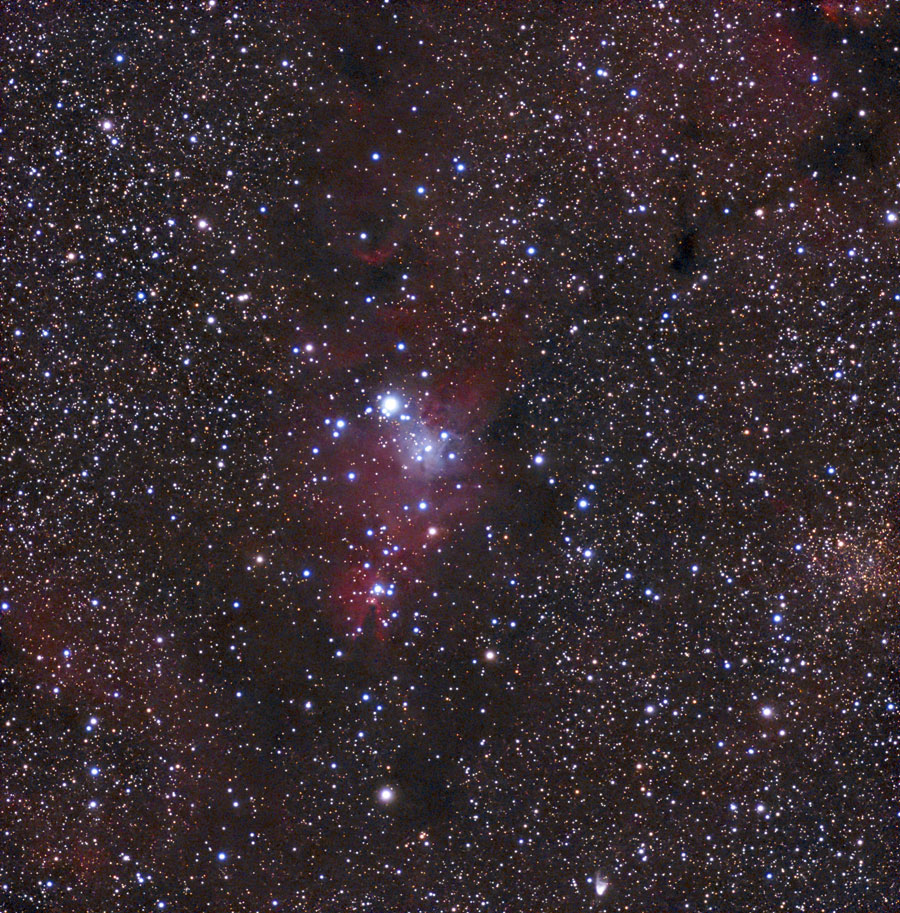
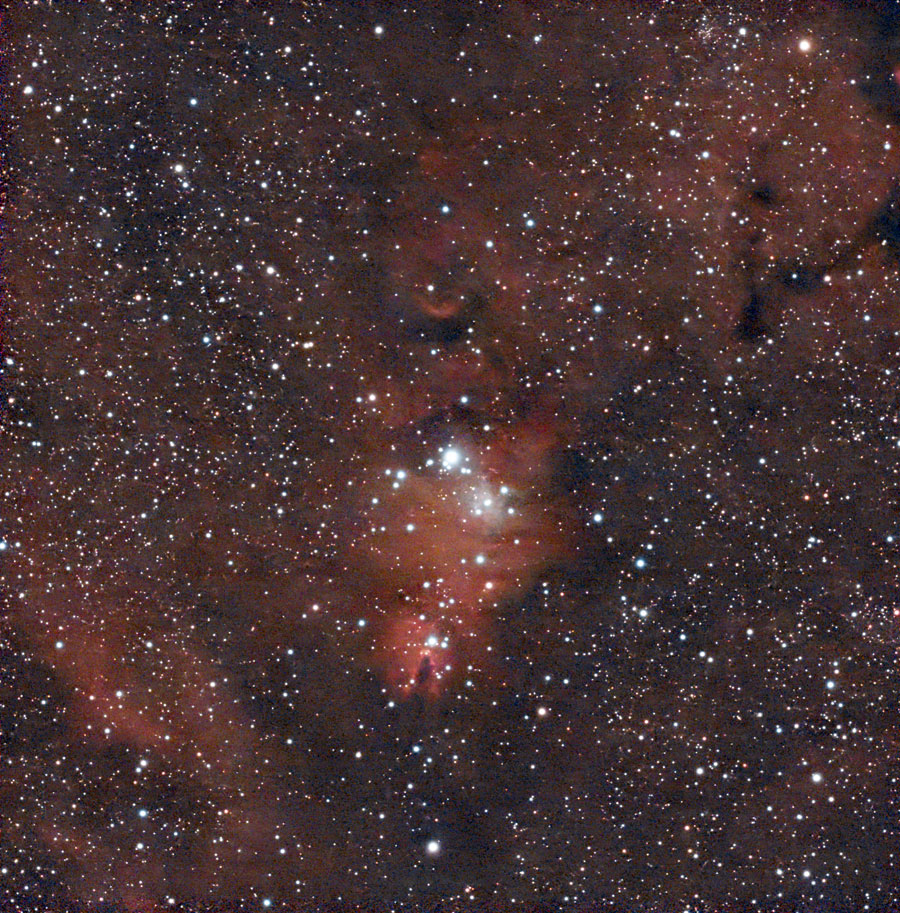
NGC 2264 in the constellation Monoceros (the Unicorn) refers to a region consisting of part of an H II region with a dark cloud in front of it - the Cone Nebula -, a star cluster - the Christmas Tree Cluster -, and the diffuse nebula in between. The Cone Nebula is a dark cloud shaped like a pointed cone.
Vespera |
Vespera Pro |
|
 |
 |
|
NGC 2264, Feb 8, 2023, mosaic section "Christmas Tree Cluster" with Cone Nebula - large, processed, denoised, rotated |
NGC 2264 (left) with NGC 2261 (top right), Mar 28, 2024 - 2250s, small mosaic, Dual Band filter, additionally processed (DN+PSE) - large |
|
Vespera Pro |
Vespera Pro |
|
 |
 |
|
NGC 2264, Feb 2, 2025 - 2000, 2:25 h, DB filter, processed and denoised (PAI) |
NGC 2264 (top left), NGC 2261 (bottom right), Mar 18, 2025 - 2000, 1 h, processed and denoised (PAI), made brighter |
|
Dwarf mini |
Dwarf mini | |
 |
 |
|
NGC 2264 with NGC 2261, Feb 7, 2026 - 50 min, mosaic, processed with Stellar Studio and additionally processed, original |
NGC 2264, Feb 9, 2026 - 50 min, DuoBand filter, mosaic, gain 120, processed with Stellar Studio and even further post-processed, original |
Around M 11...
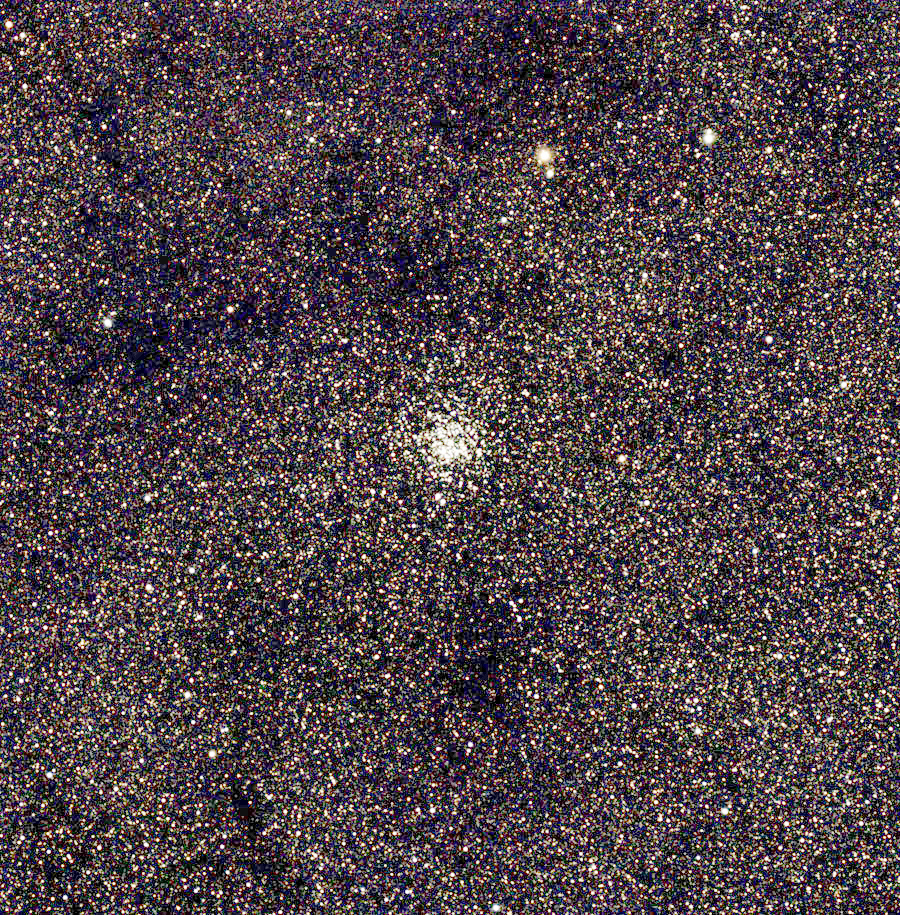
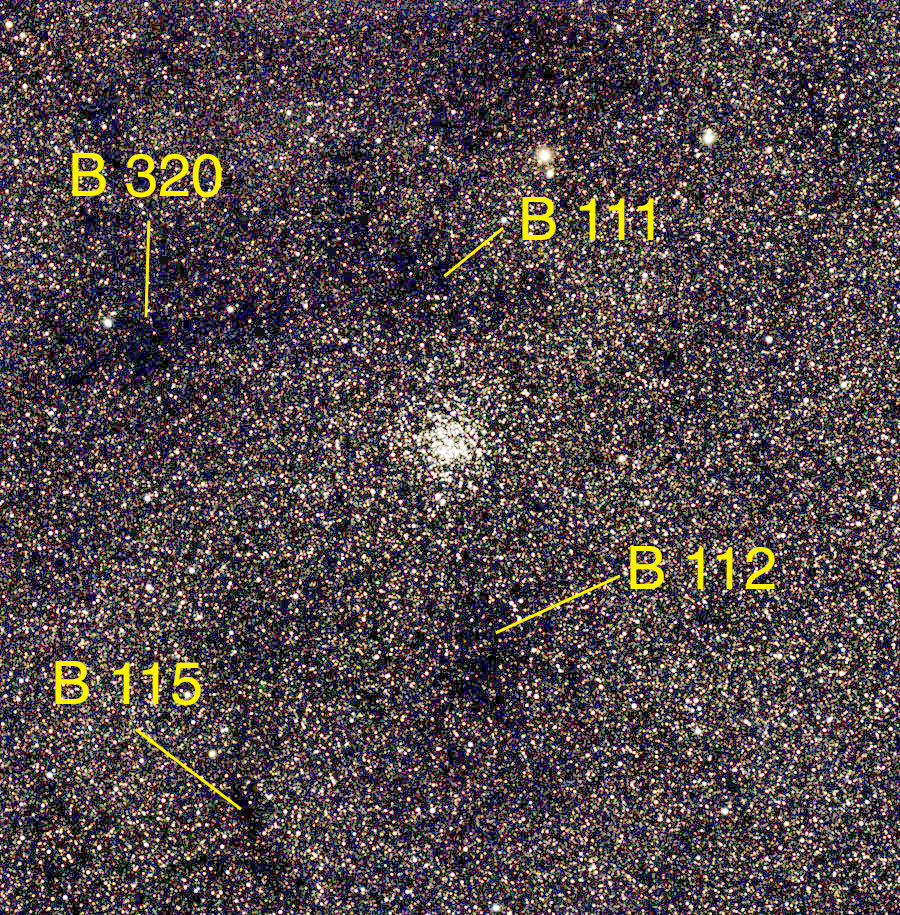
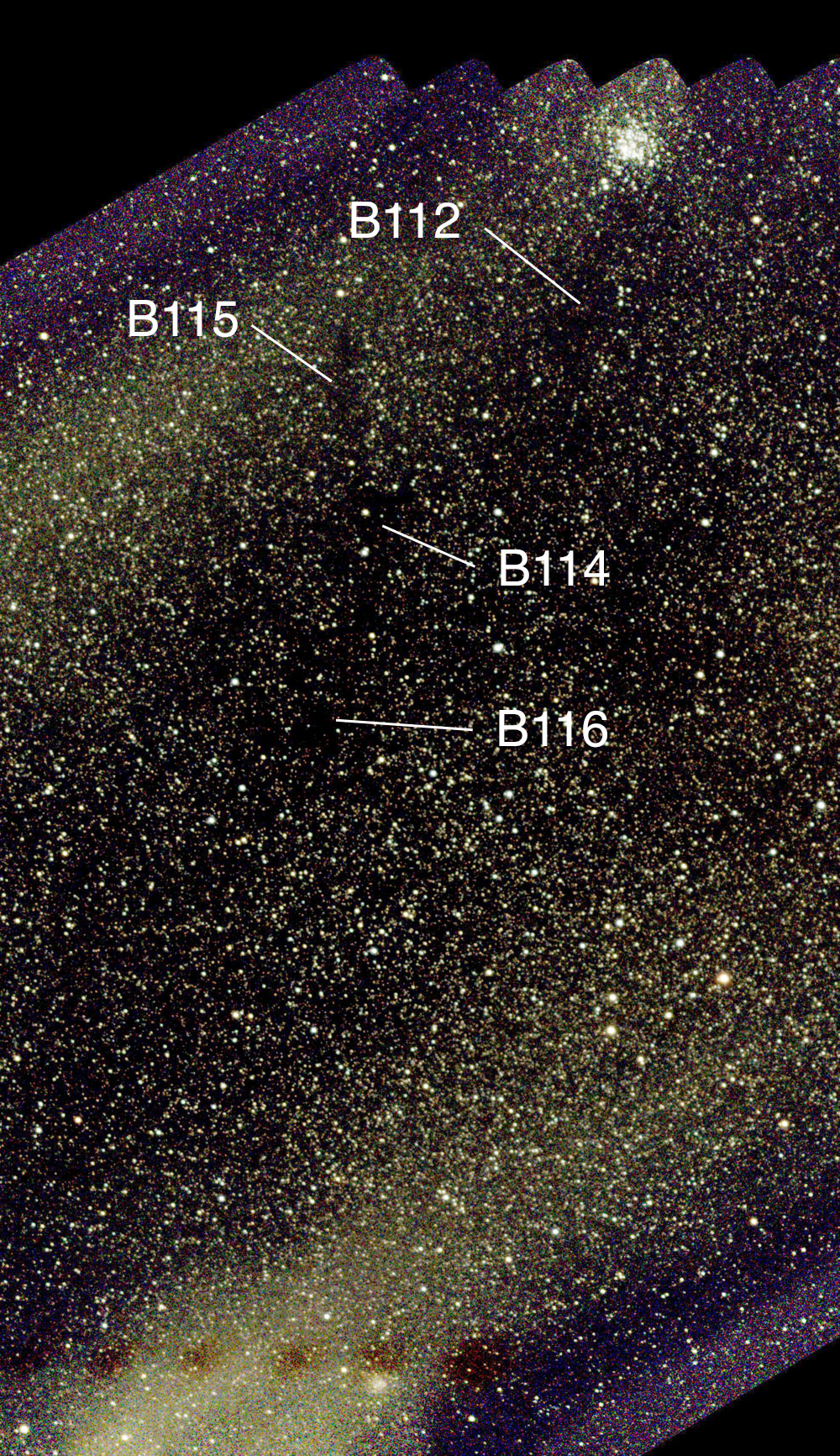
The open star cluster M 11, known as the Wild Duck Cluster, in the constellation Scutum (the Shield), is considered by Stoyan to be the most beautiful of its kind visible from Central Europe. M 11 is located in the Shield Cloud, a distinctive region of the Milky Way.
There are several dark nebulae surrounding M 11, some of which I discovered in my photos after receiving a suggestion. To do this, however, I brightened the photos significantly so that the dark nebulae would be more easily recognizable. I am showing both the brightened photos and the same photos with the dark nebulae marked.
 |
 |
|
 |
 |
Around M 24...
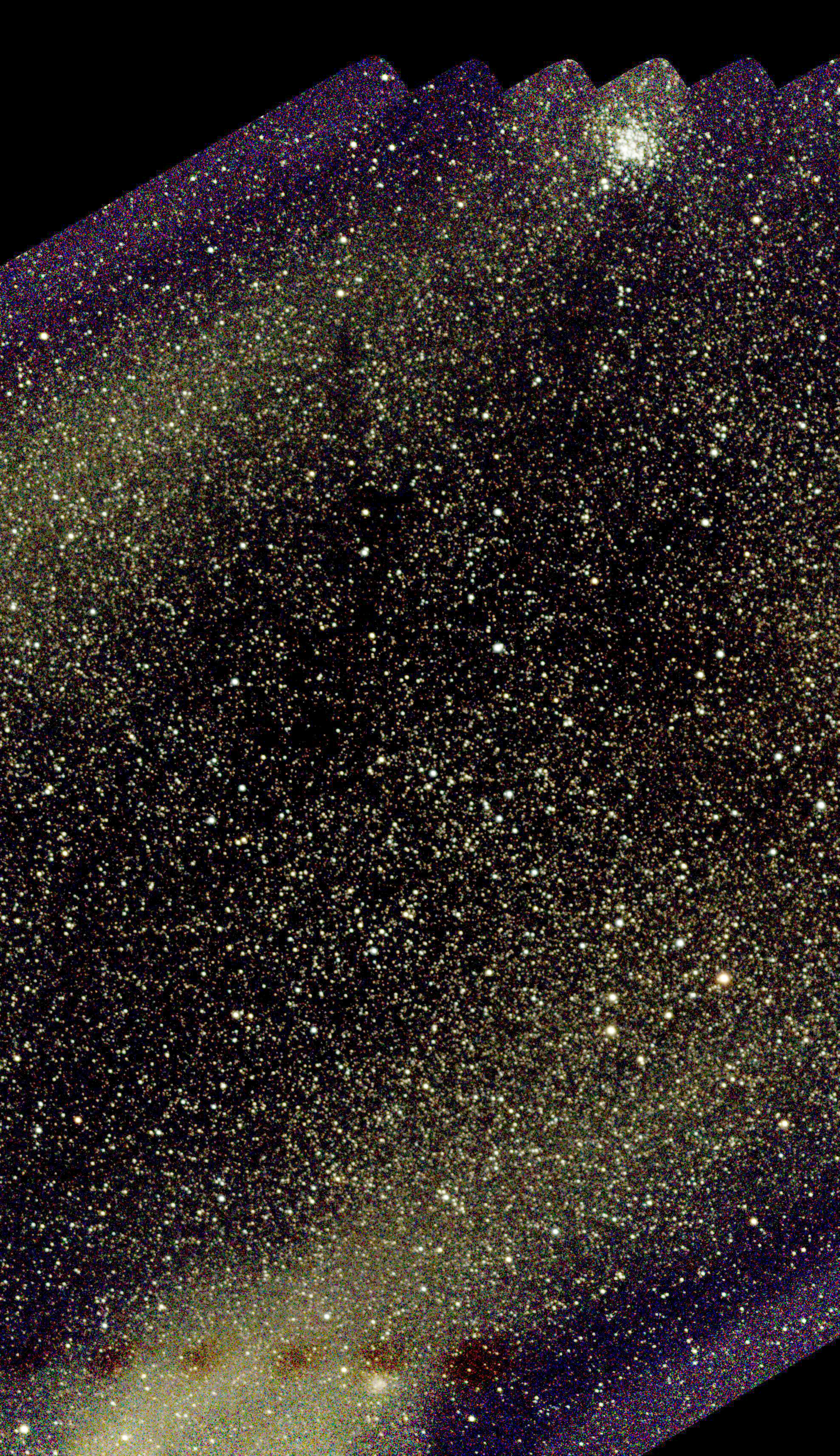
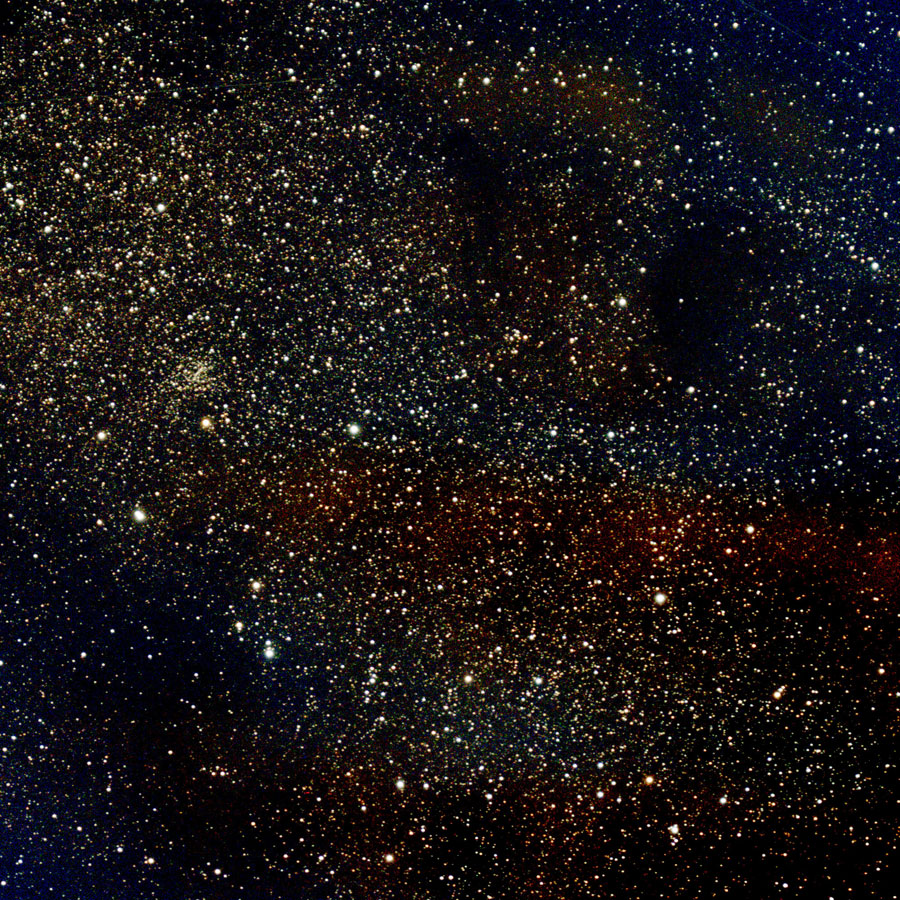
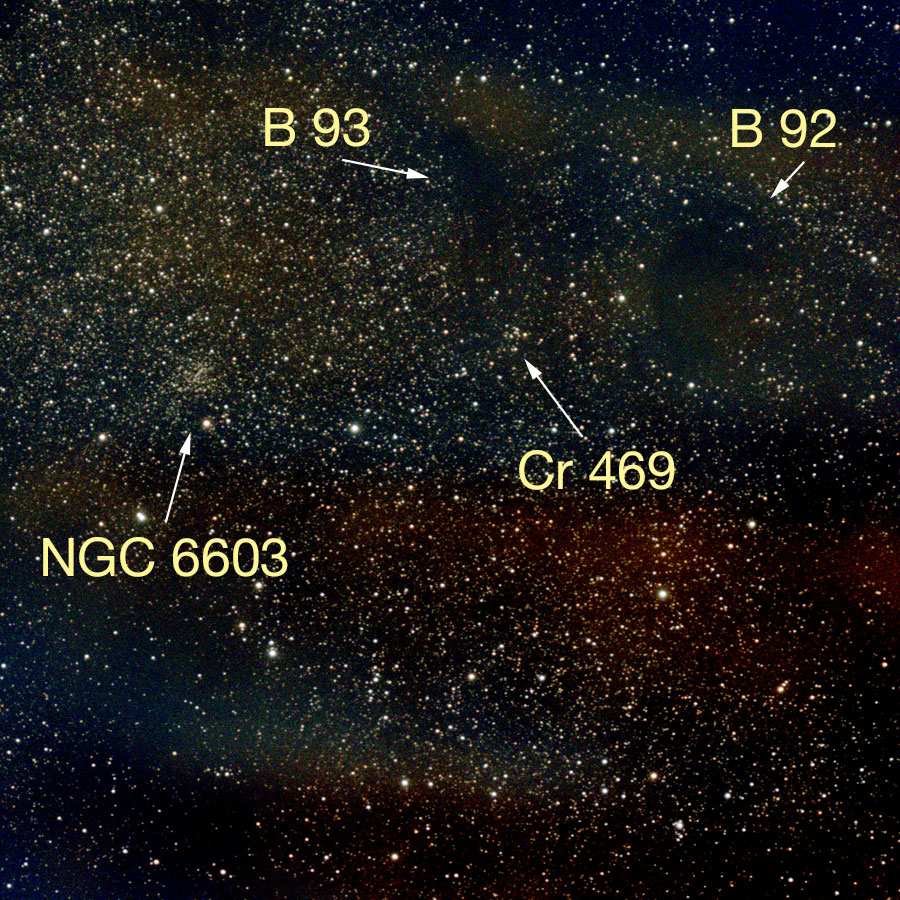
The Small Sagittarius Cloud, M 24, is located in the constellation Sagittarius and is not a physical object, but rather a 1.5° x 0.5° "window" or tunnel in the dust clouds of the Milky Way that allows a view toward the galactic center. Stars as far as 15,000 light-years away can be seen here (Messier Guide, modified). Embedded within it are the open star cluster NGC 6603 and the dark nebulae B 92 and B 93. At the lower end of B 93 lies the small open cluster Cr 469.
The photos of M 24 shown here were taken with the Vaonis Vespera Pro and are more or less noisy. I am showing two different photos; in one of them, the dark nebulae B 92 and B 93, as well as other DSOs, are marked.
 |
 |
|
M 24 slightly disturbed, Aug 31, 2025 - 2000p, (4 min), strongly processed |
M 24 and further DSO, disturbed, Aug 30, 2025 - 2000p, (5 min), processed |
Links
- Dark Nebula (Wikipedia): en.wikipedia.org/wiki/Dark_nebula
- See also my page offering Astronomy Links.
|
made by  on a mac! |


| 02.10.2026 |  |