

Partial Eclipse 2026
Introduction | Photos of the Partial Eclipse | Photos of the Equipment on the Heiligenstein Hill | Links
Introduction
On August 10, 2026, a partial solar eclipse was visible in parts of Europe; in Spain and Iceland, it was even total. In Germany, the percentage of the sun’s disk covered reached nearly 90%, so it was quite high. The observation time varied depending on the location; here in Mühlhausen (Kraichgau), it lasted from around 7:20 p.m. to 8:45 p.m. (peaking at 8:15 p.m.). The sun had already set before the eclipse was over. For details, see the links below or Wikipedia. The weather was very good; only a few small clouds threatened to interfere, but ultimately did not.
This time, too, I used a telescope for the observation - specifically, my DwarfLab Dwarf mini smart telescope (with a solar filter) - along with solar eclipse glasses. I controlled the telescope using an iPad running the DwarfLab app. I had the telescope track the sun the entire time (a good 1.5 hours) and only took photos occasionally (between 30 and 40, though only 35 were saved). I always had it take multiple photos - 20 at first, then 10, and later just 5- and stack them. Since the sun was changing quite quickly, 20 shots simply took too long; I had underestimated that at first... I practiced photographing the sun beforehand because I had not used the telescope in quite a while. That was a good thing! I also checked online beforehand to see if the telescope could actually run continuously or if it would overheat (it actually displayed a maximum of 43°C, so it was getting very hot internally...). I was given the "green light" there.
During this partial solar eclipse, a certain degree of dimming was actually visible due to the high percentage of coverage at the eclipse’s peak. What struck us most was that the sun suddenly became brighter again, even though it was slowly setting...
Photos of the Partial Eclipse
This time, I just present a collage of the photos, because it is not really worth enlarging the individual images. I also include a screenshot from the iPad showing the DwarfLab app's gallery, which displays the photos taken as previews. That is really all you need ;)
DwarfLab App Gallery
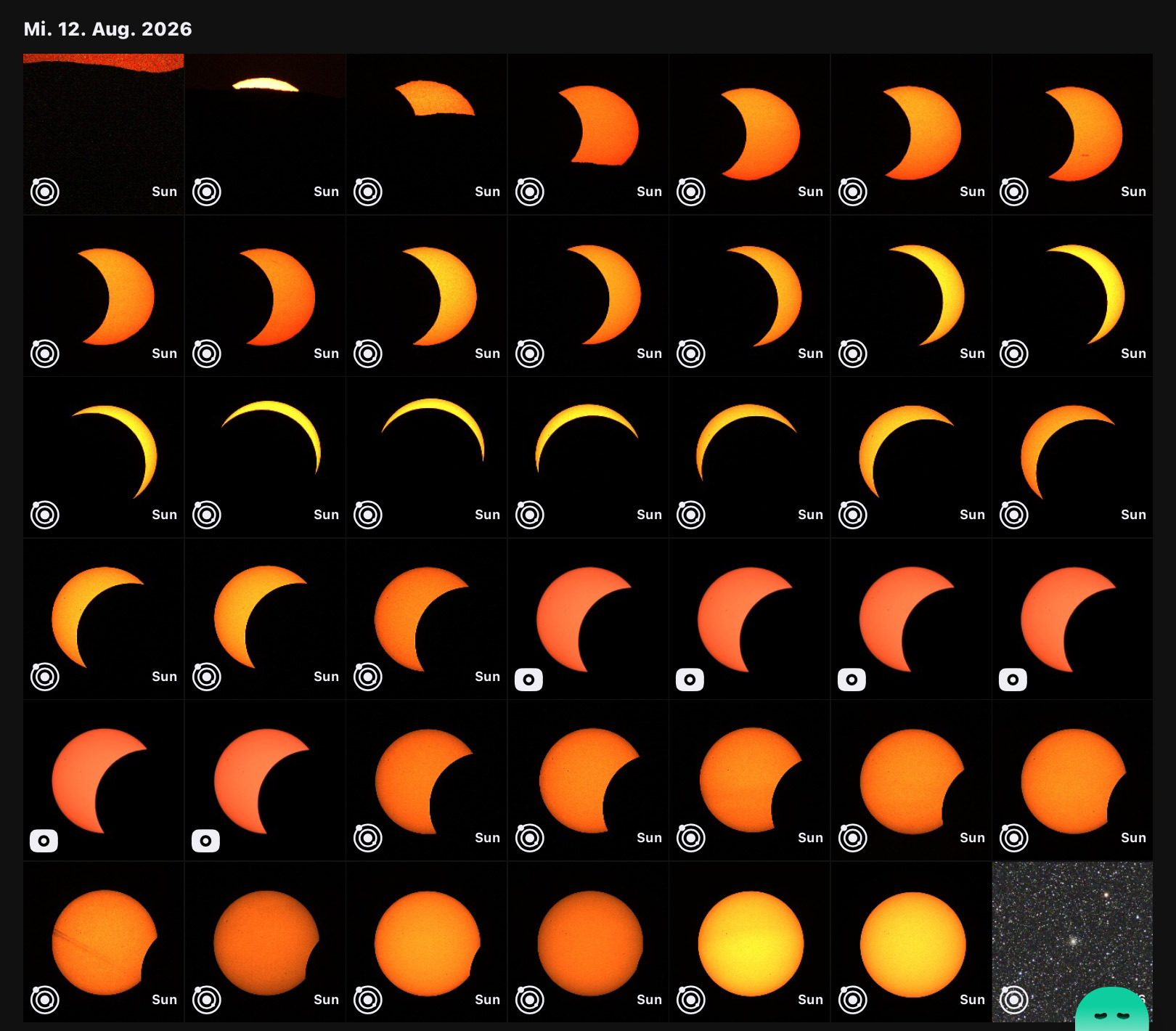
In the gallery, the photos are displayed in reverse order (the latest one first). Also, there are more photos shown there than were actually saved - I have no idea why...
Photo Collage
The following collage was created from stacked images. As a result, they are of higher quality than individual images.
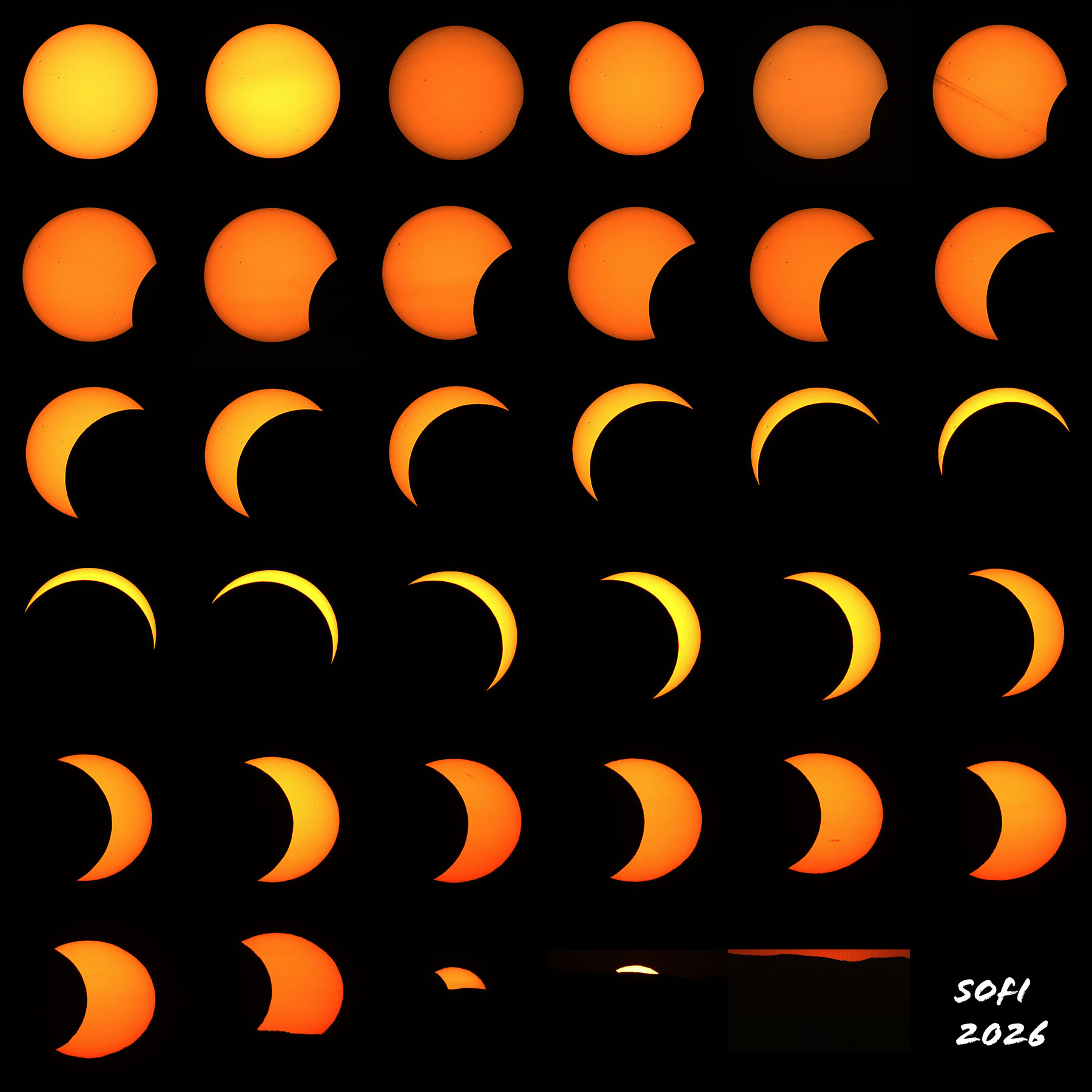
The photos are arranged in rows; unfortunately, the telescope and I were too slow to capture the sunset any better...
Choppy Animation Made from the Photos
The following animation was created from the photos in the collage and is very choppy. Nevertheless, you can follow the moon's movement across the sun quite well.
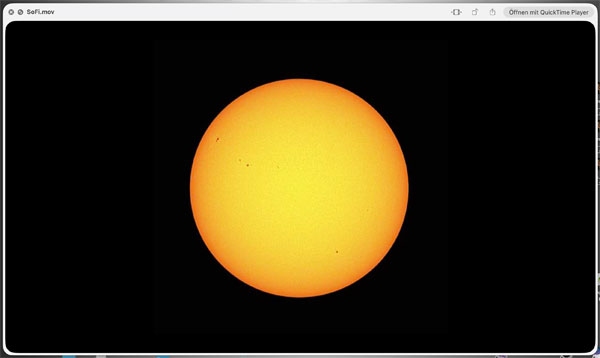
Please click the preview to start the animation in a new tab/window
Photos of the Equipment on the Heiligenstein Hill
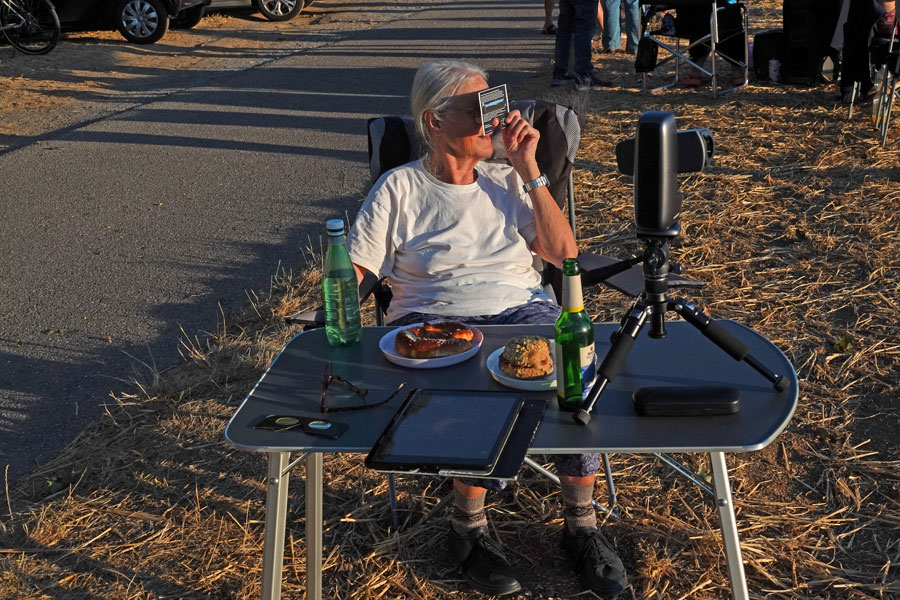 MMy wife is looking at the sun through solar eclipse glasses; on the right is the Dwarf mini, and in the foreground is the iPad used to control the telescope |
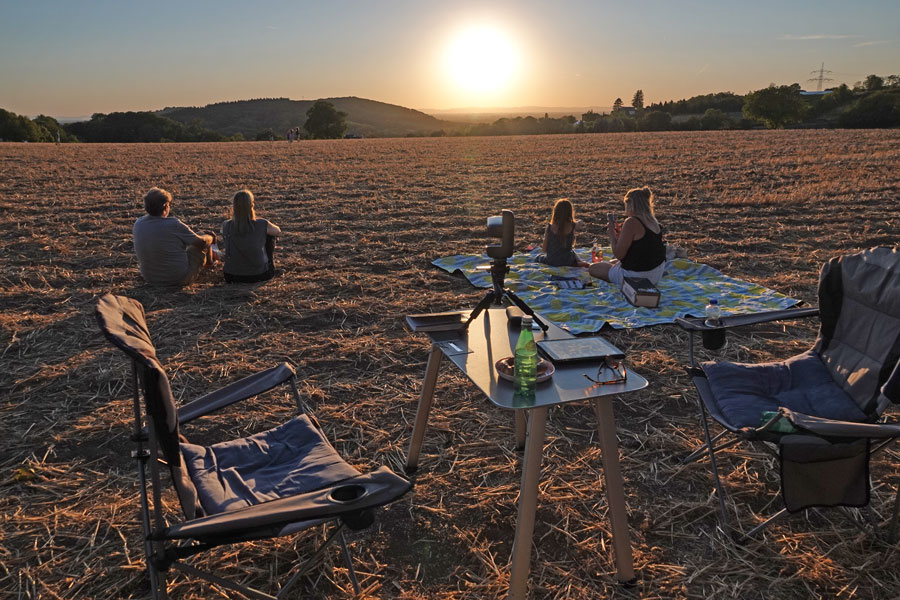 A view of the table toward the sun... |
Links
- Solar eclipse of August 12, 2026: en.wikipedia.org/wiki/Solar_eclipse_of_August_12,_2026
German-Speaking Links
- Sonnenfinsternis vom 25. 10.2022 (Wikipedia): de.wikipedia.org/wiki/Sonnenfinsternis_vom_25._Oktober_2022
|
made by  on a mac! on a mac! |


| 13.08.2026 |  |