Farthest Distances of Deep Sky Objects on My Own Photos
On this page, I would like to explore the question of how far away the most distant sky objects are that I can detect (or have detected) in photographs using my electronic telescopes. I would also like to describe how I can identify these objects and determine their distance.
Notes:
- See also page Distances of Deep Sky Objects on My Own Photos in preparation
There I list distances for a number of popular DSO that I photographed using my electronic telescopes.
Introduction
The most Distant Sky Objects Visible to the Naked Eye
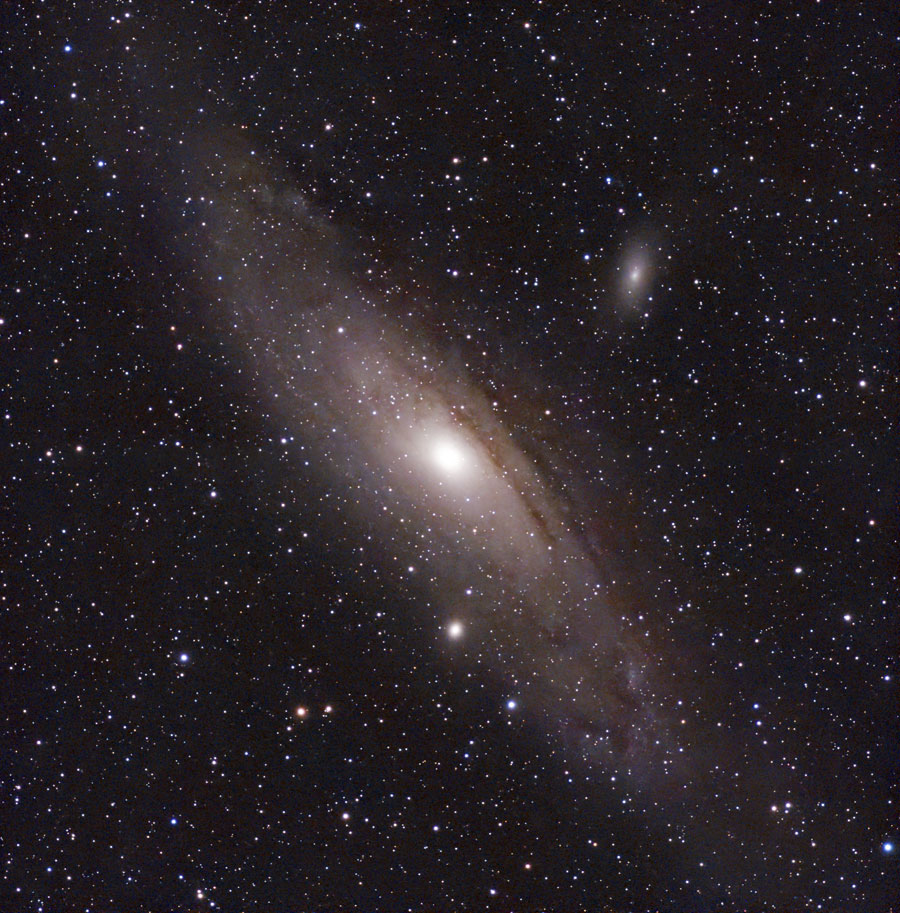
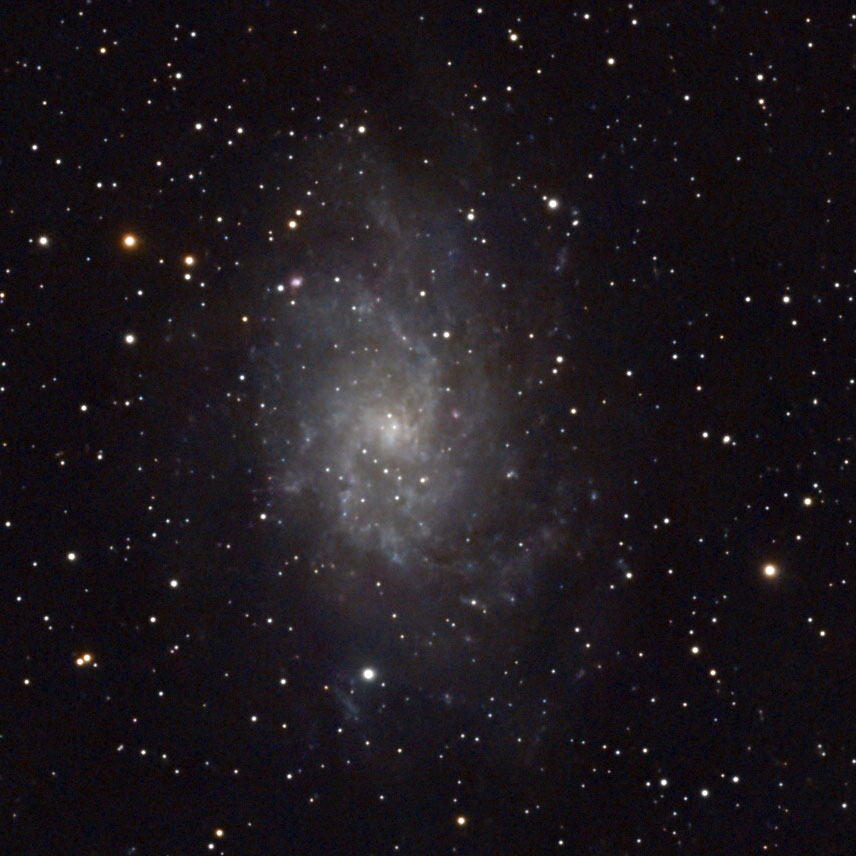
The Andromeda Galaxy (M 31), located about 2.5 million light-years away, is considered the most distant sky object visible to the naked eye. To see it, however, the sky must be quite dark. I have not yet managed to see M 31 with the naked eye; I was only able to do so with binoculars. Some observers also seem to be able to spot the slightly more distant Triangulum Galaxy M 33 (2.76 million light-years away) near M 31 with the naked eye, but I have not even been able to do so with visual telescopes. Both galaxies, M 31 and M 33, are the closest neighbors of our own galaxy, the Milky Way, and together with it form the so-called Local Group (or galaxy group).
Both galaxies are very easy to photograph with digital telescopes, and because they are so "close", they appear very large in my photos. Here are two photos that I took with the Dwarf mini in early 2026:
 |
 |
|
M 31, Feb 5, 2026 - 50 min, mosaic, processed with Stellar Studio, further processed, original |
M 33, Jan 15, 2026 - 45 min, section, processed with Stellar Studio, further processed |
But these are just two galaxies in a universe teeming with galaxies of all possible sizes and distances. And so my photos are full of galaxies - partly because I have photographed them directly with my digital telescopes (since 2020), but also partly as "bycatch" in photos of other objects (including galaxies). Below, I will describe how I identify this "bycatch" and how I determine the distances.
How Do I Find Galaxies in My Photos? And how Do I Identify them?
While closer galaxies show some structure in photos, the farther away galaxies are, the more they appear as tiny dots, resembling stars. So the question arises with these dots: Are they even galaxies, or are they stars? How can I tell the difference? If the dots are not too small, you can distinguish galaxies from stars because galaxy dots show a certain blurriness, while star dots have sharp edges. So every "fuzzy" dot is potentially a galaxy!
The only question is which one! Because only if you know which galaxy it is do you have a chance of figuring out its distance... I usually canmot answer this question on my own, but have to seek help: books, sky atlases, planetarium programs, the internet, and more. In doing so, I have found that sky atlases and planetarium programs are quickly ruled out, because - with a few exceptions - they do not list such small (and faint) objects.
Some programs, such as PixInsight, can annotate objects in photos, but I do not have such a program at my disposal. Instead, I use the Website nova.astrometry.net, which analyzes sky photos for existing objects, marks them, and labels them. So I upload my photos to this Website, have the photos analyzed (using the so-called plate-solving method), and have the found objects marked (which does not always work well...). For DSO, however, the Website seems to be limited to objects in the standard catalogs, so I cannot find any "exotic" objects this way. This means that I cannot identify many objects that I recognize as galaxies in photos because nova.astrometry.net does not recognize or name them. And basically, the Website does not care whether I have recognized a tiny dot as a galaxy or not ;)
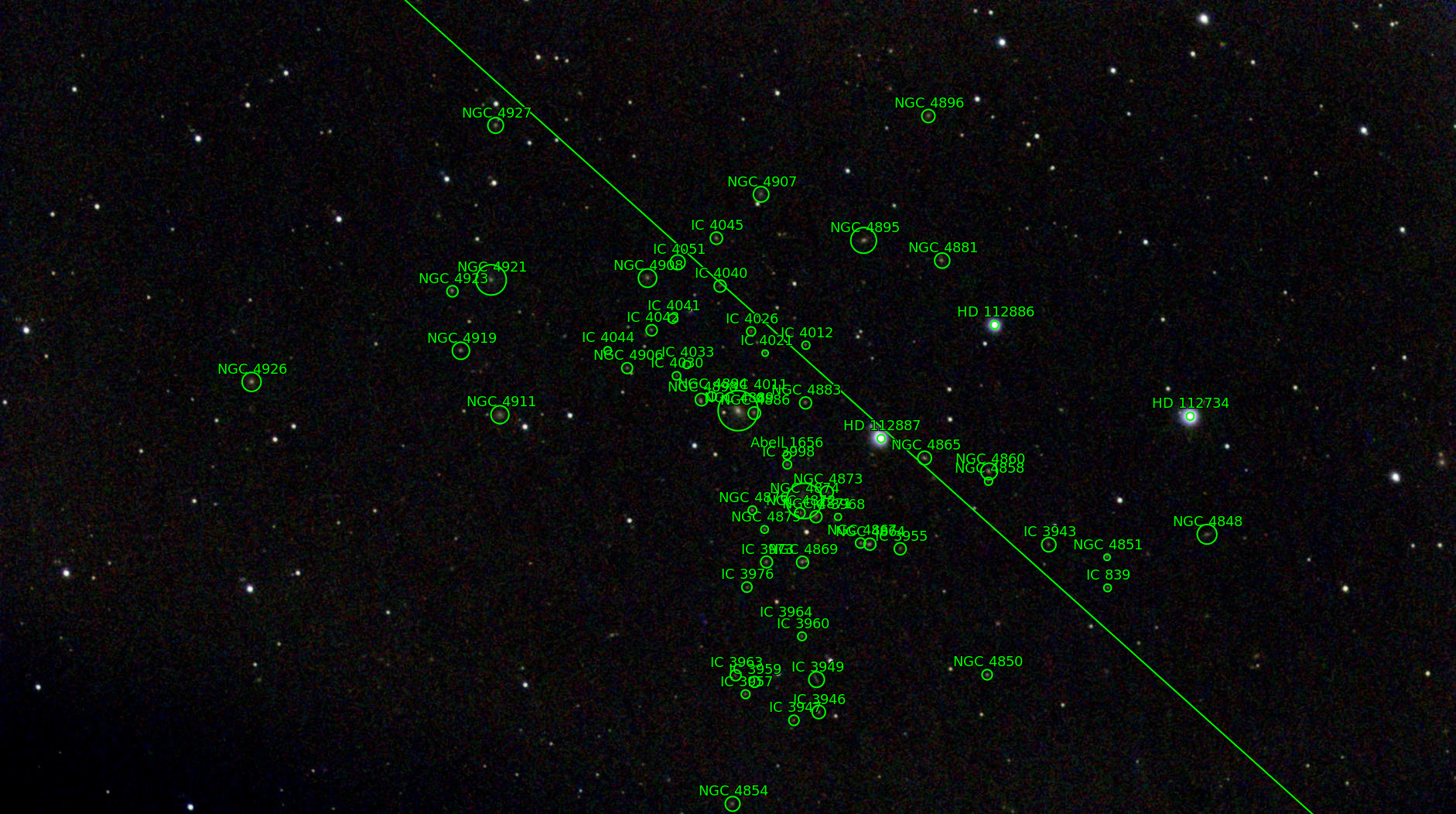
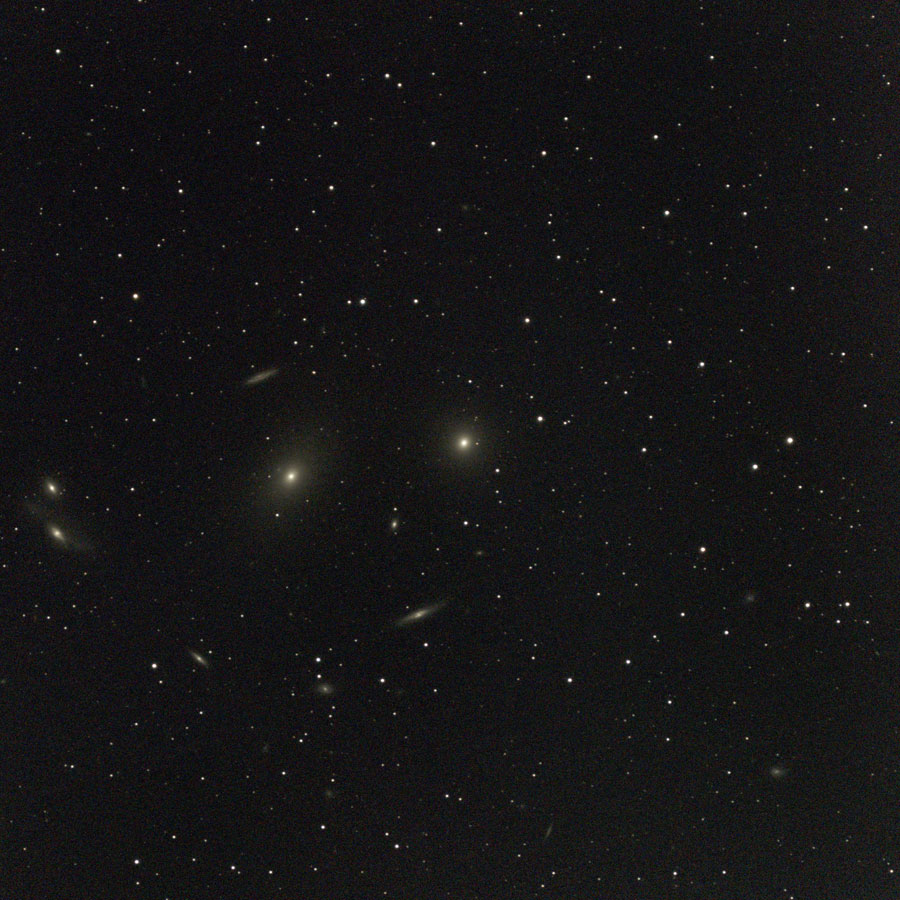
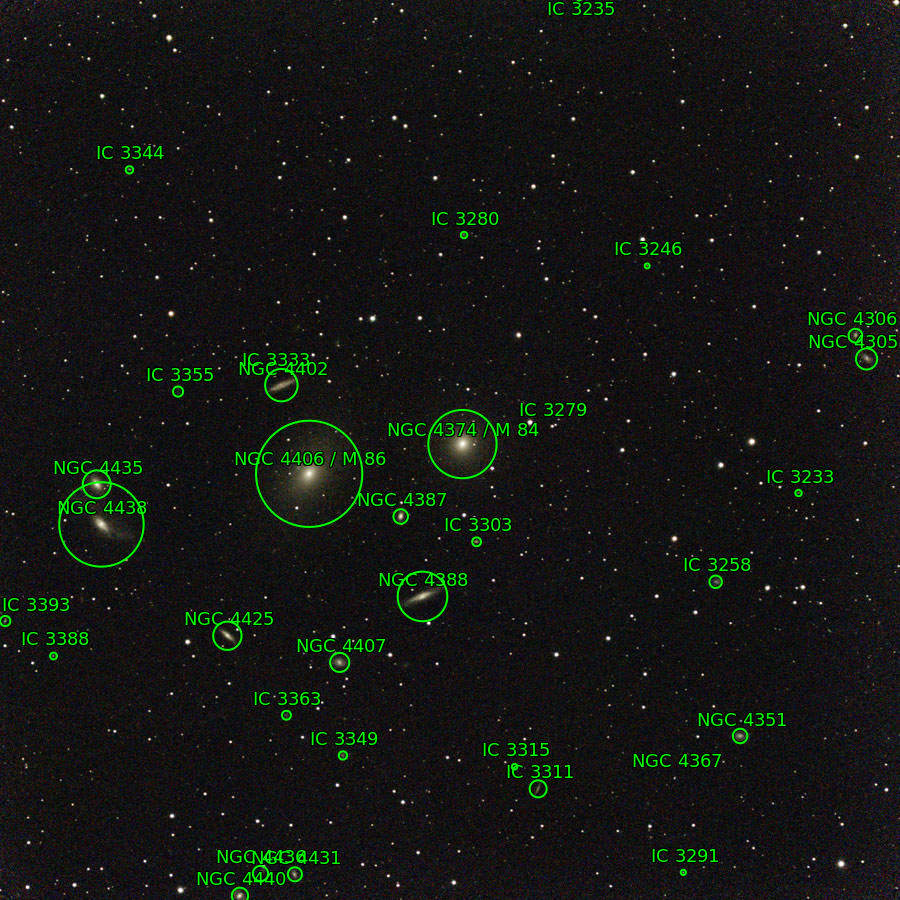
Eample: In April 2025, I used the Vespera Pro to photograph the elliptical galaxies M 84 and M 86 (the Great Galactic Face, GGG), which are members of the Virgo galaxy cluster. The photo also shows several smaller galaxies that are still distinct, as well as numerous smaller galaxies that are more or less just (blurry) dots. Analysis using nova.astrometry.net identifies, in addition to M 84 and M 86, several medium-sized galaxies (mostly with NGC numbers) and a whole series of small galaxies (IC and NGC numbers) in this photo:
 |
 |
|
M 84/86 and more (GGF), Apr 1, 2025 - 2000p, 30 min |
Evaluation with Nova.astrometry.net |
In this photo, I focused only on the larger galaxies that make up the GGG and determined their distances.
How Do I Determine the Distance to Galaxies (and Deep-Sky Objects in General)?
If I know the name of a galaxy (this applies to all DSOs), either because I observed it directly or because I looked it up on nova.astrometry.net or found it some other way, I can search for it online (at least if it has a standard catalog name and is not an "exotic" object). And then I can usually find out its distance as well; however, not all sources provide the distances of the objects. Typically, I rely on Wikipedia articles about the objects, but I also consult other sources, such as the planetarium software SkySafari or Stellarium.
My Own DSO Documentation
I have created Web pages for all the sky objects that I have observed directly in order to document my observations. On these pages, I also list the larger "bycatch"; sometimes I even created separate pages for them. For all these objects, I also try to determine their distance using the Internet and/or my planetarium software* (SkySafari, Stellarium), but I cannot find distance data for all objects. Furthermore, the data from different sources sometimes varies considerably.
*) SkySafari does not display many small objects, so their names cannot be determined. However, if you know the name, you can search for objects and usually find their data.
Since I document my observations, it naturally makes sense to wonder which of the objects I have photographed are the farthest away. But I had never systematically tracked this before, because I did not feel like going through all the galaxy Websites. Instead, I was content with the fact that the most distant celestial objects in my photos are located at a distance of between 300 and 500 million light-years (since I have stumbled upon such distances from time to time...).
In the spring of 2026, however, due to a series of coincidences, I began searching for the farthest distances in a somewhat more systematic way. I will describe that below!
Search...
Many galaxies are located within a distance range of around 10 million light-years, others around 20 million light-years, and still others around 50 million light-years. This is obviously because galaxies form groups in which they are arranged around a central point; these galaxy groups also have a certain extent, which is why the distances between galaxies within a group vary.
Virgo Galaxy Group
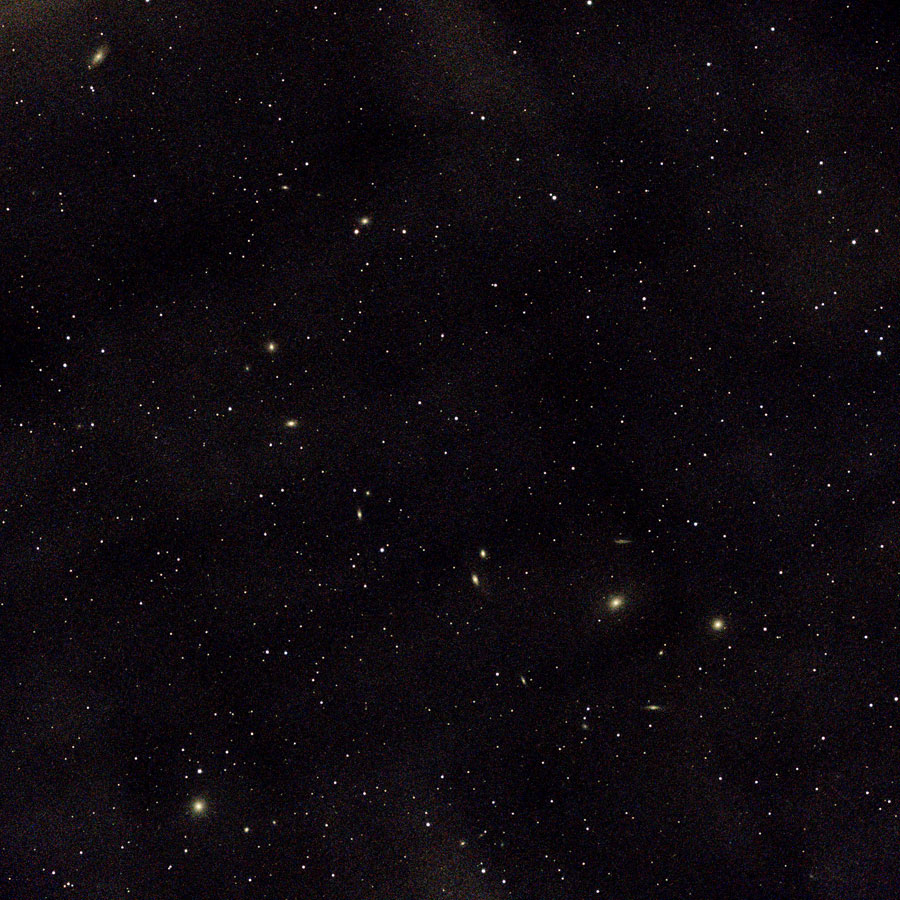
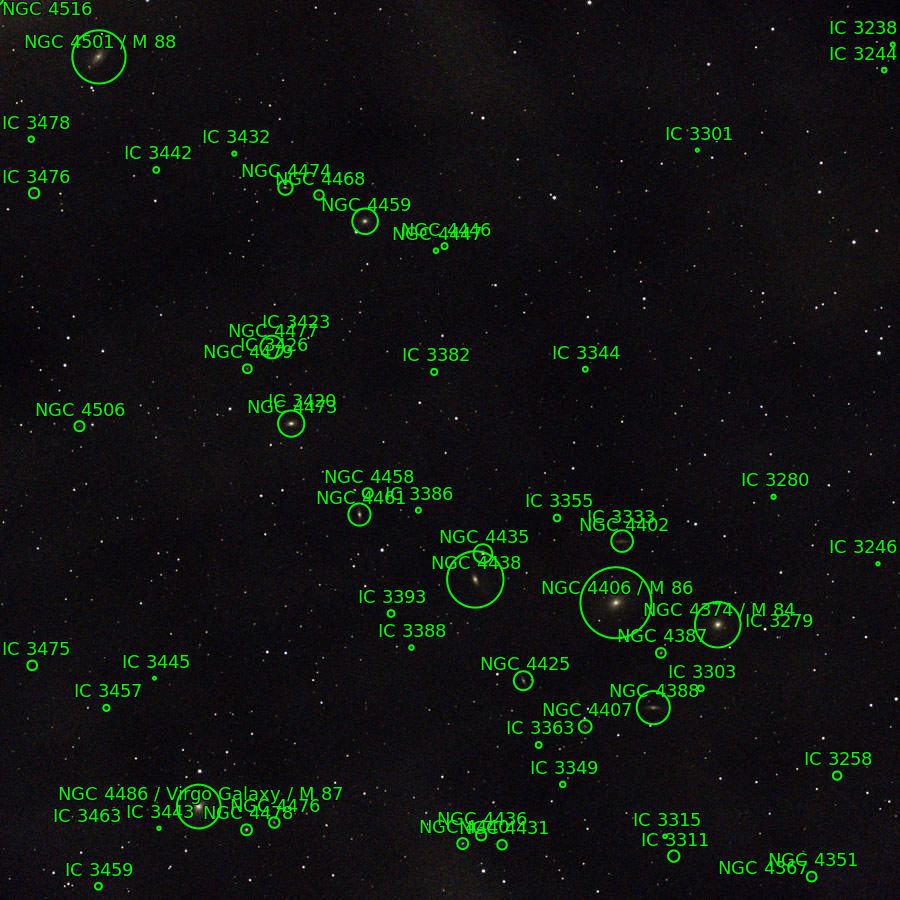
The largest galaxy group in the sky is the Virgo Galaxy Group, which lies at a distance of between 45 and 60 million light-years. Of course, this is far too close for these galaxies to be considered candidates for the greatest distance. However, even within the region of the Virgo Group, there are galaxies that are much farther than 60 million light-years away and may belong to other galaxy groups or be isolated. Here is a view of the Virgo Galaxy Group featuring the Markarian Chain:
 |
 |
|
Markarian's Chain and more - May 14, 2024, mosaic, 2580s, processed, 2000p |
Evaluation with Nova.astrometry.net |
Coma Galaxy Group
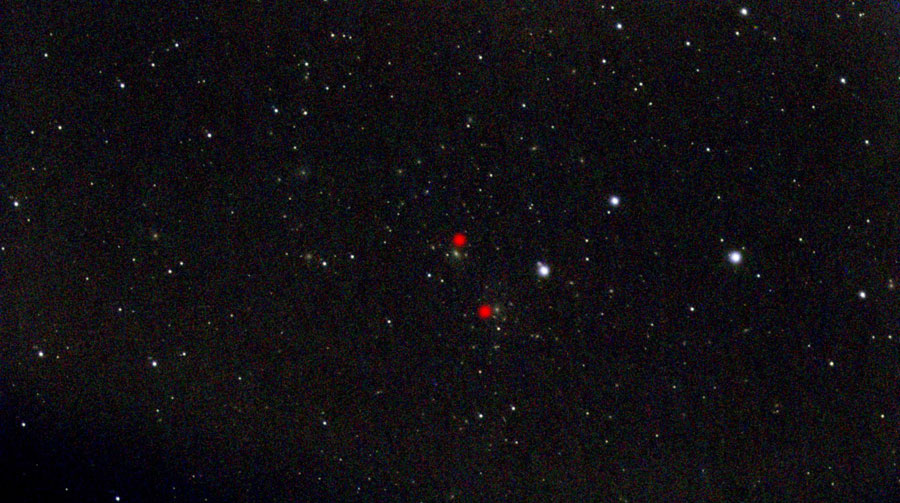
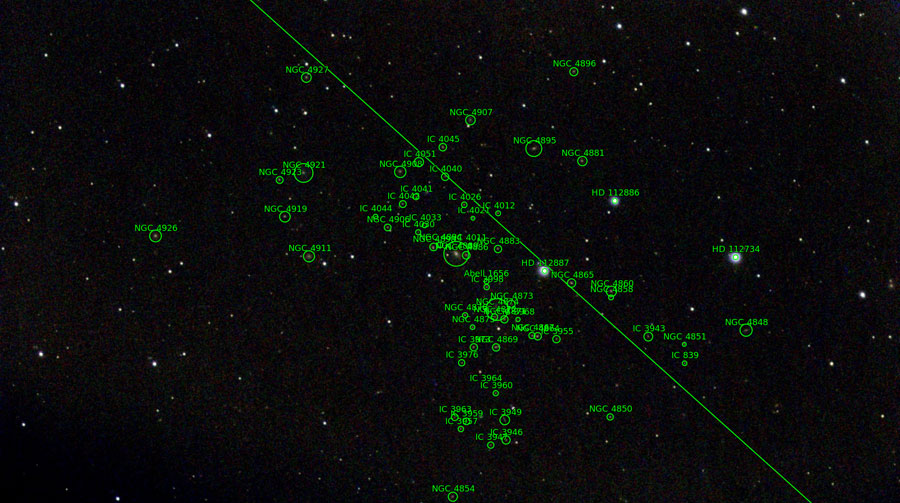
North of the Virgo Group lies the Coma Galaxy Group, and its members are much more likely candidates for the greatest distance. This is because the Coma Galaxy Group is located about 300 million light-years away, and since the group is extended, some of its members are even as far as 450 million light-years away. So, in my search for the most distant galaxies, I first looked at the Coma Galaxy Group. The two main galaxies, NGC 4889 and NGC 4874, are 291 and 321 million light-years away and are still clearly recognizable. However, their surroundings are so crowded with galaxies that I decided against a closer analysis...
 |
 |
|
NGC 4889 and NGC 4874 (lower right) labelled |
Evaluation with nova.astrometry.net - large |
Overall, my estimate that 300–500 million light-years (i.e., about half a billion light-years) is roughly the farthest distance at which I can photograph sky objects - namely galaxies - was certainly realistic, but beyond 300 million light-years, there is not really any evidence to support it...
Distant Galaxies Discovered Thanks to a Series of Coincidences!
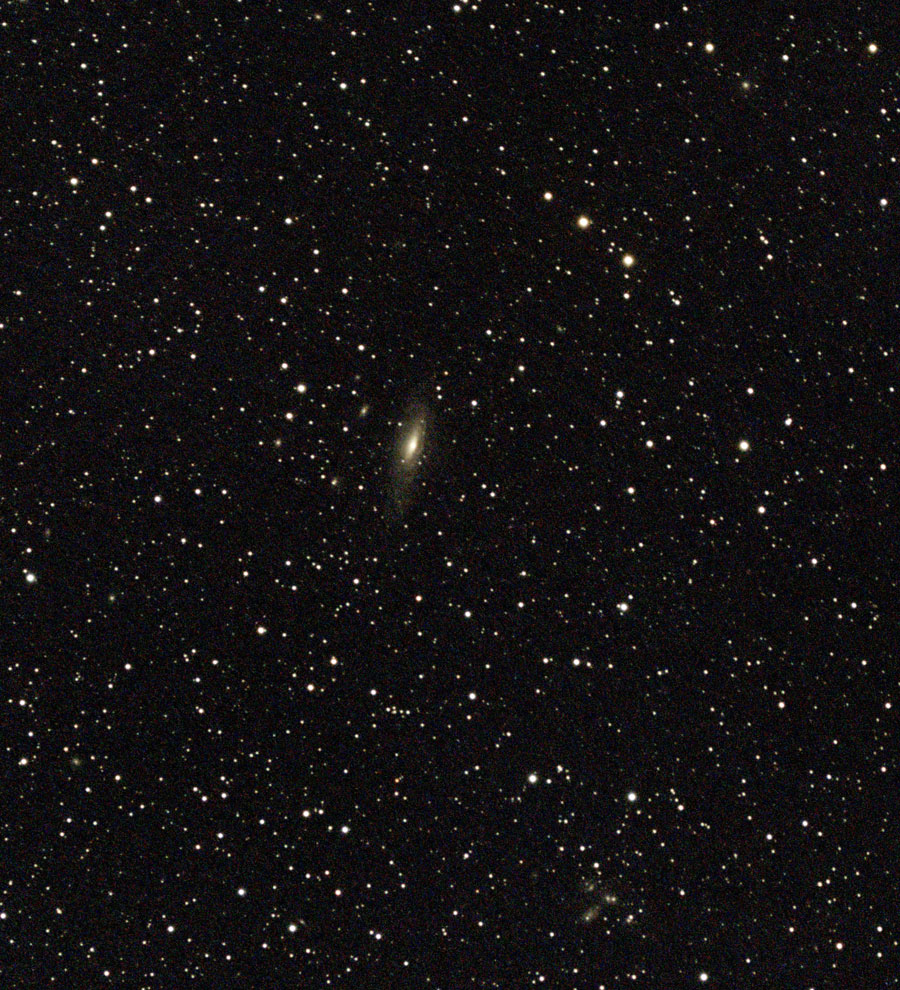
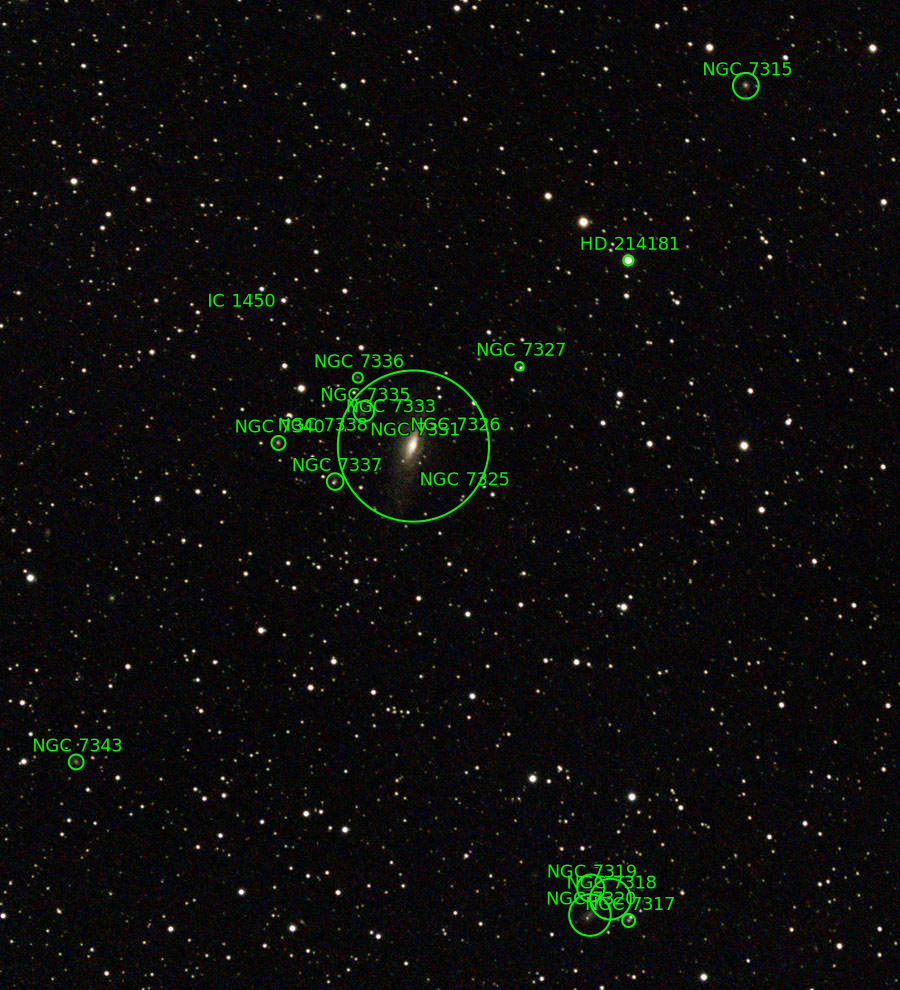
By chance, in March 2026, I discovered several galaxies in the range of 300 million light-years that are visually located near the galaxy NGC 7331 (46 million light-years): NGC 7317 (304 million light-years), NGC 7335 (292 million light-years), NGC 7336 (403 million light-years), NGC 7337 (304 million light-years), and NGC 7340 (296 million light-years). Among these, the galaxy NGC 7336 stands out as an “outlier” with a distance of 403 million light-years. That was my record holder for the time being!
 |
 |
|
NGC 7331, Nov 5, 2024 - 2000 (180 frames = 30 min), section, processed |
Evaluation with nova.astrometry.net |
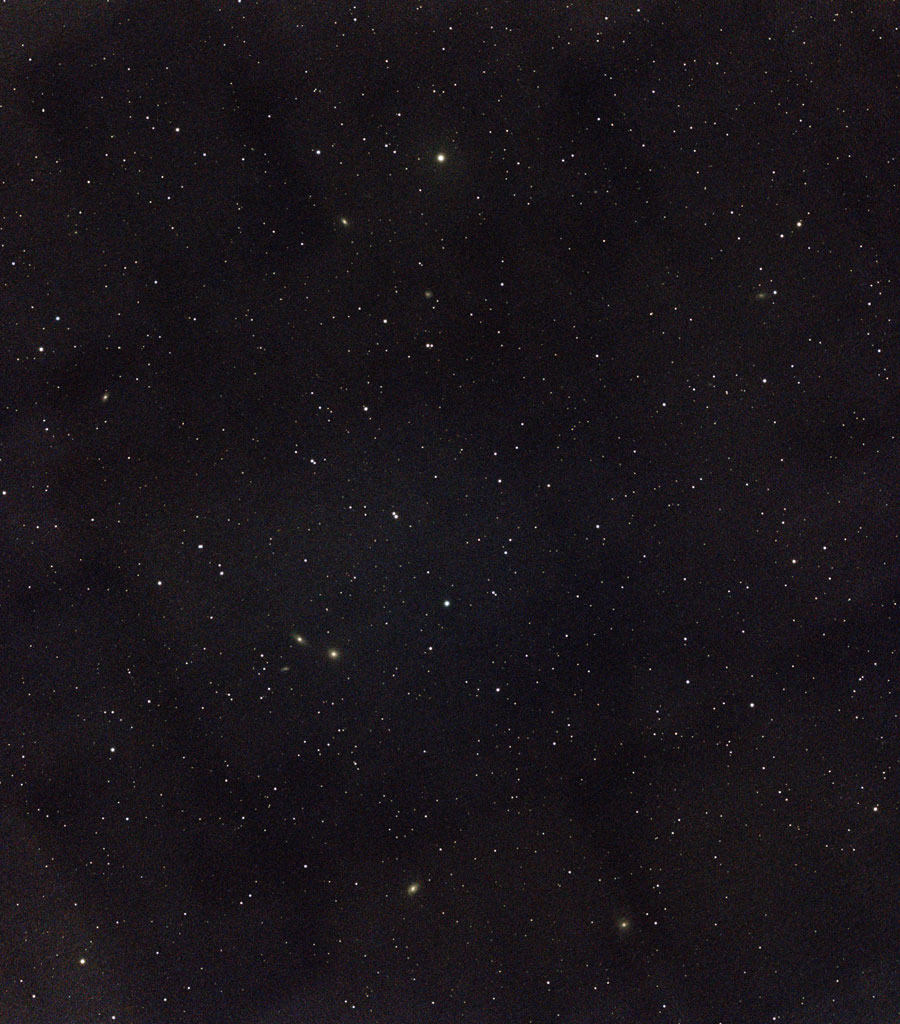
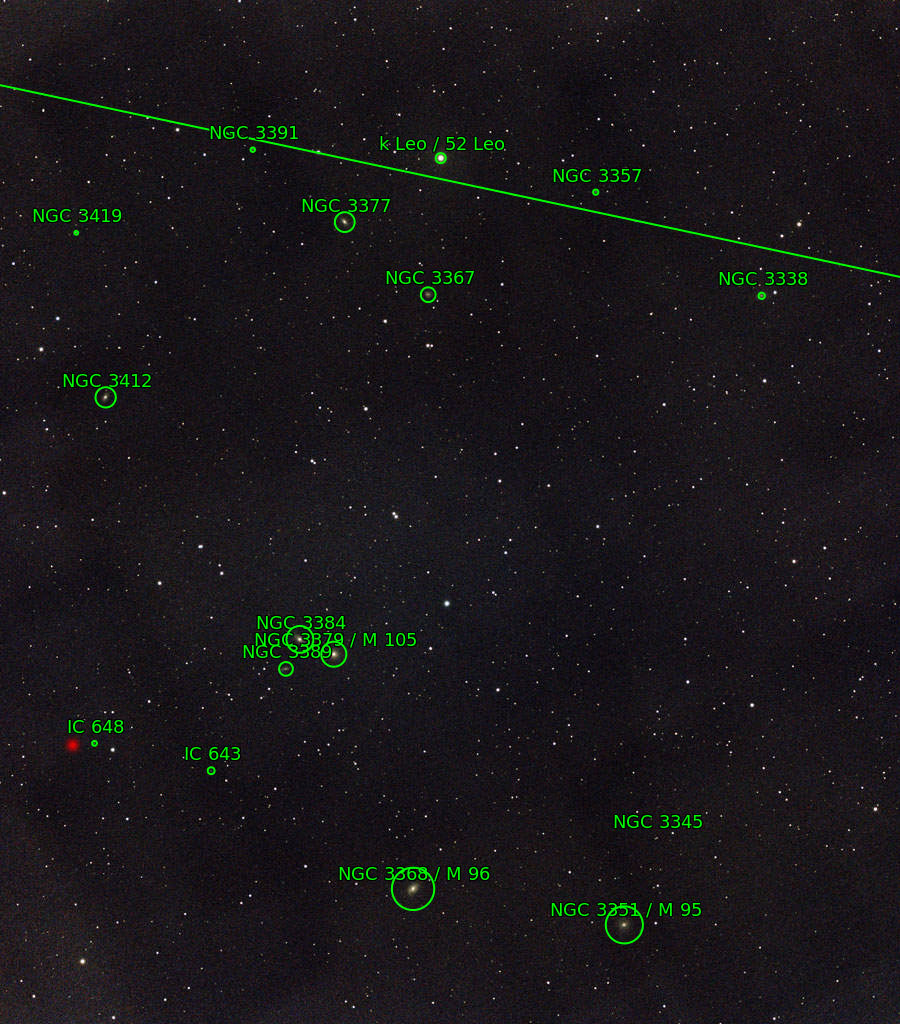
Shortly thereafter, I turned my attention once again to the galaxies M 95, M 96, and M 105. I had captured some of these as a mosaic (Vespera, Vespera Pro) in order to fit all three galaxies into a single photo. In the process, nova.astrometry.net identified the galaxy IC 643 (309 million light-years) on multiple occasions, and in one Vespera Pro photo, it also identified the galaxy IC 648, which is said to be as far as 474 million light-years away:
 |
 |
|
M 95, M 96, M 105, and more, May 10, 2024 - mosaic, processed, 2000p, 2940s |
Evaluation with nova.astrometry.net (IC 648 is at the bottom left) |
I had not really "noticed" that before, but now I had found a new distance record! Almost half a billion light-years - and a barely visible, very faint dot in the photo! I have to admit, though, that I probably would never have spotted IC 648 in the photo! The dot is just too tiny...
Galaxy 2MFGC 8391 (nearly 800 Million Light-Years away)
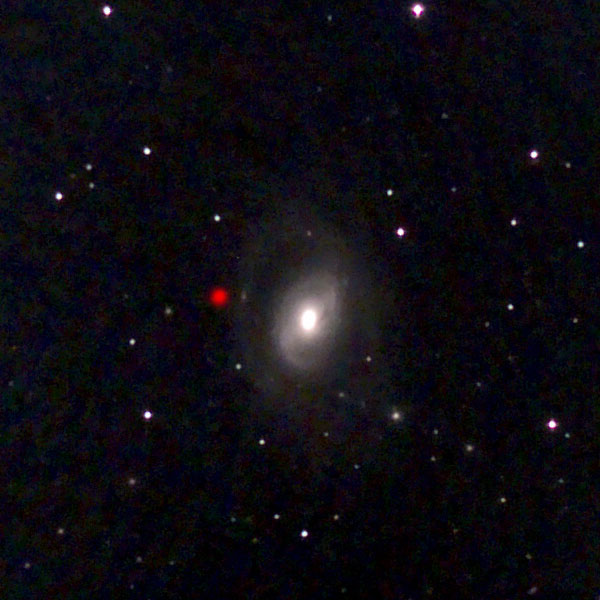
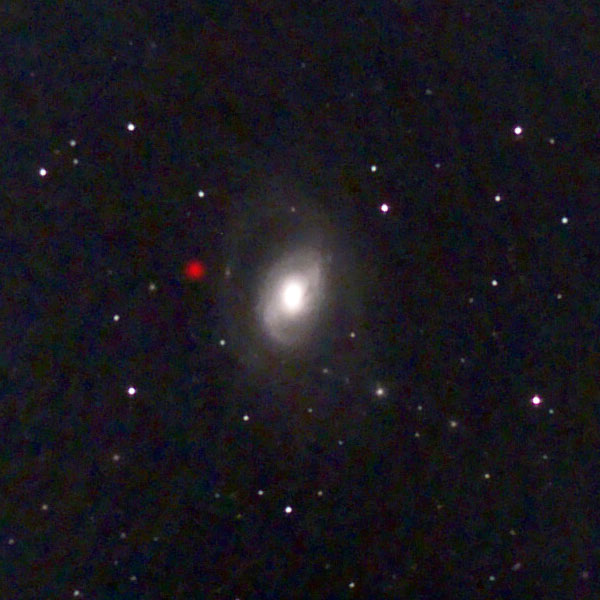
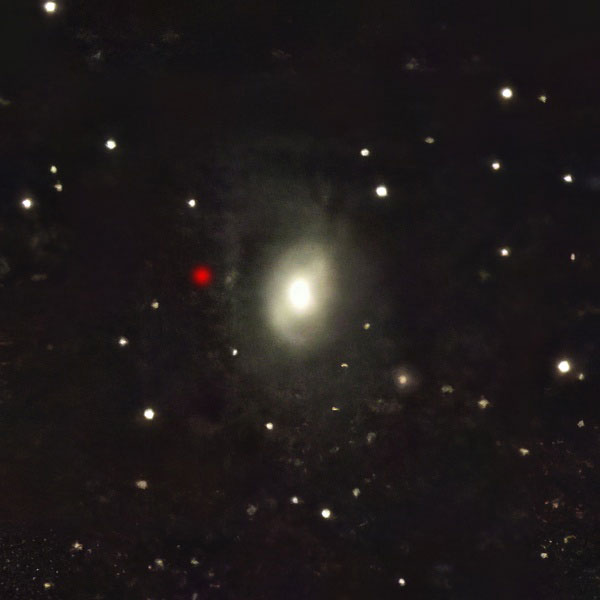
I actually stumbled upon the next "step" on the distance scale purely by chance in the latest issue of the magazine I subscribe to, "Astronomie – das Magazin" (No. 57). In it, I came across a galaxy (2MFGC 8391) that "peeks through" the spiral arm of a larger and closer galaxy (and once again, it is M 96 in Leo (40 million light-years)!) and, depending on the source, is between 700 and 800 (usually just under 800) million light-years away (though one source gives only 160 million light-years...). I got the best view of this galaxy in 2021 with the eVscope (M 96 with 2MFGC 8391):
 |
 |
 |
||
eVscope: M 96 with 2MFGC 8391 (marked), Mar 8, 2021, section, processed |
eVscope: M 96 with 2MFGC 8391 (marked), Mar 8, 2021, section, processed alternatively |
Vespera Pro: M 96 with 2MFGC 8391 (marked), Feb 19, 2025 - 30 min, section, processed and denoised (TP) |
This probably made this galaxy the most distant object I had photographed so far. Of course, this galaxy looks much, much better through the Hubble Telescope (de.wikipedia.org/wiki/Messier_96) - I probably only captured the core as a tiny dot. This photo shows the galaxy so clearly that I cannot even imagine it being that far away... And you can see many other small galaxies that might be even farther away!
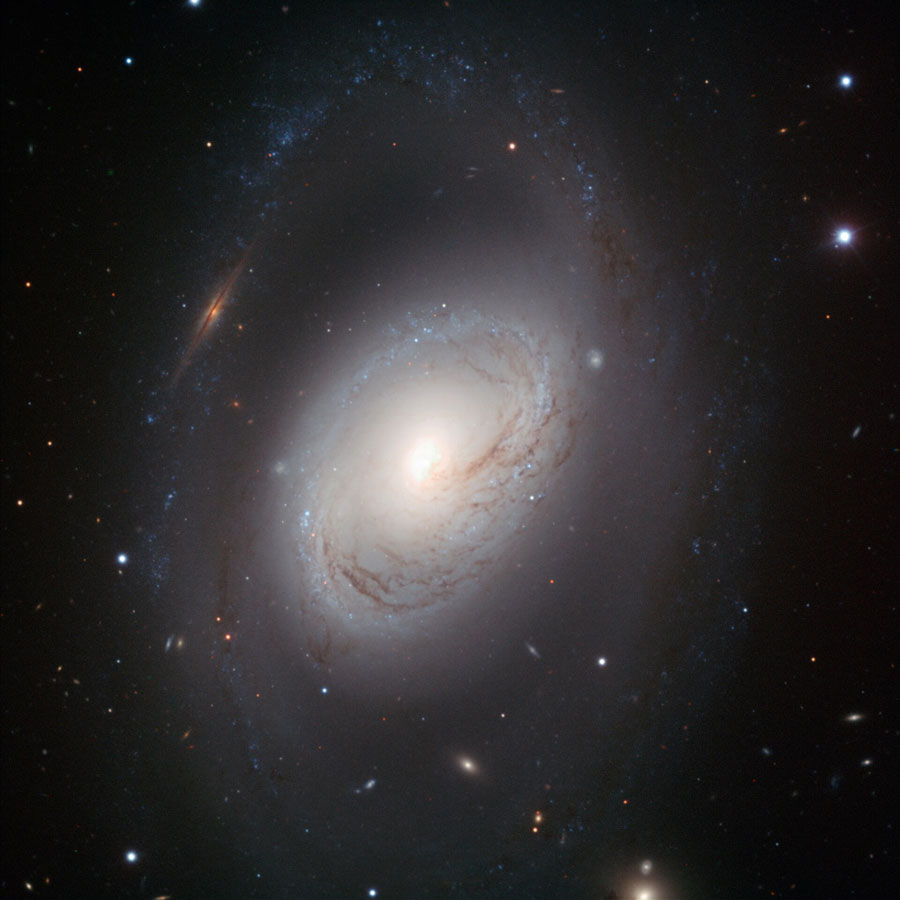
Photo: Photo of Messier 96 and 2MFGC 8391 (upper left) by the Very Large Telescope (Wikipedia)
Galaxy WISEA J223640.87+341319 (nearly 1.09 Billion Light-Years away)
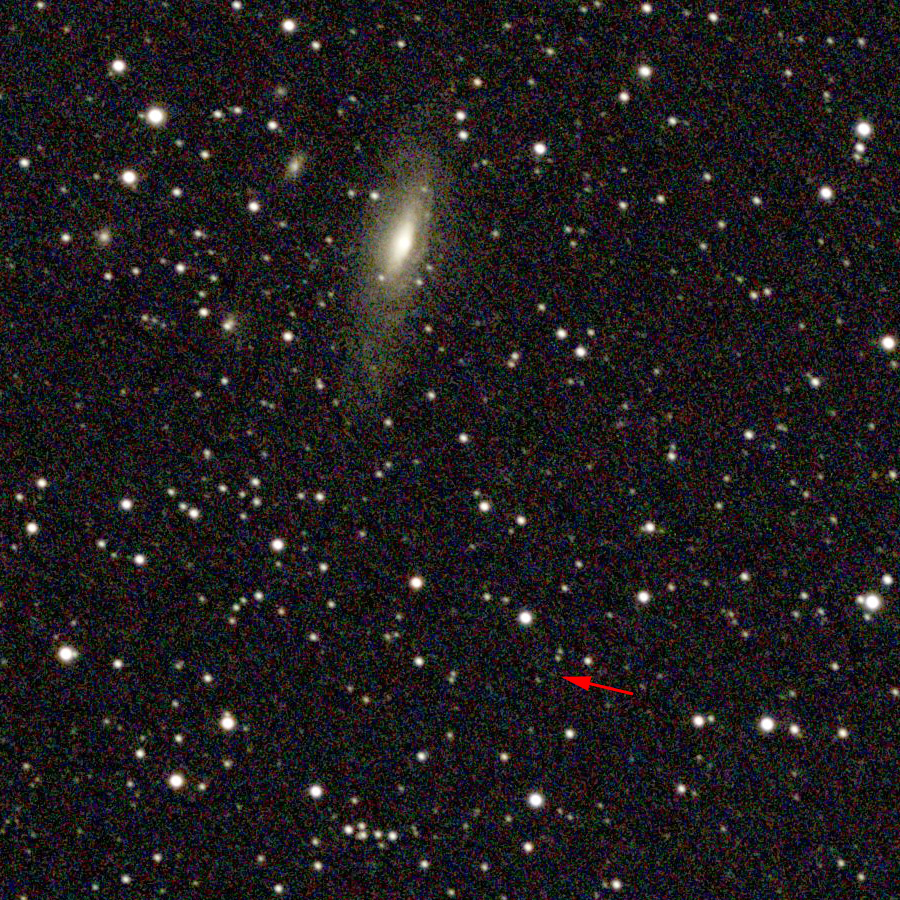
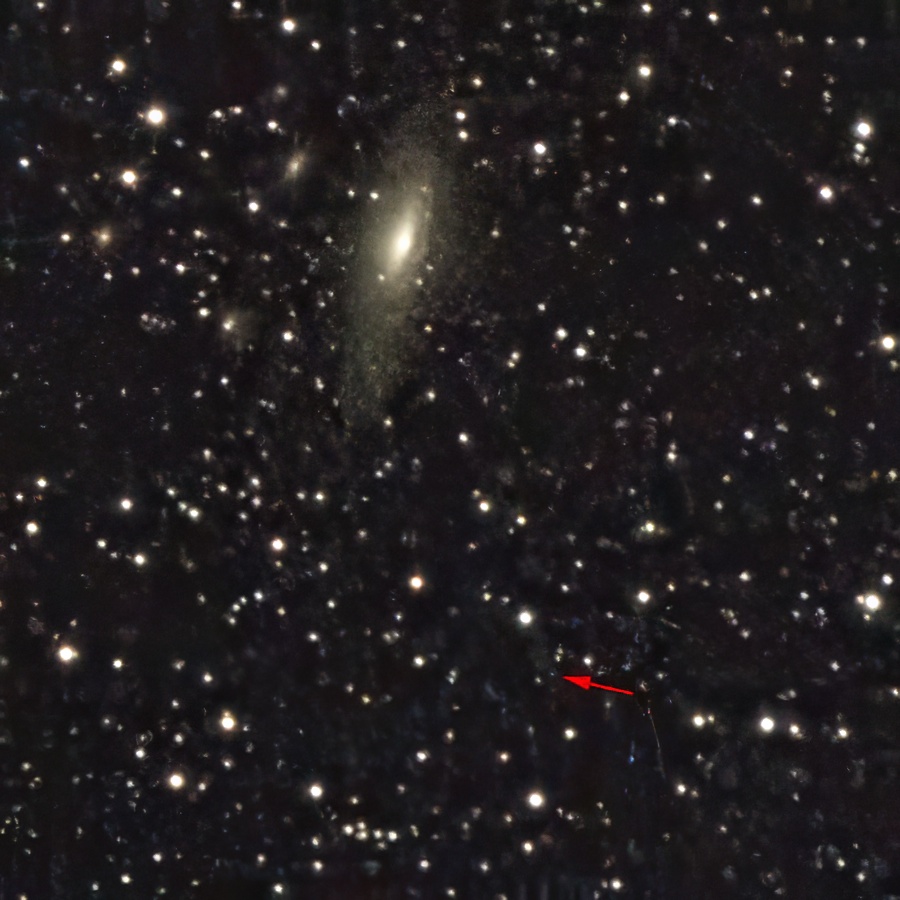
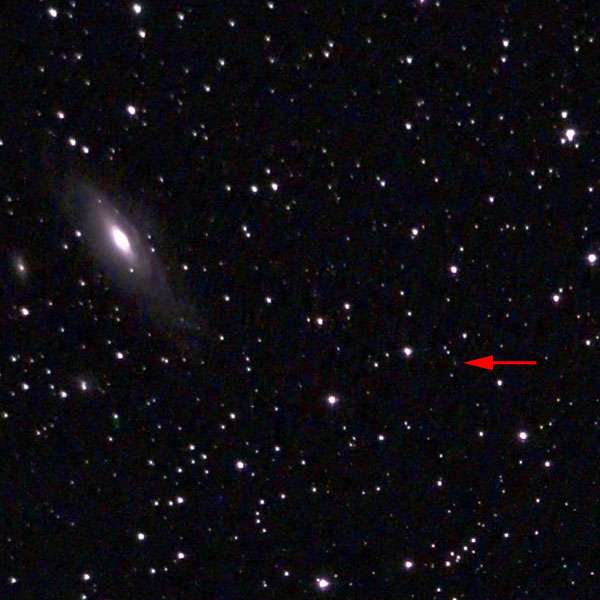
But that was not the (temporary) end of my search for the most distant object in my photos! Thanks to an article in Spektrum der Wissenschaft by two amateur astronomers (I had already been in contact with one of them), I came across a galaxy at the end of March 2026 that is a good billion light-years away (the most distant galaxy the two found is a good 2 billion light-years away): Galaxy WISEA J223640.87+341319 at a distance of 1.09 billion light-years. This one is also located near the previously mentioned galaxy NGC 7331 in Pegasus. I had taken photos of NGC 7331 with the Vespera Pro, but whether you can actually make anything out in them is certainly a matter of opinion. After denoising, a tiny dot is visible at the relevant spot, at any rate. But then I looked again at my eVscope 2 photos, and as with 2MFGC 8391, the result from the eVscope (2) is better (the eVscopes really are better galaxy hunters...). I think the tiny dot of the galaxy is clearly visible in the photo on the right:
 |
 |
 |
||
Vespera Pro: NGC 7331, Nov 5, 2024 - 30 min, section, not denoised |
Vespera Pro: NGC 7331, Nov 5, 2024 - 30 min, section, denoised (many artifacts) |
eVscope 2: NGC 7331 - Sep 6, 2023, 10 min, section |
First Conclusions
Anyway, after a few lucky breaks and some searching, I was able to increase the maximum distance of the galaxies in my photos from 300 to just under 500, to just under 800, and finally to a good 1,000 million (= 1 billion) light-years. I think that will do for now ;)
Links
- See also my page offering Astronomy Links.